The 31st session of the Conference of the Parties (COP31) to the United Nations Framework Convention on Climate Change
(UNFCCC) will be held in Antalya, Türkiye, from 9 to 20 November 2026. The meeting brings together representatives of
different countries to negotiate measures to address climate change and to strengthen international cooperation.

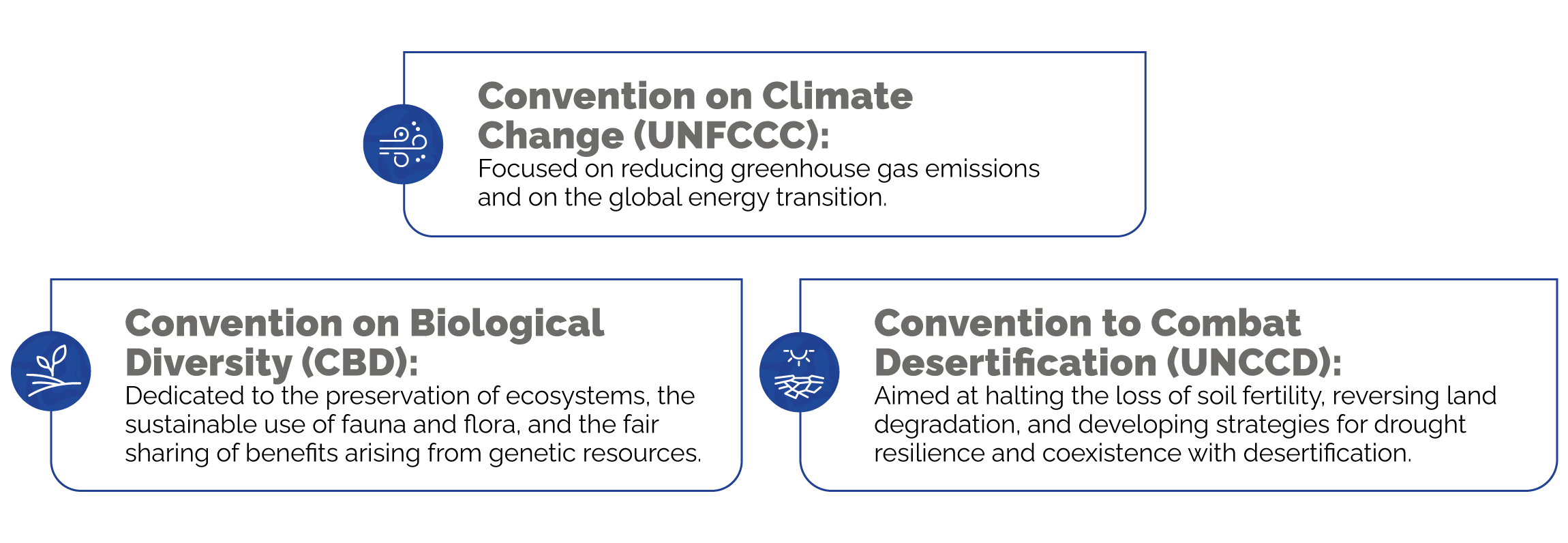
The UNFCCC is one of the three international environmental conventions that emerged from the United Nations Conference on
Environment and Development (Rio-92), alongside the Convention on Biological Diversity (CBD) and the United Nations
Convention to Combat Desertification (UNCCD). Held annually, the UNFCCC Conference of the Parties is the main multilateral
forum for negotiation and decision-making on the global response to climate change. The core of the global environmental
governance framework is structured around three complementary fronts:
The main instruments of the international climate change regime are the Framework Convention, the Kyoto Protocol, and the
Paris Agreement, adopted in 2015. The Paris Agreement sets the goal of holding the increase in the global average
temperature to well below 2 °C above pre-industrial levels, while pursuing efforts to limit the increase to 1.5 °C. It also seeks to
strengthen the capacity to adapt to the impacts of climate change and to make financial flows consistent with a pathway
towards low greenhouse gas emissions and climate-resilient development.

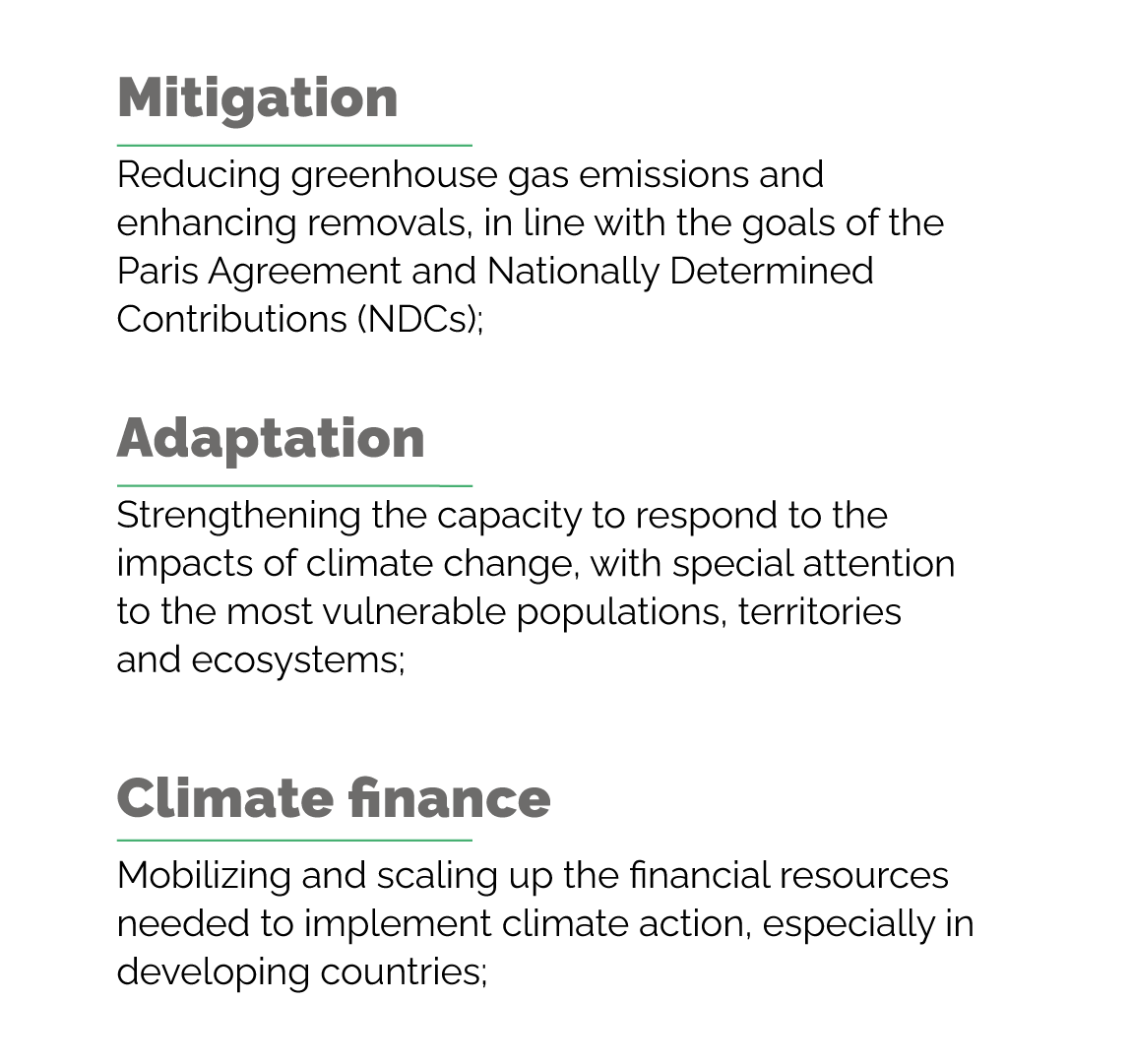
COP31 will continue with the international negotiations aimed at implementing the Paris Agreement and strengthening
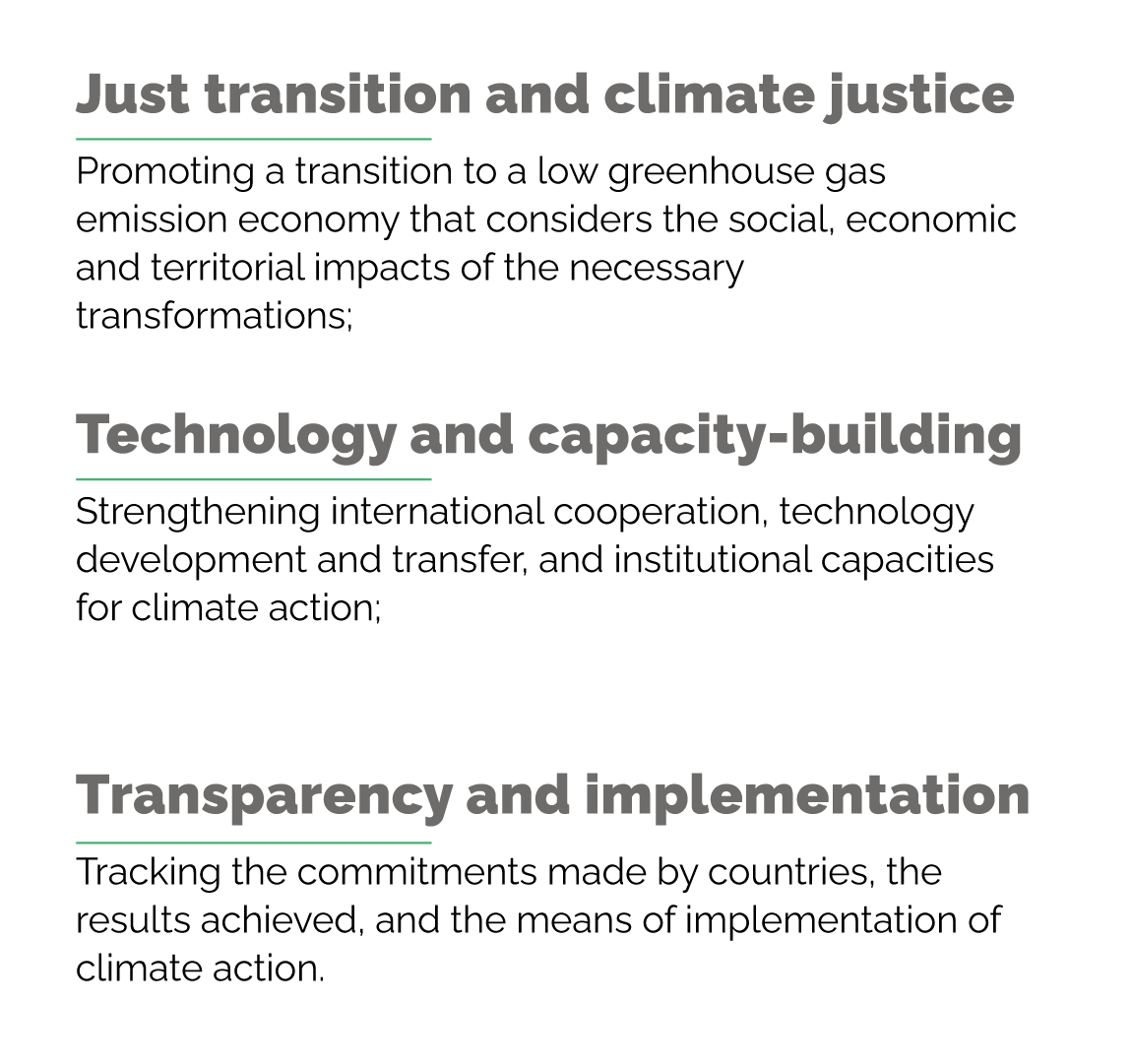
cooperation among countries. The central topics of the international climate agenda include:

The Brazil Pavilion is the Brazilian government's official space at the UN Climate Change Conferences. Located in the Blue
Zone, it is an important space for dialogue, coordination, and the exchange of experiences among representatives of
government, civil society, the private sector, academia, and international organizations. At COP31, the Pavilion will have two
auditoriums, Belém and Global Mutirão, whose programming is coordinated by the Ministry of Environment and Climate
Change (MMA), the COP30 Presidency and the Brazilian Trade and Investment Promotion Agency (ApexBrasil). The Belém
Auditorium will host discussions on topics relevant to Brazilian society, connecting national initiatives to the global climate
agenda.
The Global Mutirão Auditorium will be dedicated to the Global Climate Action Agenda, with debates aligned with the six
thematic axes and the 120 Plans to Accelerate Solutions (PAS), building on the outcomes and legacy of COP30. The
programming of both auditoriums will focus on the implementation of climate commitments, on showcasing concrete
experiences and results, and on strengthening cooperation among different actors.




For detailed information on how the Brazil Pavilion at
COP31 works and operates, please see the Frequently
Asked Questions (FAQ) section, which brings together
guidance for organizing institutions and panel
participants.
The material answers questions about the
responsibilities of coordinators and moderators,
programming, participation, accreditation, infrastructure,
logistics and communications, with the aim of
supporting the planning and delivery of activities in
accordance with the procedures and deadlines set by
the Organizing Committee.

Brazil's participation in COP31 involves various federal government bodies, under the coordination of the Ministry of
Foreign Affairs (MRE) and the Ministry of Environment and Climate Change (MMA), to support international negotiations
and cooperation and dialogue activities related to the implementation of the United Nations Framework Convention on
Climate Change (UNFCCC) and the Paris Agreement.
The main national instruments guiding Brazil's climate action include the National Policy on Climate Change (PNMC),
Brazil's Nationally Determined Contribution (NDC) and the National Plan on Climate Change (Plano Clima), which sets out
strategies and instruments to guide mitigation and adaptation actions in the country. Brazil's participation also seeks to
contribute to strengthening multilateralism, international cooperation and the implementation of climate solutions that
consider different social, economic and environmental realities.