Traveller´s goods
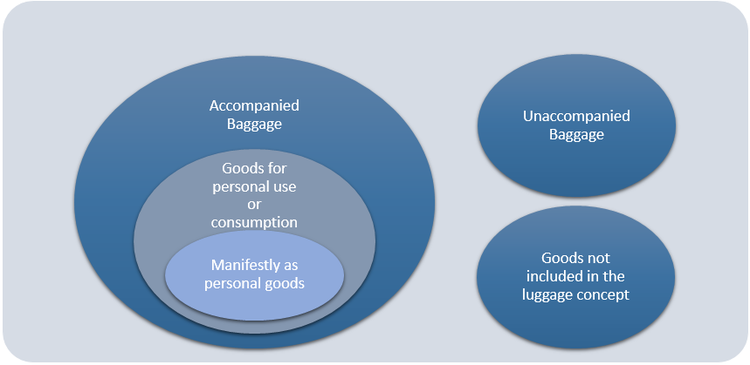
These comprise all goods brought by a traveler as a result of their international trip, whether carried as hand luggage, checked baggage, or sent to Brazil separately from the traveler by any means of transport. Accordingly, a traveler’s goods encompass both accompanied and unaccompanied baggage, as well as goods excluded from the definition of baggage. What distinguishes them is the tax treatment applicable to each category.
BAGGAGE
The following fall under the definition of baggage:
-
New or used goods intended for personal use or consumption, provided they are compatible with the circumstances of the trip.
-
Other goods, including gifts, provided they do not exceed quantitative limits and, by their nature, quantity, or variety, do not indicate commercial and/or industrial purposes.
GOODS FOR PERSONAL USE OR CONSUMPTION
These are goods that, by their nature and quantity, are compatible with the circumstances of the trip:
-
Toiletries and wearing apparel;
-
Goods of an manifestly personal nature.
Goods of a manifestly personal nature are those that a traveler may require for their own use, taking into account the circumstances of the trip and their physical condition, as well as portable equipment intended for professional activities to be performed during the trip. Examples include:
-
One used still camera (even if equipped with video recording capabilities);
-
One used wristwatch;
-
One used mobile phone, including smartphones.
The following are not considered goods of a manifestly personal nature, even if intended for the traveler's own use:
-
Machinery and appliances that require installation for operate (e.g., desktop computers, air conditioners, video projectors);
-
Camcorders and personal computers, including laptops and tablets.
 Proof of compatibility with the circumstances of the trip may be required, taking into account, among other variables, the duration of the stay abroad.
 Learn more:
Frequently Asked Questions
DUTIABLE GOODS
These are the remaining goods belonging to the traveler, including gifts, subject to tax payment, provided they qualify as baggage.
Learn more: Goods to Declare, Tax Computation, and Payment
GOODS EXCLUDED FROM THE DEFINITION OF BAGGAGE
These are goods belonging to the traveler that, under regulatory provisions, do not form part of the definition of baggage:
-
Goods exceeding quantitative limits;
-
Motor vehicles in general, motorcycles, scooters, mopeds, motorhomes, personal watercraft (jet skis), aircraft, watercraft, and boat engines, as well as their parts and accessories;
-
Goods intended for resale (commercial purpose) or industrial use;
-
Packages/parcels brought for third parties;
-
Goods destined for legal entities (companies) for subsequent customs clearance under the Standard Import Regime (Regime Comum de Importação).
Learn more: Vehicles and Personal Mobility Devices
ACCOMPANIED BAGGAGE
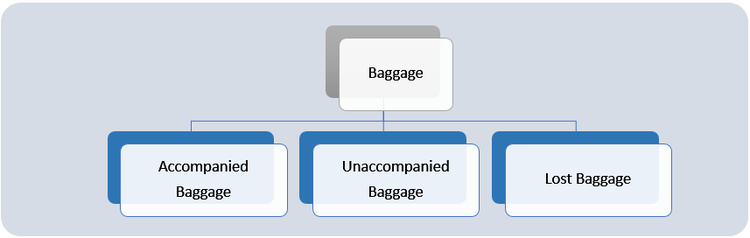
Baggage carried by the traveler on the same means of transport in which they travel.
UNACCOMPANIED BAGGAGE
Baggage brought into the country or sent abroad as cargo, covered by a bill of lading, air waybill, or equivalent transport document.
Upon entry into Brazil, unaccompanied baggage must:
-
Arrive within 3 (three) months prior to or up to 6 (six) months following the traveler's arrival; and
-
Originate from the location or one of the locations of stay or origin of the traveler.
Learn more: Relocating to Brazil ou Moving Abroad
LOST BAGGAGE
Baggage checked in as accompanied baggage by the traveler that arrives in the country without its owner due to an act of God, force majeure, or errors/omissions beyond the control of the traveler.
ASSOCIATED LEGISLATION