Presentation

The Nuclear Technology Development Center (CDTN) is one of the units of the National Nuclear Energy Commission (CNEN), an agency linked to the Ministry of Science, Technology and Innovation. Located in Belo Horizonte (MG), the CDTN operates in research and development, teaching (postgraduate) and provision of services in the nuclear area and related areas.
The Center's main activities today involve the areas of nuclear technology, minerals, materials, health and the environment. The applications of radiation and nuclear techniques include environmental monitoring and remediation, radiation metrology, the development and production of radiopharmaceuticals and the management and treatment of radioactive waste, where the CDTN is considered a reference in Latin America. Other areas include the optimization of mineral extraction and purification processes, nanotechnology, structural integrity and management of the aging of mechanical components of large-scale facilities. There is strong cooperation with the energy, health, oil industry and environmental sectors.
At the regional level, the CDTN plays a prominent role in technological development and the provision of specialized services for the mineral and metallurgical sectors, in addition to providing radiological services and producing radiopharmaceuticals for applications in positron emission tomography (PET).
Occupying an area of 240 thousand m², with 42 thousand m² of built area, the CDTN has the TRIGA nuclear research reactor, the Radiopharmaceutical Research and Production Unit and the Gamma Irradiation Laboratory, Pilot Facilities for Processing Mineral Goods, in addition to a campus with around 50 laboratories.
The CDTN has a strong presence in the training of human resources in strategic areas, through the Postgraduate Program in Radiation Science and Technology, Minerals and Materials (Stricto Sensu), recognized with a score of 6 by Capes (on a seven-point evaluation scale) in the academic master's and doctorate modalities, a specialization course in the area of radioactive waste (Lato Sensu), in addition to a broad program of scientific initiation scholarships and short courses in its areas of expertise. It also maintains short open online courses in Radiological Protection, which contributes to disseminating the culture of safety in the handling of radioactive sources.
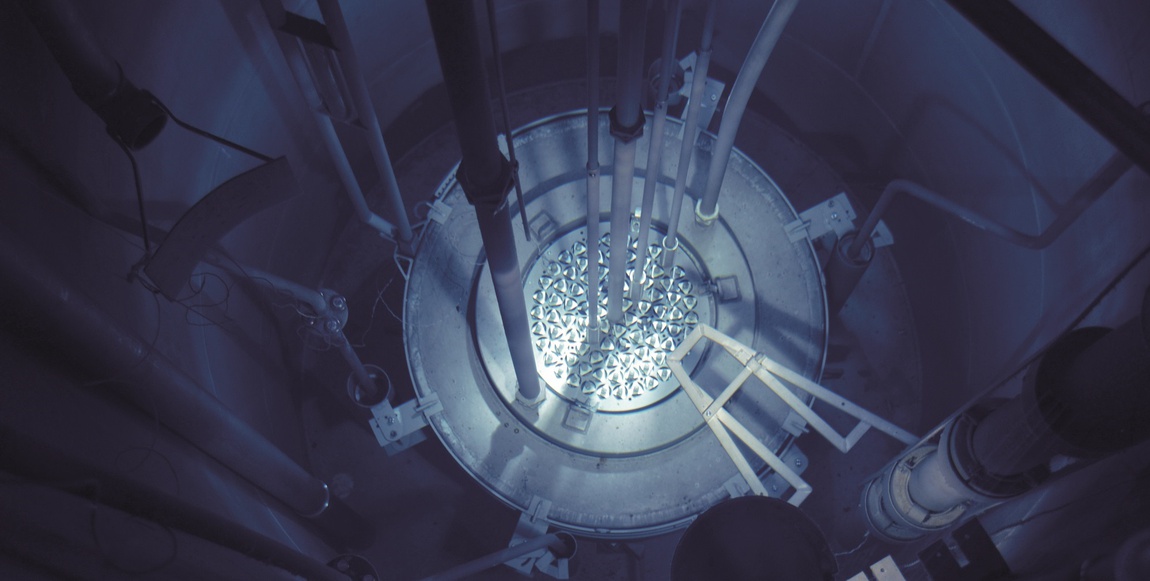
- TRIGA IPR-R1 Reactor | Photo: Antônio P. Santiago/CDTN

History of CDTN
As the Radioactive Research Institute (IPR), the CDTN was founded at the UFMG School of Engineering in 1952, after the then Governor of Minas Gerais, Juscelino Kubitscheck, appointed a group to study the establishment of an ‘atomic center’, with the participation of professors Francisco de Assis Magalhães Gomes, Djalma Guimarães, Domício de Figueiredo Murta and Eduardo Schmidt Monteiro de Castro. The initial activities of the new Institute included research into radioactive mineral occurrences and studies in nuclear physics and chemistry, metallurgy and materials of nuclear interest. Its TRIGA (Training, Research, Isotopes and General Atomic) Mark 1 research reactor, dedicated to research, radioisotope production and personnel training, was inaugurated in 1960.
The IPR became part of the National Nuclear Energy Plan in 1965, following the signing of an agreement between UFMG and CNEN.
Separated from UFMG and transferred to the Brazilian Nuclear Technology Company (CBTN) in 1972, it added the development of nuclear technology to its goals. In 1974, it was incorporated by the state-owned company Empresas Nucleares Brasileiras S/A (NUCLEBRÁS), and in 1977, its name was changed to the Nuclear Technology Development Center, with the role of supporting NUCLEBRÁS units in absorbing the nuclear technology transferred under the Brazil-Germany agreement (1974-1988). During this period, the CDTN was heavily involved in uranium prospecting, licensing of mining facilities, uranium ore processing and fuel element manufacturing, as well as training of reactor operators for the Angra 1 and 2 Nuclear Power Plants. During this period, the development of technology for solidifying low-level radioactive waste from the Angra 1 and 2 plants and the technical support for the implementation of the uranium enrichment plant in Resende, RJ, were carried out. Also noteworthy in the 1980s was the cooperation with German institutions (KWU, NUKEM, KFA) for studies on the use of thorium in nuclear power reactors of the Angra 1 type, a project that was successful in its first phase, having reached the irradiation test of the fuel developed in a research reactor.
With the dissolution of NUCLEBRÁS in 1988, it returned to being part of CNEN, focusing more on research, development and specialized training in the nuclear field and related areas. In this new phase, the CDTN established greater cooperation with other research institutions, industry and government agencies, expanding its interaction with society. In the 1990s, laboratories were set up to consolidate this new orientation, with emphasis on Gamma Irradiation, Dosimeter Calibration and Environmental Tritium.
This new phase led to the strengthening of so-called “related” skills, which combine knowledge essential to nuclear technology brought from other areas of technology. Examples include studies on materials physics, which gave rise to nanotechnology laboratories, including carbon chemistry and nanobiotechnology, and the column flotation process for mineral concentration, a technology disseminated in the country by the CDTN. The applications of nuclear techniques to hydrology and hydrogeology expanded, thus consolidating, in the latter case, actions that had begun in the 1970s.
In the area of specialized training, in 2003, the CDTN started the Postgraduate Program, at the master's level, and, in 2010, the doctorate level, of significant relevance for the training of new generations of researchers. In 2020, the CDTN launched the first postgraduate specialization course (Lato Sensu) in the area of radioactive waste management.
In 2008, the institution increased its involvement in healthcare, supporting the area of Nuclear Medicine, with the installation of a Cyclotron and the implementation of the Radiopharmaceutical Research and Production Unit. The Mammography Radiation Protection Laboratory was created, focused on the quality control of these exams. It was at this same time that the CDTN became involved in the national project of the Brazilian Multipurpose Reactor (RMB) and began to exercise the technical coordination of the project of the National Repository of Low and Medium Level Radioactive Waste, later called the Nuclear and Environmental Technology Center – CENTENA.
In the following years, the CDTN sought to place special emphasis on its relationship with other Science & Technology institutions, both national and international, and on the management of technological innovation, aiming at the transfer of knowledge to society. To manage the CDTN's innovation policy, the Technological Innovation Center (NIT) was created, in accordance with Law No. 10.973/2004 and its amendments. This new legal framework enabled the CDTN to count on the support of the Research Development Foundation (Fundep), a support foundation, in the capture and management of innovation projects and the provision of technological services to companies and government agencies. Cooperation in the areas of mineral technology, nanostructured materials and environmental studies stands out. The area of nanostructured materials gained special attention at the CDTN from the 2010s onwards, with projects such as MGGrafeno, in partnership with the state-owned company CODEMGE and UFMG for the development of a graphene production process and its applications, and the implementation of the Advanced Materials and Strategic Minerals laboratory – Granioter, this one at the request of the Ministry of Science, Technology and Innovation.
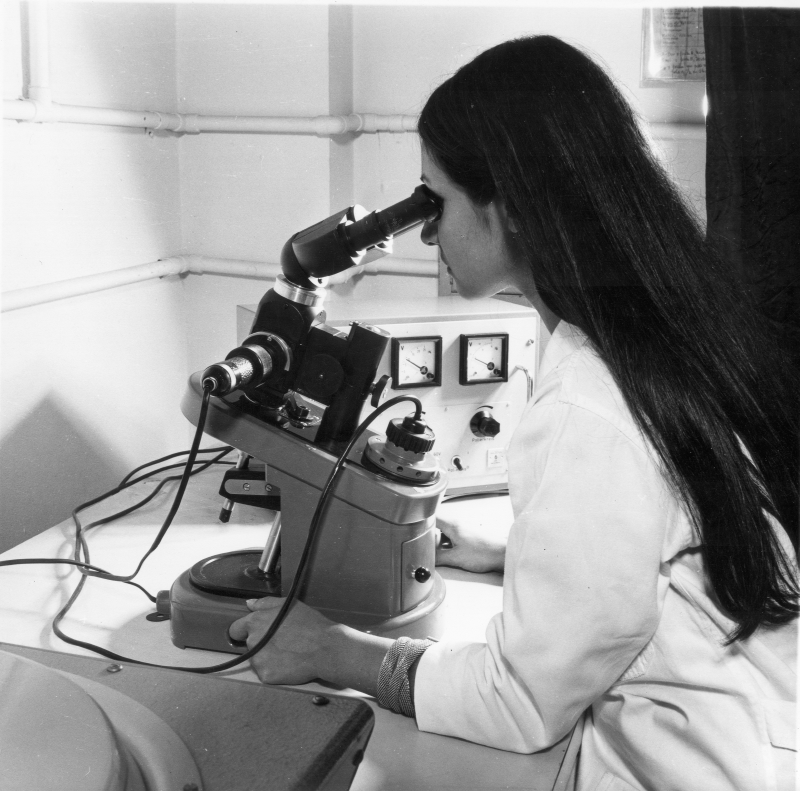
1969 Record | Photo: Archive/CDTN