Notícias
OFFICIAL STATEMENT - ICMBio clarifies that it will not euthanize Spix's macaws
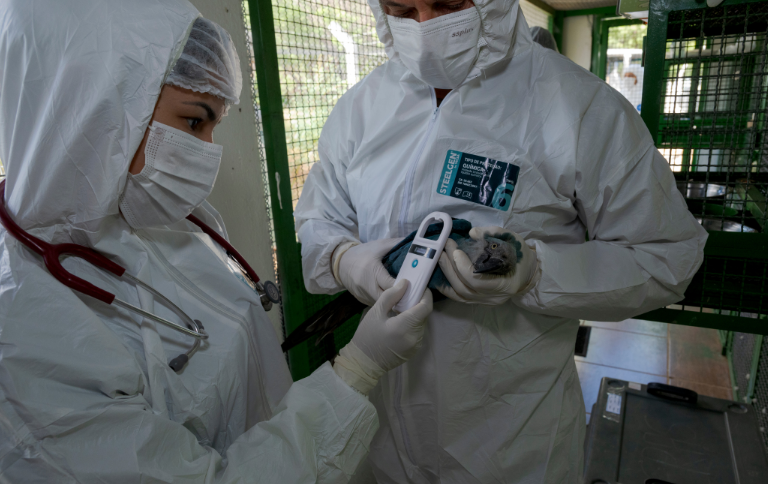
- Foto: Divulgação/ICMBio
The Chico Mendes Institute for Biodiversity Conservation (ICMBio) clarifies that claims circulating on social media about an alleged intention to euthanize Spix’s macaws (Cyanopsitta spixii) from the Criadouro Conservacionista Ararinha Azul (Ararinha Azul Conservation Breeding Facility), in Curaçá, Bahia, are false.
ICMBio further clarifies that, on May 27, there was an emergency transfer of 69 Spix’s macaws and two blue-winged macaws that had never tested positive for circovirus, from the Criadouro Conservacionista Ararinha Azul (Ararinha Azul Conservation Breeding Facility) to the Centro de Conservação e Manejo de Fauna da Caatinga (Caatinga Wildlife Conservation and Management Center - Cemafauna), of the Federal University of the São Francisco Valley (Univasf)— an institution specialized in wildlife management, located in Petrolina (PE). The operation was carried out in compliance with strict biosafety protocols, covering all stages of capture, transport, reception, and handling of the animals, with the aim of minimizing health risks and ensuring the well-being of the birds.
The measure aimed to separate birds that tested positive from those that tested negative for circovirus and to increase sanitary safety, ensuring the health and well-being of the Spix’s macaws that showed no signs of the virus.
The 34 macaws that tested positive for circovirus remain at the Ararinha Azul breeding facility in Curaçá, under the custody and care of the company. According to ICMBio, these birds have high scientific value, will not be subjected to euthanasia, and may contribute to understanding the dynamics of circovirus in neotropical species and support the development of more effective health management protocols. Thus, ICMBio reaffirms that the birds under its care are being managed under strict protocols focused on monitoring and research.
Psittacine circovirus (affecting macaws, parrots, and parakeets) is a disease originating in Australia and is considered one of the most severe for birds, as it can affect feathers and the beak, increase chick mortality, and cause immunosuppression in infected birds, facilitating the occurrence of other diseases. Circovirus has no cure and may progress slowly and steadily, leading to long periods of suffering. Despite this, the virus does not infect humans or production birds.
The Institute reiterates its commitment to transparency and advises the public to always seek information from its official channels.
Comunicação ICMBio
comunicacao@icmbio.gov.br
(61) 2028-9280