COP30: Brazil at the Heart of the Global Climate Agenda
The 30th Conference of the Parties to the United Nations Framework Convention on Climate Change (COP30) will take place from November 10 to 21 in Belém, in the state of Pará, at the heart of the Amazon.
The Conference will bring together heads of state, ministers, diplomats, UN representatives, scientists, business leaders, NGOs, artists, activists, and other members of civil society from more than 190 countries to deliberate on actions to combat climate change.
Brazil, which previously hosted Eco-92 and Rio+20, will once again have the opportunity to reaffirm its leadership role in global discussions on climate change and sustainability.
The main topics to be addressed include:
- Reduction of greenhouse gas emissions.
- Adaptation to climate change.
- Climate finance for developing countries.
- Renewable energy technologies and low-carbon solutions.
- Preservation of forests and biodiversity.
- Climate justice and the social impacts of climate change.
The event will build on the Paris Agreement, signed at COP21, and on the discussions from previous conferences. The goals of limiting global temperature rise to 1.5°C and fulfilling climate finance commitments will remain central issues for assessing progress since COP29 and driving new collective action.
MinC at COP30
The participation of Brazil’s Ministry of Culture (MinC) at COP30 places culture at the center of the global climate agenda, recognizing that a sustainable future depends on protecting territories, cultural heritage, memories, and ways of life.
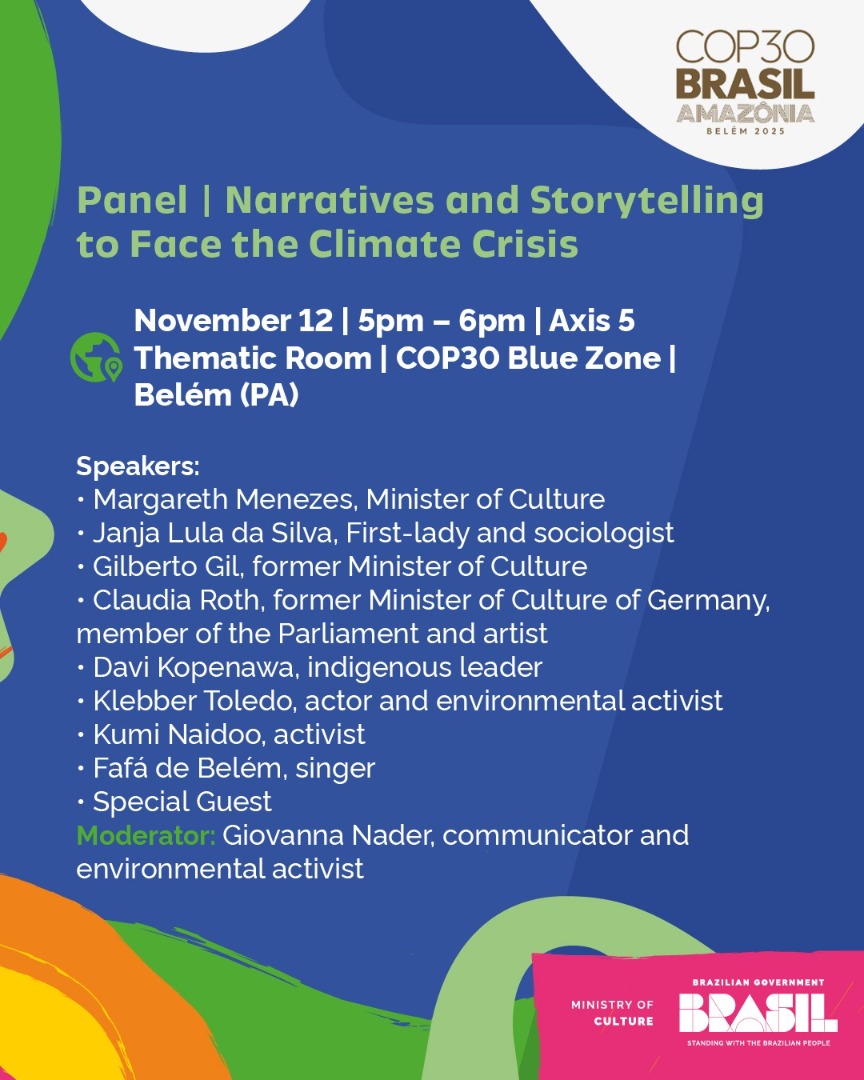
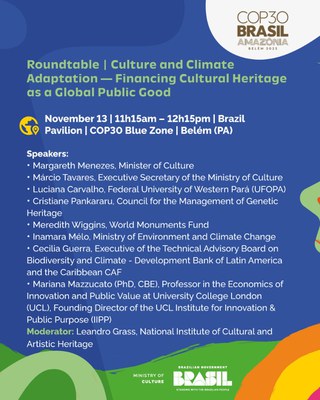
Throughout the conference, MinC will promote a range of initiatives, alongside events led by the National Institute of Historic and Artistic Heritage (Iphan) and the Secretariat for Citizenship and Cultural Diversity (SCDC). Key topics will include cultural heritage, climate justice, funding to help cultural heritage adapt to climate change, and the role of narratives in mobilizing society in the face of the climate crisis.
This presence conveys a clear message: culture is not secondary — it is central to building inclusive and effective solutions for tackling climate change.
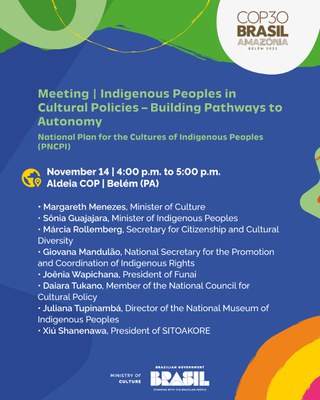
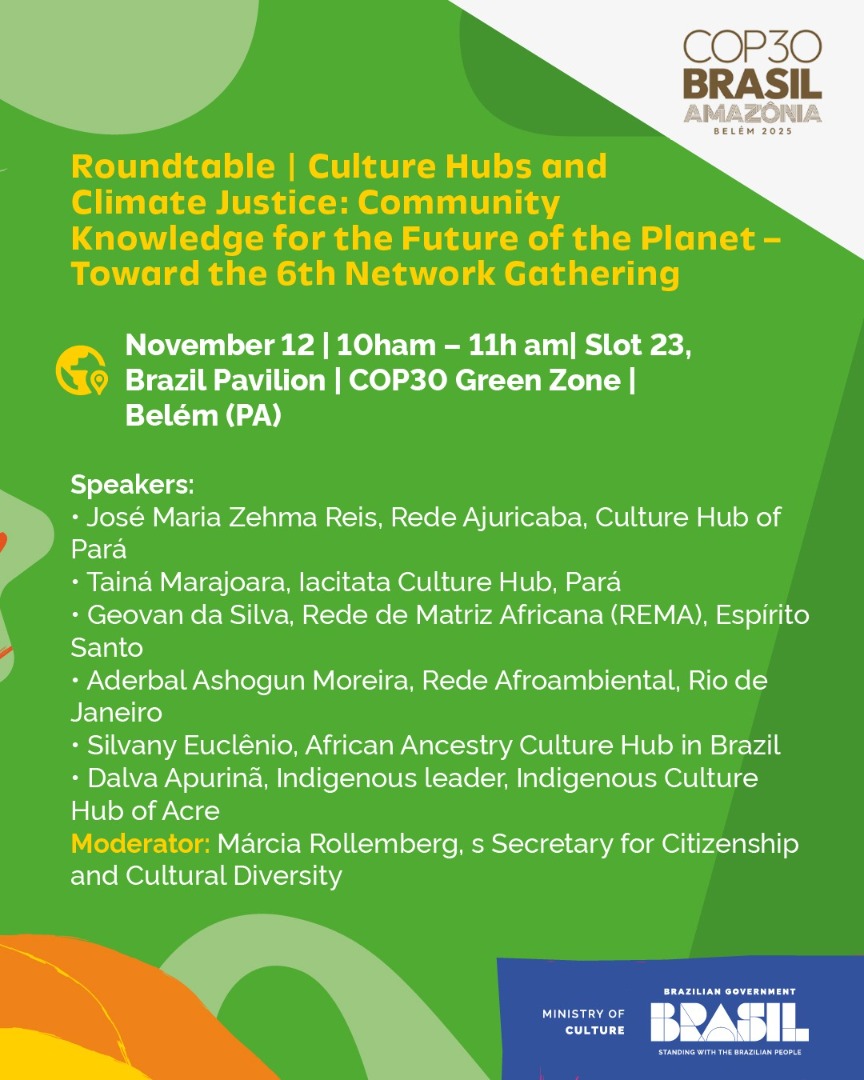
The roundtables and panels will bring together Indigenous leaders, international experts, public officials, artists, and activists, offering complementary perspectives on climate adaptation, cultural assets as shared human heritage, and community knowledge for shaping possible futures.
With this ambitious agenda, the Ministry of Culture strengthens the dialogue between traditional knowledge, science, and public policy — positioning Brazil as a global reference in integrating culture and climate on the international stage.
Schedule
Day 11/12/2025
|
|
Day 11/13/2025
|
|
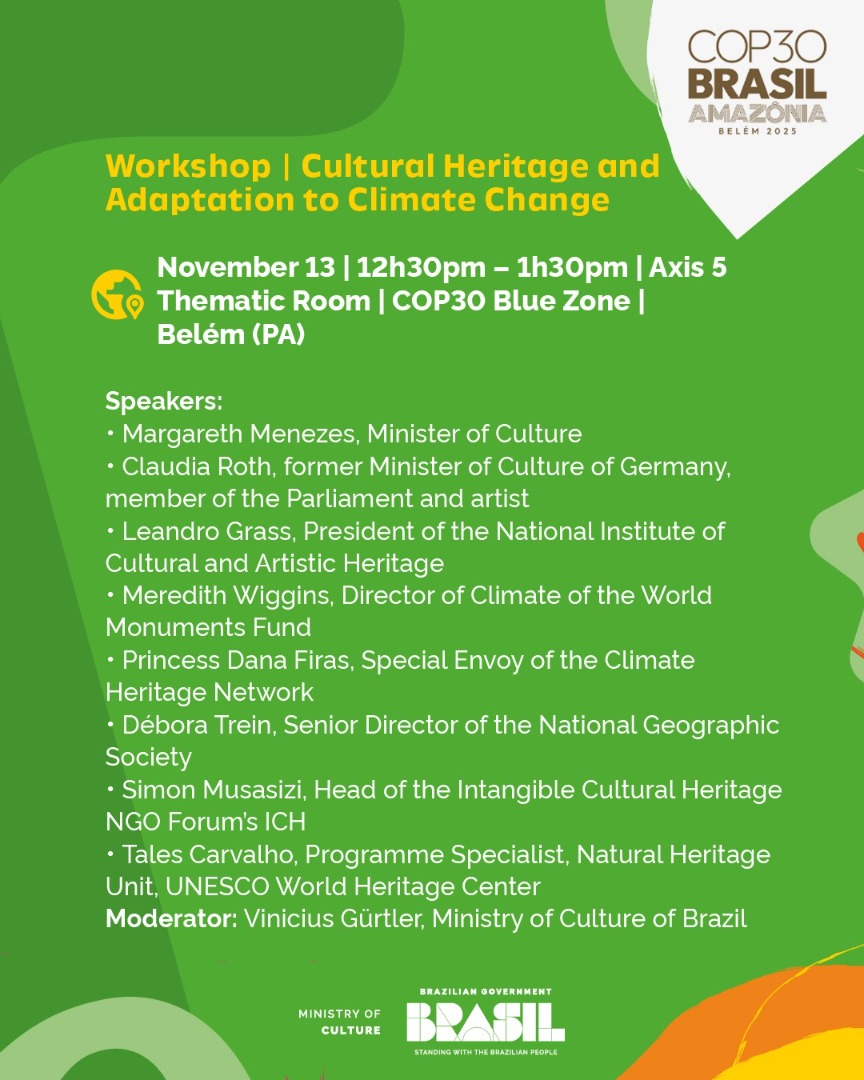
Day 11/14/2025
|