
Año 20 - Nº 230 - septiembre 2025


Sitios


Congresos

Revistas
Publicaciones
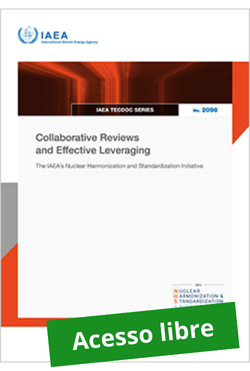
Collaborative Reviews and Effective Leveraging
IAEA-TECDOC-2098 ¦ English ¦ 66 pages ¦ Date published: 2025
This TECDOC was developed by the Nuclear Harmonization and Standardization Initiative Regulatory Track and offers comprehensive approaches for the cooperation of regulatory bodies in the review of advanced reactors and particularly small modular reactors. This report focuses on how regulatory bodies can effectively utilize other regulatory bodies' reviews and how they can work together while independently reviewing a design against national requirements. This document is informed by valuable insights from previous and ongoing multinational regulatory review activities and other international efforts on harmonization. It is an invaluable resource for regulatory bodies, technical support organizations and industry organizations involved in the pre-licensing and licensing of advanced reactors
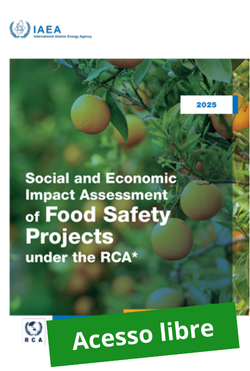
Social and Economic Impact Assessment of Food Safety Projects under the RCA
IAEA/PAT/009 ¦ English ¦ 127 pages ¦ Date published: 2025
This report evaluates the social and economic impacts of food safety programmes implemented from 2020 to 2024, supported by the IAEA under the Regional Cooperative Agreement for Research, Development and Training related to Nuclear Science and Technology for Asia and the Pacific (RCA). It is one of four thematic assessments examining the application of nuclear science and technology in air quality monitoring, food safety, isotope hydrology and nuclear medicine. Drawing on evidence from 19 participating State Parties, IAEA administrative data, expert analysis, five success case stories and a comprehensive cost-benefit assessment, the report illustrates how technical cooperation in food safety has advanced sustainable development across Asia and the Pacific. This publication highlights the achievements of the regional collaboration, delivering results that exceed what individual countries could achieve alone. It offers a compelling demonstration of science in action, advancing health and environmental and economic benefits through the peaceful application of nuclear science and technologies under RCA programmes.
Environment at a Glance Indicators
OECD Publishing, Paris, Jun 2025
This new web format for Environment at a Glance Indicators provides real-time interactive on-line access to the latest comparable OECD-country data on the environment from the OECD Core Set of Environmental Indicators – a tool to evaluate environmental performance in countries and to track the course towards sustainable development. The web version allows users to play with the data and graphics, download and share them, and consult and download thematic web-books. These indicators provide key messages on major environmental trends in areas such as climate change, biodiversity, water resources, air quality, circular economy and ocean resources.
Developing a Roadmap for the Commercial Deployment of Nuclear Hydrogen Production
IAEA Nuclear Energy Series No. NR-G-4.1 ¦ English ¦ STI/PUB/2096 ¦ 180 pages ¦ Date published: 2025
Developing a roadmap for the commercial deployment of nuclear hydrogen production provides a useful management tool for planning and strategizing the development of nuclear hydrogen projects. This publication covers the role of the hydrogen economy in global decarbonization efforts, as well as the potential that nuclear energy has in supporting the production of hydrogen for which high increases in demand are predicted. The publication is intended for experts in hydrogen and energy decarbonization using hydrogen, interested Member States and stakeholders in nuclear hydrogen projects, including executives and strategic decision makers within utilities currently operating nuclear power plants, and for policy makers and end users.
A Holistic Process for Decision Making on Decommissioning and Management of Complex Nuclear Sites
OECD. Nuclear Energy Agency ¦ English ¦ NEA/DLM/R(2024)4¦ 109 pages ¦ Date Published: July 2025
The Nuclear Energy Agency (NEA) Expert Group on a Holistic Process for Decision Making on Decommissioning and Management of Complex Sites (HDCS) was created on 25 June 2020 by the NEA through its Committee on Decommissioning of Nuclear Installations and Legacy Management (CDLM). HDCS serves as a forum for international exchange and co-operation on decision making for complex sites with different levels of uncertainties. In agreement with the mandate of the HDCS, the objective of this expert group is to develop a holistic process for decision-making considering both decommissioning and legacy aspects, and to provide guidelines to allow an integral progression from recognition to resolution to decommission and manage complex sites. The HDCS expert group started on the basis of the work performed from 2016 to 2019 by the Expert Group on Legacy Management (EGLM) established by the NEA, through its Committee on Radiological Protection and Public Health (CRPPH). The specific goal of the EGLM was to develop a practical and harmonised approach to the regulation of nuclear and radiological legacy sites and installations. The results of the EGLM were published in 2020 in the report Challenges in Nuclear and Radiological Legacy Site Management - Towards a Common Regulatory Framework (NEA, 2020). This report was supported by the development of 13 case studies considering a large set of situations and countries, and site visits to Sellafield in the United Kingdom and to the Andreeva Bay site for temporary storage of spent nuclear fuel on the Kola Peninsula, Russia. During the four-year period of the mandate of the HDCS expert group, a progressive work methodology was developed to address the possible steps of a holistic approach, sharing results within other NEA committees and forums but also in the framework of international events. To support the development of a holistic process, further insights have been gained from additional case studies provided by Canada, France, the United Kingdom and the United States to address both decommissioning and legacy aspects. These test cases cover different kinds of situations and sites with significant experience. The expert group prepared the present report, with the support of the NEA Secretariat, describing the results obtained, presenting the supported case studies collected, and integrating the external feedback received during dissemination events. The principal outcome is the description of the main steps of a holistic process, as shown below (Figure ES1) and addressed in the body of this report.
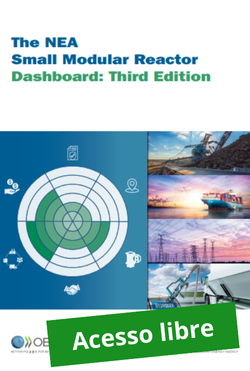
The NEA Small Modular Reactor Dashboard: Third Edition
OECD. Nuclear Energy Agency ¦ English ¦ NEA No. 7737¦ 260 pages ¦ Date Published: July 2025
All low-carbon solutions will be required to achieve the world's net zero targets. Nuclear energy has a role to play in meeting this need. A wave of innovation in small modular reactors (SMRs) is advancing quickly with the potential to help decarbonise hard-to-abate sectors. Progress is real and is positioned to accelerate pathways to net zero. SMRs could replace coal on-grid, fossil fuel cogeneration of heat and power for heavy industry, diesel at off-grid mines, as well as producing hydrogen and synthetic fuels. Looking beyond technical feasibility, The NEA SMR Dashboard defines criteria for assessing real progress in six dimensions of readiness: licensing, siting, financing, supply chain, engagement and fuel. In the NEA SMR Dashboard: Second Edition, the NEA presented assessments of the progress of 56 SMRs. In 2023, the NEA presented assessments of the progress of 42 SMRs in two volumes.For this third edition of the NEA SMR Dashboard, the NEA’s comprehensive global review identified 127 SMR technologies around the world. Seventy-four SMRs are included in this edition of the NEA SMR Dashboard; these are the SMRs for which the requisite publicly available information was assessable and for which the relevant designers were willing to participate. The other 53 include approximately 25 that are under development but requested not to be included in the SMR Dashboard at this time but may be included in the future; the remainder include SMR technologies that are not under active development, may be without human or financial resources, or have been cancelled or paused indefinitely. The assessments in this edition of the SMR Dashboard are based on progress up to a cutoff date of 14 February 2025.
Evaluation of Physical Protection Systems at Nuclear Facilities
IAEA Nuclear Security Series No. 49-T ¦ English ¦ STI/PUB/2104 ¦ 130 pages ¦ Date published: 2025
The physical protection system (PPS) at a nuclear facility consists of a range of nuclear security measures involving personnel, procedures and equipment. Ensuring that the PPS is operating as designed is crucial for the security of the nuclear material and of the facility itself. An evaluation of the individual elements of a facility’s PPS, as well as the system as a whole, provides a measure of the system’s effectiveness. This publication provides technical guidance for Member States, competent authorities and operators on evaluating the effectiveness of such systems to protect nuclear material in use and in storage against unauthorized removal, and to protect nuclear material and facilities against sabotage.
Advances in Fabrication Technologies for Power Reactor Fuels
IAEA-TECDOC-2097 ¦ English ¦ 210 pages ¦ Date published: 2025
Over the next decade, further advancements in nuclear fuel fabrication technology are necessary to support the near-term deployment of advanced fuels for both large nuclear power plants and small modular reactors, including GEN III/III+ and GEN IV reactors. This publication offers a comprehensive overview of the current state of technological progress in fuel fabrication across various stages, including powder processing and reconversion, sintering, pelletizing, cladding, and the production of fuel rods and assembly components. It aims to serve as a valuable resource for ongoing activities and to support preparations for the deployment of new fabrication technologies.
Outlook for Nuclear Energy in Africa
IAEA/PAT/011 ¦ English ¦ 36 pages ¦ Date published: 2025
Africa faces rising energy demands and energy security and climate challenges. The IAEA’s new publication, developed for South Africa’s 2025 G20 Presidency, highlights nuclear energy as a transformative solution. With only one operational nuclear power plant on the continent and over 500 million people lacking electricity, nuclear power offers a clean, reliable and scalable path to energy security and sustainable development. The publication explores the growing interest in nuclear energy across more than 20 African countries, the role of small modular reactors, and the continent’s strategic uranium resources. It emphasizes the importance of nuclear infrastructure development, financing, regional cooperation and IAEA support to Member States. Case studies from Egypt, Ghana, Kenya and Nigeria showcase progress and potential in the development of nuclear energy on the continent. With innovative financing and international collaboration, nuclear energy can help to power Africa’s future and ambitions.
Rapport d’Activité de l’Institut de Radioprotection et de Sûreté Nucléaire
ASNR ¦ 40 pages ¦ Date published: 2025
Le rapport d’activité 2024 de l’Institut de radioprotection et de sûreté nucléaire (IRSN) présente les faits marquants des principales missions de l’IRSN sur l’année 2024. Au 1er janvier 2025, l’Autorité de sûreté nucléaire et de radioprotection (ASNR) créée par la loi relative à l’organisation de la gouvernance de la sûreté nucléaire et de la radioprotection du 21 mai 2024 a démarré. Elle est issue de la réunion de l’Autorité de sûreté nucléaire (ASN) et de l’Institut de radioprotection et de sûreté nucléaire (IRSN). Autorité administrative indépendante, l’ASNR assure désormais, au nom de l’État, le contrôle des activités nucléaires civiles en France. Elle exerce également les missions de recherche, d’expertise, de formation et d’information des publics dans les domaines de la sûreté nucléaire et de la radioprotection.