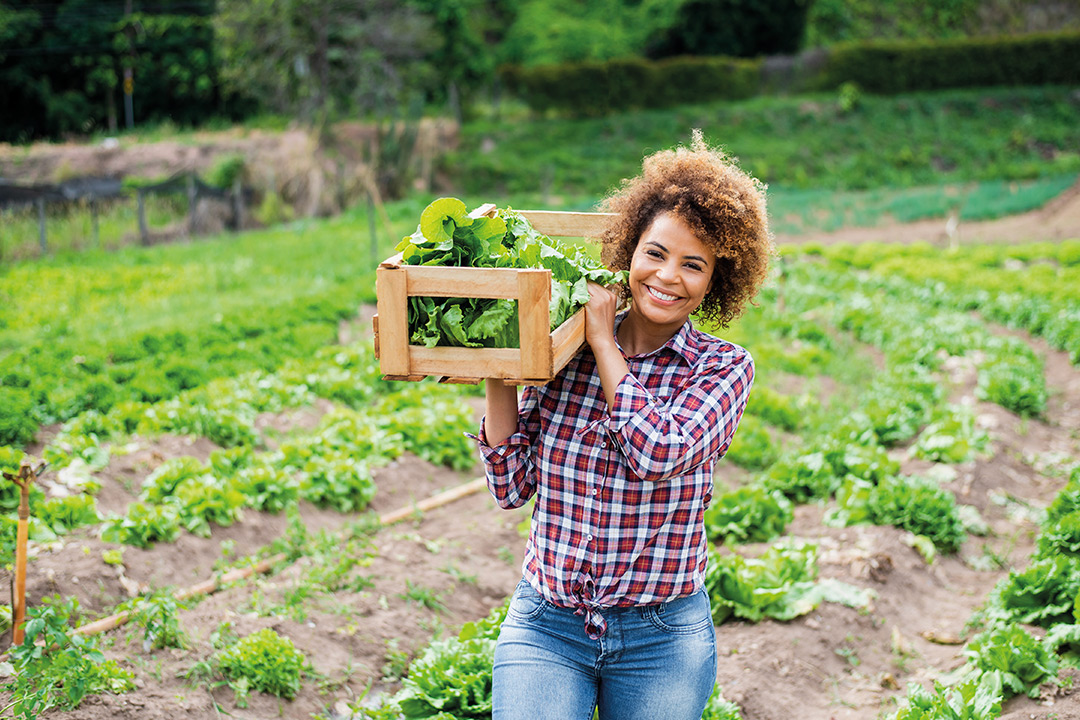
Social Biofuel Seal: stronger support for family farming
To strengthen family farming and more effectively achieve the social objectives of the biodiesel policy—particularly with regard to harnessing the potential of the North, Northeast, and Semi-Arid regions—the Federal Government completed, in 2024, the restructuring of the Social Biofuel Seal, a process initiated by the National Energy Policy Council (CNPE) in 2023.
Created in 2004 during the first administration of President Luiz Inácio Lula da Silva, the program grants a seal to biodiesel producers that meet requirements for social inclusion and regional development focused on family farming.
To this end, companies receive tax incentives and priority access to the biodiesel market. The restructuring forms part of the resumption of the National Program for the Production and Use of Biodiesel, also created in 2004.
The seal aims to encourage small farmers’ participation in the biodiesel production chain, ensuring promotion, technical assistance, and rural extension, as well as the purchase of products from those registered in the National Program for Strengthening Family Agriculture (Pronaf).
The initiative also contributes to diversifying biodiesel feedstock sources, reducing dependence on soybeans, and promoting alternative crops such as palm oil. This measure aligns with the schedule for biodiesel blending in diesel fuel.
The biodiesel production chain is being consolidated into a sustainable model that integrates renewable energy, social responsibility, and economic development. In its current format, the program fosters a business environment more conducive to sector investment, provides greater legal certainty, and reduces bureaucratic obstacles for companies.
The restructuring process began on 03/20/2023, through a CNPE resolution that set promotion and acquisition targets under the program for the North, Northeast, and Semi-Arid regions, which must be at least:
- 10% in 2024
- 15% in 2025
- 20% from 2026 onward
To operationalize these targets, the Ministries of Mines and Energy (MME) and Agrarian Development and Family Farming (MDA) issued an ordinance establishing guidelines to restructure the seal, with the aim of increasing promotion and acquisition of raw materials from family farms in these regions.
The guidelines—based on transparency, the productive inclusion of family farming, and the integration of public policies for energy and food security—were essential to creating a regulatory framework conducive to meeting the targets with minimal social and sectoral impact.
This new regulatory framework was formalized by Decree No. 11,902/2024, signed by President Luiz Inácio Lula da Silva and the Ministers of Mines and Energy, Alexandre Silveira, and Agrarian Development and Family Farming, Paulo Teixeira. The program also maintains a partnership with the Ministry of Agriculture and Livestock (Mapa).
The previous decree regulating the seal restricted biodiesel producers seeking certification to purchasing raw materials for national biodiesel production solely from family farms, which prevented many producers from accessing the program.
The main change introduced by Decree No. 11,902/2024 was the expansion of the range of products that could be purchased from family farms in the North, Northeast, and Semi-Arid regions. This adjustment allows greater use of local resources and encourages the cultivation of new crops in these areas, which face persistent poverty and social challenges.
The expansion of biodiesel use in the energy matrix, coupled with the strengthening of family farming, aligns with the Fuel of the Future Law and supports sustainable mobility and a fair, inclusive energy transition. It will also help reduce the carbon intensity of the transport sector while generating jobs, income, and opportunities for entrepreneurs and self-employed workers.
HOW IT WORKS
- Biodiesel producers holding the Social Biofuel Seal must support family farming by purchasing a minimum percentage of raw materials (such as soybeans, castor beans, palm, and sunflowers) from farmers registered with Pronaf. They are also required to provide these farmers with technical assistance and rural extension services. Part of this support may also be delivered through training, donations, or purchases of other family farming products from the North, Northeast, and Semi-Arid regions.
- In return, companies are guaranteed priority access to the mandatory biodiesel market and may obtain reductions in PIS/Pasep and Cofins tax rates, making biodiesel more competitive.
- To obtain the seal, biodiesel producers must meet requirements such as formalizing contracts with family farmers and providing them with technical assistance and training.
OBJECTIVES
The objectives of the Social Biofuel Seal are to strengthen and sustainably develop family farming in order to:
- Diversify production
- Reduce inequalities
- Mitigate climate impacts
- Promote energy security and food security
- Integrate family farming into the biodiesel production chain and increase its role in food production
- Strengthen oilseed and food production chains in the North, Northeast, and Semi-Arid regions to improve productivity and competitiveness in family farming
- Promote projects for research, innovation, and the development of new oilseed sources integrated with family farming and agroecological transition initiatives.
NUMBERS
- Expenditure by biodiesel producers on family farming through the Social Biofuel Seal: R$ 6.6 billion
DATES
- 03/20/2023 – Resolution Nº. 3/2023 of the National Energy Policy Council (CNPE)
- 08/03/2023 – Interministerial Ordinance MME/MDA Nº. 2/2023
- 01/30/2024 – Decree Nº. 11,902/2024
- 06/27/2024 – MDA Ordinance Nº. 28/2024
Published: November 12, 2025
Photo credit: Getty Images