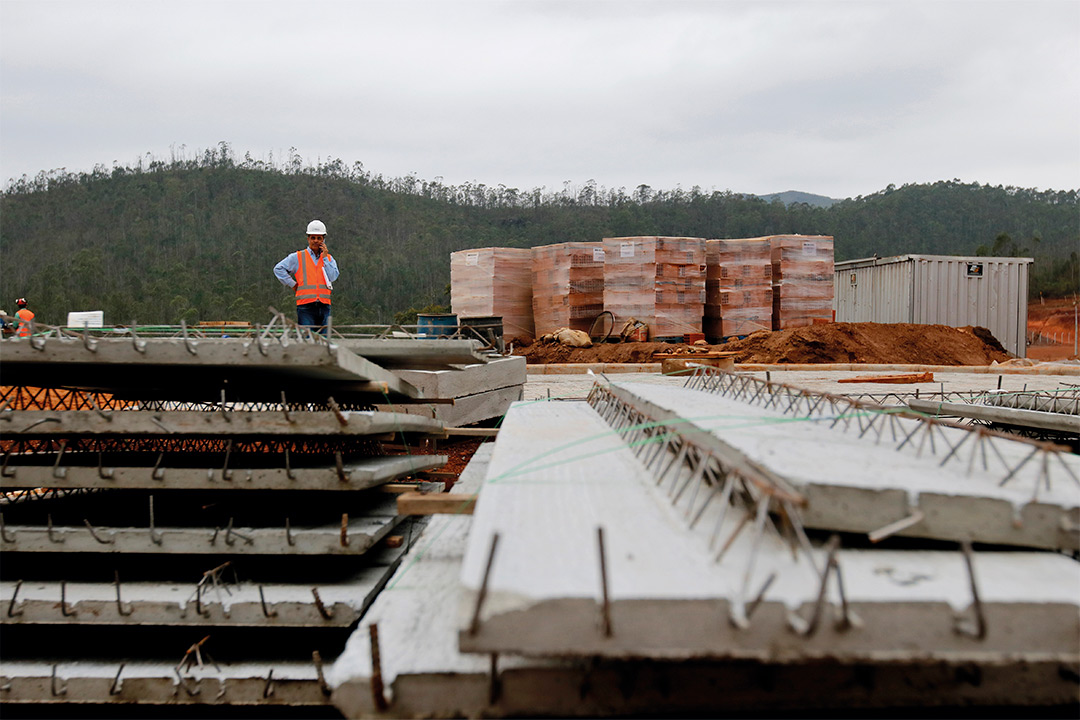
Rights of populations affected by dams
Brazil now has comprehensive legislation to protect the rights of populations affected by dams, with a detailed set of obligations for the companies responsible and guarantees for individuals and families impacted by mining and hydroelectric projects.
On 12/15/2023, Law No. 14,755 was signed by President Luiz Inácio Lula da Silva, with the participation of the Ministry of Mines and Energy (MME), other Federal Government agencies, the National Congress, and the Movement of People Affected by Dams.
The legislation establishes the obligations of companies for compensation and reparations. In addition to disaster prevention, its goal is to prevent recurring violations of rights and excessive delays in compensating families and repairing the environment, as seen in the devastating tragedies of Mariana and Brumadinho, in Minas Gerais.
Among other provisions, with an emphasis on social inclusion and the protection of the most vulnerable, the law guarantees the following rights:
- Compensation for material losses
- Collective resettlement as a priority option
- Independent technical advice at the developer’s expense
- Emergency assistance in cases of accidents or disasters
- Compensation for moral, individual, and collective damages
- Housing conditions equivalent in size and construction quality to the previous ones
- Implementation of rural or urban resettlement projects
- Bookkeeping and registration of resettlement properties.
The law formally recognizes those affected by dams in Brazil and establishes rights for these populations, such as individual and collective compensation. It also ensures social participation in negotiations with public authorities and private developers, not only in disaster cases but also during dam construction and decommissioning.
In general terms, the law has brought the following advances, among others:
- Creation of the National Policy on the Rights of Populations Affected by Dams (PNAB)
- Specification of the rights of Populations Affected by Dams (PAB)
- Establishment of the Program for the Rights of Populations Affected by Dams (PDPAB)
- Establishment of rules for social responsibility of the entrepreneur.
These guidelines apply both preventively, through environmental licensing of dams, and in situations arising from leaks or structural failures.
Beyond ensuring the rights of families, the law also reinforces proper environmental licensing and the safety of communities living near dams, particularly traditional and low-income populations.
The rights program must finance specific initiatives targeting women, the elderly, children, people with disabilities, individuals in vulnerable situations, indigenous peoples, traditional communities, and fishermen.
DEFINITION
The standard defines PAB as all those individuals or families subject to one or more of the following impacts caused by the construction, operation, decommissioning, or failure of dams:
- Loss of property or possession of real estate.
- Devaluation of real estate due to its location near or downstream of these structures.
- Loss of productive capacity of land and natural elements of the landscape that generate income, directly or indirectly including the remaining portion of partially affected property, impacting the income, subsistence, or way of life of populations.
- Loss of products or areas for fishing or natural resource management.
- Prolonged interruption or alteration in water quality that affects supply
- Loss of sources of income and employment.
- Changes in people’s habits, as well as loss or reduction of economic activities and exposure to negative social, cultural, and psychological effects due to removal or evacuation in emergency situations.
- Changes in the way of life of indigenous populations and traditional communities.
- Disruption of access to urban areas and rural communities.
RIGHTS
- Reparation through replacement, indemnification, equivalent compensation, and social compensation.
- Collective resettlement as a priority option, to preserve cultural and neighborhood ties prevailing in the original situation.
- Free and informed choice regarding reparation alternatives.
- Negotiation, preferably collective, regarding:
• forms of reparation
• parameters for identifying assets and improvements eligible for reparation
• parameters for establishing compensation amounts and possible remedies
• planning stages and resettlement schedules
• development of housing projects
- Independent, multidisciplinary technical assistance, chosen by the affected communities, funded by the developer and free from its interference, to guide participation in the process.
- Emergency assistance in cases of accidents or disasters, ensuring that living standards are maintained until families and individuals achieve conditions at least equivalent to those they previously had.
- Fair compensation for material losses, which—except in cases of accidents or disasters—must be prior, covering:
• the value of properties and improvements.
• lost profits, where applicable.
• monetary resources to ensure maintenance of living standards until families and individuals achieve conditions at least equivalent to those that preceded the accident or disaster.
- Reparation for moral damages, individual and collective, resulting from disruptions caused by compulsory removal or evacuation in emergencies, including:
• loss or alteration of cultural and social ties or ways of life.
• loss or restriction of access to natural resources, places of worship or pilgrimage, and sources of leisure.
• loss or restriction of means of subsistence, income, or employment.
- Rural resettlement, in accordance with the fiscal module, or urban resettlement with housing units that meet the minimum size requirements of urban planning legislation.
- Implementation of rural or urban resettlement projects through self-management processes.
- Housing conditions that, at a minimum, replicate previous ones in size and construction quality, while meeting standards suitable for vulnerable groups.
- Common areas and facilities in resettlement projects that allow for socialization and collective living, following, whenever possible, the prevailing standards in the original settlement.
- Registration and recording of properties resulting from urban and rural resettlements, or, where applicable, granting of real rights of use.
- Resettlement on economically viable land, preferably in the region and municipality inhabited by the PAB, after assessment of its agro-economic and environmental feasibility by the Local PNAB Committee.
- Prior discussion and approval of the resettlement project by the Local PNAB Committee, including location, identification of land parcels, infrastructure, and collective-use facilities, as well as the choice and allocation of lots.
- Formulation and implementation of economic and social recovery and development plans, without prejudice to individual or collective reparations due, aimed at restoring or, if possible, integrating local and regional productive arrangements and chains that ensure employment opportunities compatible with qualifications and experience, while maintaining or improving living conditions.
- Receipt by each person, family, or registered organization of a copy of all relevant information concerning them, within 30 days after updating their registration for reparation purposes.
- Public consultation on the list of all persons and organizations registered for reparation purposes, along with aggregated registry information, while preserving privacy and personal data.
- Reparations must recognize the diversity of situations, experiences, vocations, preferences, cultures, and specificities of groups, communities, families, and individuals. They must also be subject to discussion, negotiation, and approval by the Local PNAB Committee, and may take the following forms:
• Replacement – when destroyed property or infrastructure, or impaired social conditions, are replaced or reconstituted.
• Indemnification – when reparation takes the form of monetary compensation.
• Equivalent compensation – when other goods or situations are provided that, although not directly replacing the lost property or situation, are considered materially or morally satisfactory.
• Social compensation – when reparation takes the form of material benefits in addition to other forms of reparation.
- In applying this law, the principle of centrality of the victim’s suffering must be observed, ensuring fair reparation for those affected and the prevention or reduction of similar harmful events.
RURAL FAMILY ECONOMY
The rights of PABs who farm under a family economy regime, whether as owners, sharecroppers, or squatters, are as follows:
- Compensation for material losses, including the value of land, improvements, crops, and damages due to contract interruption
- Compensation for compulsory displacement resulting from resettlement
- Compensation for immaterial losses, with the establishment of technical assistance programs necessary for rebuilding lifestyles and social, cultural, and economic networks, including psychological, welfare, agronomic, and other relevant support.
PROGRAM
In cases provided for by law, a PDPAB must be created at the expense of the developer, with the objective of ensuring the established rights through specific programs directed at:
- Women, the elderly, children, people with disabilities, and vulnerable groups, as well as domestic and farm animals
- Indigenous populations and traditional communities
- Health, environmental sanitation, housing, and education impacts in municipalities that will receive project workers or those affected by a potential leak or dam failure
- Restoration of losses resulting from reservoir filling, leakage, or dam failure
- Fishermen and fishing activities
- Communities receiving resettlement or relocated families.
DATES
- 12/15/2023 – Law No. 14,755 sanctioned
- 03/14/2024 – Discussion group initiated by the MME for the regulation of the PNAB