Aquaculture for Food Security
On 11/06/2024, Ministers Alexandre Silveira (Mines and Energy) and André de Paula (Fisheries and Aquaculture) signed a Technical Cooperation Agreement (ACT) to expand fish and food production in hydroelectric reservoirs.
The goal is to foster the sector’s sustainable development, making better use of Union waters to generate jobs, income, and food security, while also encouraging the use of renewable energy.
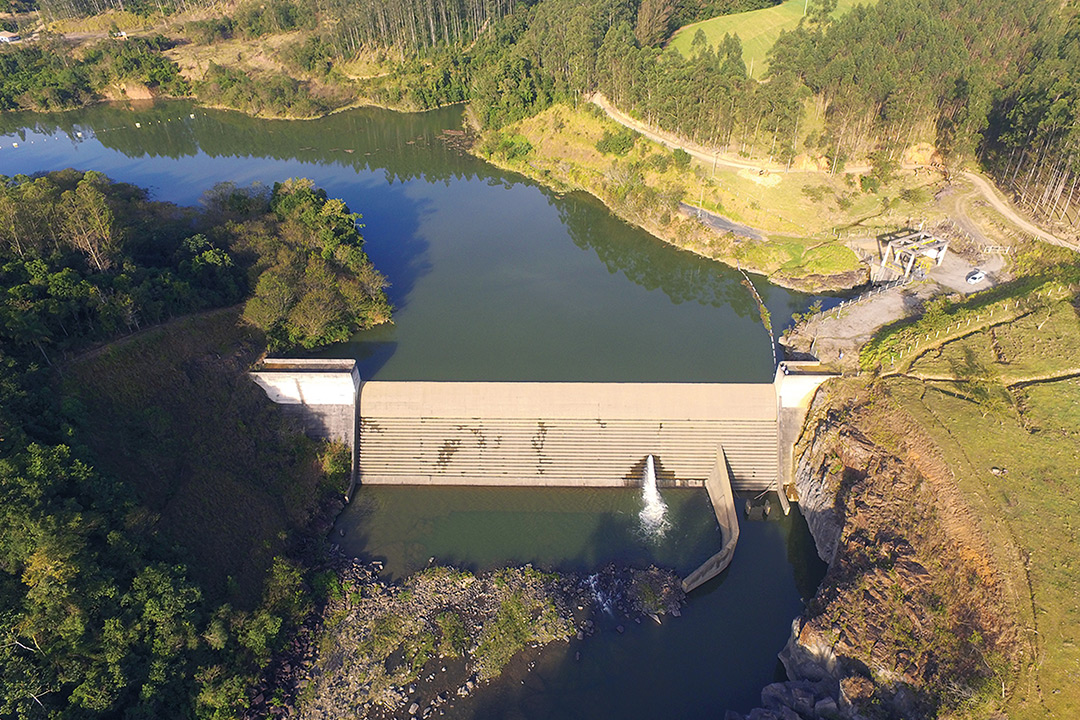
The initiative aims to increase fish production by tapping into the potential of the 74 hydroelectric reservoirs across the country considered suitable for aquaculture. It aligns with Brazil’s commitment to a fair and inclusive energy transition.
Aquaculture is the fastest-growing agricultural activity in Brazil, according to the Ministry of Fisheries and Aquaculture (MPA). Fish farming in net cages within federal waters has shown faster development in recent years compared to other types of aquaculture.
In 2024, aquaculture production declared in federal waters reached 148,500 tons of fish (including fish, bivalve mollusks, and algae), generating 4,126 direct jobs.
Despite its economic importance, growth in the sector faces challenges. Hydroelectric reservoirs, while primarily intended for power generation, are shared with activities such as aquaculture, supply, irrigation, navigation, and tourism. The main bottleneck is project regularization, hindered by complex procedures, overlapping regulations, and slow processes.
The Technical Cooperation Agreement will enhance federal government actions on regularization, planning, and promotion of aquaculture. It also encourages the integration of renewable energy generation into aquaculture production systems.
Additionally, the agreement strengthens governance in the use of hydroelectric reservoirs, optimizing their productive potential while minimizing risks and impacts on power plant operations.
Although fish is the world’s leading source of animal protein, Brazil’s aquaculture potential remains underexploited despite its abundance of freshwater and long coastline.
NUMBERS
AQUACULTURE IN FEDERAL WATERS (2024)
- 4,126 direct jobs
- 148,500 tons of aquatic products (fish, bivalve mollusks, and algae)
- 138,500 tons of fish
- 138,200 tons of tilapia
Source: Bulletin of Aquaculture in Federal Waters
POTENTIAL SCOPE OF THE MEASURES
74 hydroelectric plant reservoirs identified as suitable for aquaculture
DATES
- 11/06/2024 – Technical Cooperation Agreement (ACT) No. 14/2024 signed between the Ministries of Mines and Energy and Fisheries and Aquaculture, in Brasília
Published: November 12, 2025
Photo credit: Venâncio Máximo (CGT Eletrosul)