
Presentation
Revolution in the Brazilian Energy and Mineral Sector
Alexandre Silveira
Minister of State for Mines and Energy
The devastating effects of global warming are already at the doorsteps of populations around the world. What once seemed like the plot of a disaster movie or a miniseries about a bleak future has, unfortunately, drawn much closer to reality. In recent years, like many other countries, Brazil has faced the impacts of extreme weather events, including heatwaves, severe droughts, heavy rains, and destructive floods.
The energy transition has increasingly taken center stage. It has become imperative to undertake profound changes in global, national, and regional energy matrices — replacing fossil fuel–based sources, such as oil and coal, with more sustainable, low-carbon alternatives, including solar, wind, biomass, and other clean technologies.
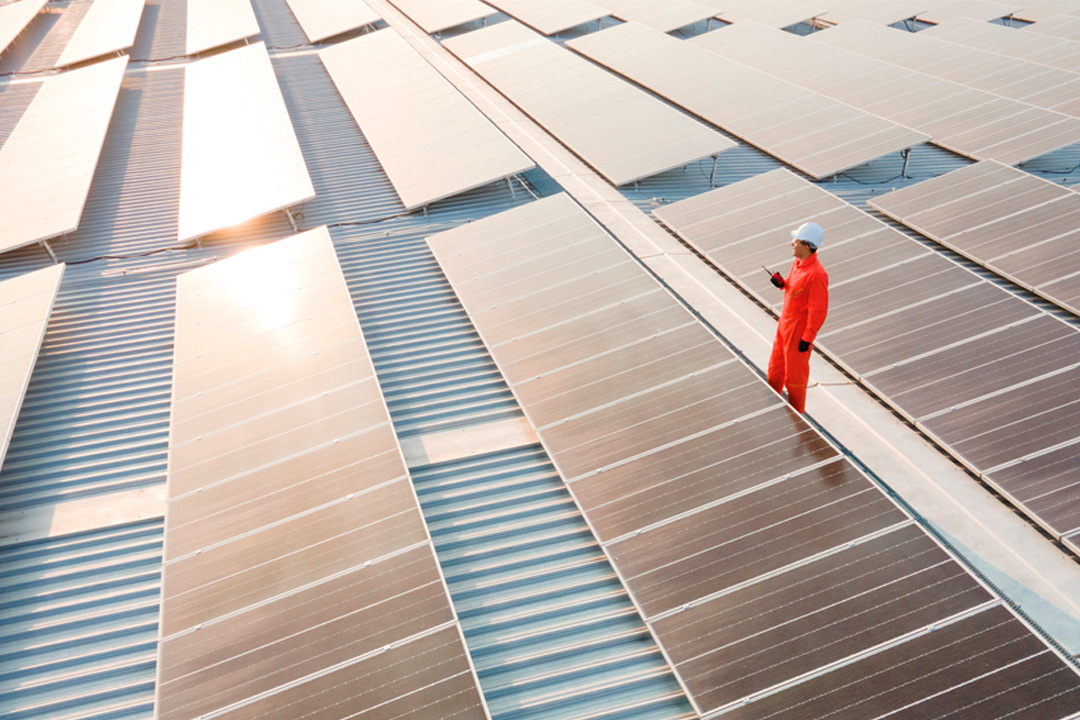
Brazil is uniquely positioned to lead the global energy transition and advance decarbonization. The country benefits from an electricity matrix that is already around 90% renewable, a formidable hydroelectric infrastructure, and global recognition for its pioneering use of ethanol in vehicles. Its soil holds a wealth of critical and strategic minerals. Across the country, wind turbines dominate skylines and vast stretches of solar panels brighten the landscape.
President Luiz Inácio Lula da Silva has embraced the energy transition with great determination, placing the full weight of the federal government behind this priority—one that is essential for today and vital for the future of humanity.
In line with these priorities, the Ministry of Mines and Energy (MME) has designed and implemented the most comprehensive set of energy transition measures ever undertaken in Brazil, setting an example for the world.
These efforts include the creation of new programs, the expansion of public policies, and the establishment of regulatory frameworks across different segments of the energy sector, alongside close coordination with private companies and civil society. Initiatives aim to guarantee energy security, reduce electricity bills, lower fuel prices, and curb waste in household, commercial, and industrial consumption.
This report addresses the actions and achievements of the MME since January 2023. These actions take place on five fronts, outlined in the main chapters, coordinated with each other and summarized below as attributes and competencies of the agency.
This report highlights the MME’s actions and achievements since January 2023. They are organized into five main areas—detailed in the following chapters—each closely interconnected and summarized below as defining attributes of the ministry.
We are talking about the Ministry of Mines and Energy...
... dedicated to the energy transition, fully committed to advancing the green economy as a response to climate change
... that prioritizes social inclusion, focused on addressing the basic needs of the most vulnerable populations
... that promotes economic development to generate jobs, income, and opportunities for entrepreneurs and the self-employed
... that employs state-of-the-art management and planning tools
... that plays a leading international role and works to attract foreign investment to Brazil.
The 36 subchapters of this report illustrate a defining feature of the approach being put forward by the current Federal Government: the energy transition should not be seen merely as a technological shift, but as a new development model with social inclusion at its core.
It is the Government of Brazil on the side of the Brazilian people. This is reflected in public policies that prioritize social justice, such as People’s Light (“Luz do Povo”), People’s Gas (“Gás do Povo”), Light for All (“Luz para Todos”), Amazon Energy (“Energias da Amazônia”), Clean Energy in My House, My Life (“Energia Limpa no Minha Casa Minha Vida”), Social Biofuel Seal (“Selo Biocombustível Social”) and Aquaculture for Food Security (“Aquicultura para a Segurança Alimentar”). In our vision of the energy transition, no one will be left behind.
In February 2025, President Lula stated that Brazil is undergoing a revolution in the energy and mining sectors. A country already described in our National Anthem as “giant by nature” is now making bold strides to improve the quality of life for its people, with the strong leadership of the Ministry of Mines and Energy. Our advances in the energy sector confirm the direction of the non-negotiable defense of national sovereignty, in the increasing certainty that Brazil belongs to Brazilians.
Full version in PDF: Brazil World Leader in Energy Transition - COP30 Edition
TABLE OF CONTENTS
- National Energy Transition Policy
- Fuel of the Future
- Legal Framework for Low-carbon Hydrogen
- Strategic minerals for the energy transition
- Legal Framework for Offshore Wind Power
- Energy Transition Acceleration Program (Paten)
- People’s Gas Program: free cylinders and health protection
- People’s Light Program: zero electricity bill
- Light for All Program
- Combating energy poverty
- Renegotiation of the Rio Doce Agreement
- Clean Energy in My House, My Life Program
- Provisional measure on renewable energies and tariff reduction
- Solidarity in the climate tragedy of the South
- Rights of populations affected by dams
- Social Biofuel Seal: stronger support for family farming
- Aquaculture for Food Security
- Gas for Employment
- Innovations in the auctions for cheaper energy
- Revitalization of the Itaipu energy transmission system
- Potencializa E&P and Equatorial Margin
- Optimization of the local content policy
- Renewal of the oil transport shipping fleet
- National Pact for More Women in Energy and Mining
- Nuclear energy
- Incentivized and infrastructure debentures
- Investments and jobs
- Ten-year Energy Plan 2034
- Renewal of distribution concessions
- Restructuring of the National Mining Agency (ANM)
- Geological mapping
- Recovery of regularization reservoirs
- Organizational chart Ministry of Mines and Energy (MME)
Published: November 12, 2025
Photo credit: Getty Images