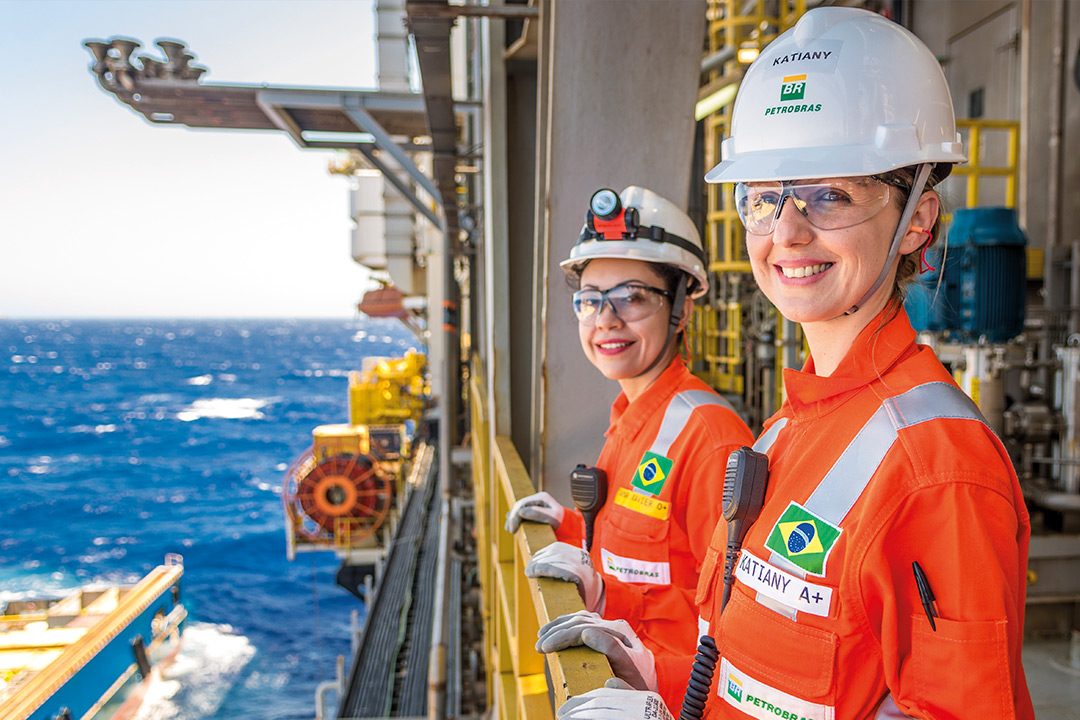
National Pact for More Women in Energy and Mining
Launched on September 4, 2024, the National Pact for More Women in Energy and Mining aims to promote strategies for gender equality and initiatives for the technical and managerial training of women in the sector, in the context of the energy transition.
According to data from the International Renewable Energy Agency (IRENA), only 32% of the workforce in these areas is made up of women. This figure falls to 28% in STEM (science, technology, engineering, and mathematics) professions. The goal is to change this scenario, as women are essential to building the economy of the future.
The Minister of Mines and Energy, Alexandre Silveira, and the Minister of Women, Aparecida Gonçalves, signed the pact, with the support of First Lady Janja Lula da Silva. The pact outlines the following shared commitments:
Promote initiatives for technical and managerial training and capacity building of women in the energy and mining sector, especially young women in situations of social vulnerability.
Encourage gender equality strategies in leadership and management positions.
Establish policies that support care and parenting responsibilities in the sector.
Implement strategies to combat all forms of workplace violence, focusing on preventing and addressing discrimination, harassment, and gender inequality.
Contribute to reducing poverty and gender inequality, particularly by expanding access to energy and clean cooking technologies.
These initiatives increase the likelihood that more women will be able to build and sustain promising careers in the green economy. Women must have access to quality job opportunities, workplaces free from harassment, and conditions in which motherhood is treated as a valued role rather than a burden for companies.
The commitment is part of the Governance Policy of the Ministry of Mines and Energy and its Diversity, Equity, and Inclusion Program. The MME’s Participatory Strategic Plan defines “sustainability” as a guiding value, alongside the objectives of “combating energy poverty” and “delivering social returns on energy and mineral wealth.” The initiative is aligned with the United Nations Sustainable Development Goal 5 (Gender Equality).
INTEGRATION
On May 19, 2025, the study “Integration of the Gender Component in Energy Sector Policies in G20 Countries” was released during the III Seminar on Strategic Management of Diversity, Equity, and Inclusion of the MME and Related Entities. The study was developed under the Brazil-Germany Energy Partnership, coordinated by the National Secretariat for Energy Transition and Planning (SNTEP/MME).
The publication presents an overview of public policies in G20 countries and provides recommendations for measures in four areas:
economic empowerment
access to energy
political and sectoral representation
gender mainstreaming and integration
The study shows that, despite advances in gender equality policies in the energy sector, challenges remain for women’s effective participation. In G20 countries, fewer than one in four workers in the energy sector are women, and only one in five hold senior management positions. On average, women earn 11% less than men.
NUMBERS
32% of the workforce in energy and mining is made up of women, according to the International Renewable Energy Agency (IRENA).
28% of women in STEM (science, technology, engineering, and mathematics) professions
DATES
- 09/04/2024 – Launch of the National Pact for More Women in Energy and Mining, in Brasília
Published: November 12, 2025
Photo credit: Petrobras