Innovations in the auctions for cheaper energy
The current management of the Ministry of Mines and Energy (MME) has introduced important innovations in the energy auction models, already held and scheduled to take place in 2025 and 2026.
Among others, the initiatives aim to meet the following objectives:
Ensure alignment with the energy transition
Facing the transformations that the Brazilian electricity matrix has undergone
Contribute to the cheapening of electricity for consumers and companies.
An example is the Auction for Isolated Systems 2025 (Sisol), which, in line with the guidelines of the Amazon Energy Program, is aimed at combating energy poverty in the region and improving the quality of life in the most remote municipalities. In an unprecedented way, the event incorporated as a goal a floor for the participation of renewables within the offers to be presented by competing companies.
Another novelty, of great scope for the development of the country, is the resumption in the new energy segment, with the A-5 Auction, after several years without holding it due to lack of demand. The focus now is on contracting Small Hydroelectric Power Plants (SHPs), unlike other bids, in which there was a very large predominance of wind and solar sources.
With this courageous decision, the MME gives projection to a source that was previously undervalued. The SHPs are able to mobilize a markedly national industry, bringing together a lot of history and expertise, which cannot be lost.
The Reserve Capacity Auction in the Form of Power (LRCAP) represents an advance compared to the first one, in 2021, in particular because it is much larger and more ambitious. In addition to the necessary recontracting of existing thermoelectric plants, it also brings a look at the expansion of new flexible thermal plants. And it brings another innovation: for the first time, it has the participation of hydroelectric plants to offer power in the system, bringing greater diversification of the matrix.
The Transmission Auctions are fulfilling an ambitious expansion agenda, with the largest auctions in the history of the Brazilian electricity sector. They totaled R$ 60 billion contracted, in 2023 and 2024 alone. This represents at least double what has been practiced in recent years. They will reduce the risk in renewable energy investments that depend heavily on transmission, but, above all, generate low tariffs, since investment in transmission is what makes the infrastructure viable for there to be competition in the supply of generation.
In this way, the various auctions already held, added to those already in progress and those scheduled until the end of 2026, bring benefits both to the population, especially low-income, and to industry, commerce, agribusiness and services.
Led by the MME, the initiatives ensure energy security in the country and the quality of services provided to consumers and user companies, without interruptions in supply.
The auctions favor the improvement of generation and transmission infrastructure in all regions. These are important factors for the creation of employment and income both in the construction and maintenance of enterprises. For the consumer, they help to provide affordable cost that can fit into their household budget.
The broad competitiveness of the auctions reflects the progress of planning and the attractiveness of the sector for new investments, especially in renewable sources.
In the case of generation, by law, the government has to contract new energy loads a few years in advance. Hence the nomenclature below, in which, for example, the A-5 represents that the auction takes place five years before the start of the energy supply.
1 ISOLATED SYSTEMS 2025 (SISOL)
In September 2025, the Auction for Isolated Systems 2025 (Sisol) was held, whose service benefited more than 30 thousand people in remote locations in Pará and Amazonas. In total, there were about R$ 312 million in investments.
Among the highlights is the contracting of the first hybrid project in the sector associated with batteries (BESS). In Jacareacanga (PA), 30 megawatts (MW) of battery storage and 18 MW of solar generation will be installed — a solution equivalent to the largest battery ever in Brazil, located in Registro (SP).
Isolated systems are regions that are still very dependent on diesel generation, which is responsible for more than 60% of the current supply and emits greenhouse gases. In addition, the use of diesel has a very high level of losses and inefficiency above the average in the country, not to mention the logistical difficulties for supply in places with difficulties for transportation.
Sisol 2025 is aligned with the objectives of the MME’s Amazon Energy Program, and seeks, at the same time, to combat energy poverty and promote social inclusion in low-income communities in the Legal Amazon. The winning projects exceeded the minimum required percentage of 22% renewable energy, reaching an average of 50% renewability. The attractiveness was also evident in the results: a discount of 22% in Lot 1 and 47% in Lot 2 in relation to the initial prices, ensuring more advantageous rates for the consumer. The start of operation will be in 2027, with 15-year contracts.
2 RESERVE CAPACITY IN THE FORM OF POWER (LRCAP)
The Reserve Capacity Auction in the Form of Power was designed to contract electricity from new and existing generation projects, with a view to ensuring the security and reliability of the energy supply in the National Interconnected System (SIN). This type of auction had not occurred since 2021.
The purpose is to have enough power to meet the maximum load at critical moments, such as consumption peaks or when there is a reduction in uncontrollable generation such as solar and wind.
In August 2025, two public consultations were launched for the Reserve Capacity Auction (LRCAP) 2026. Ordinances No. 859/2025 and No. 860/2025 initiate these processes.
An innovation consists of allowing the contracting not only of energy from thermoelectric plants, but from the expansion of hydroelectric plants, and the introduction of operational flexibility requirements.
3 SMALL HYDROELECTRIC PLANTS
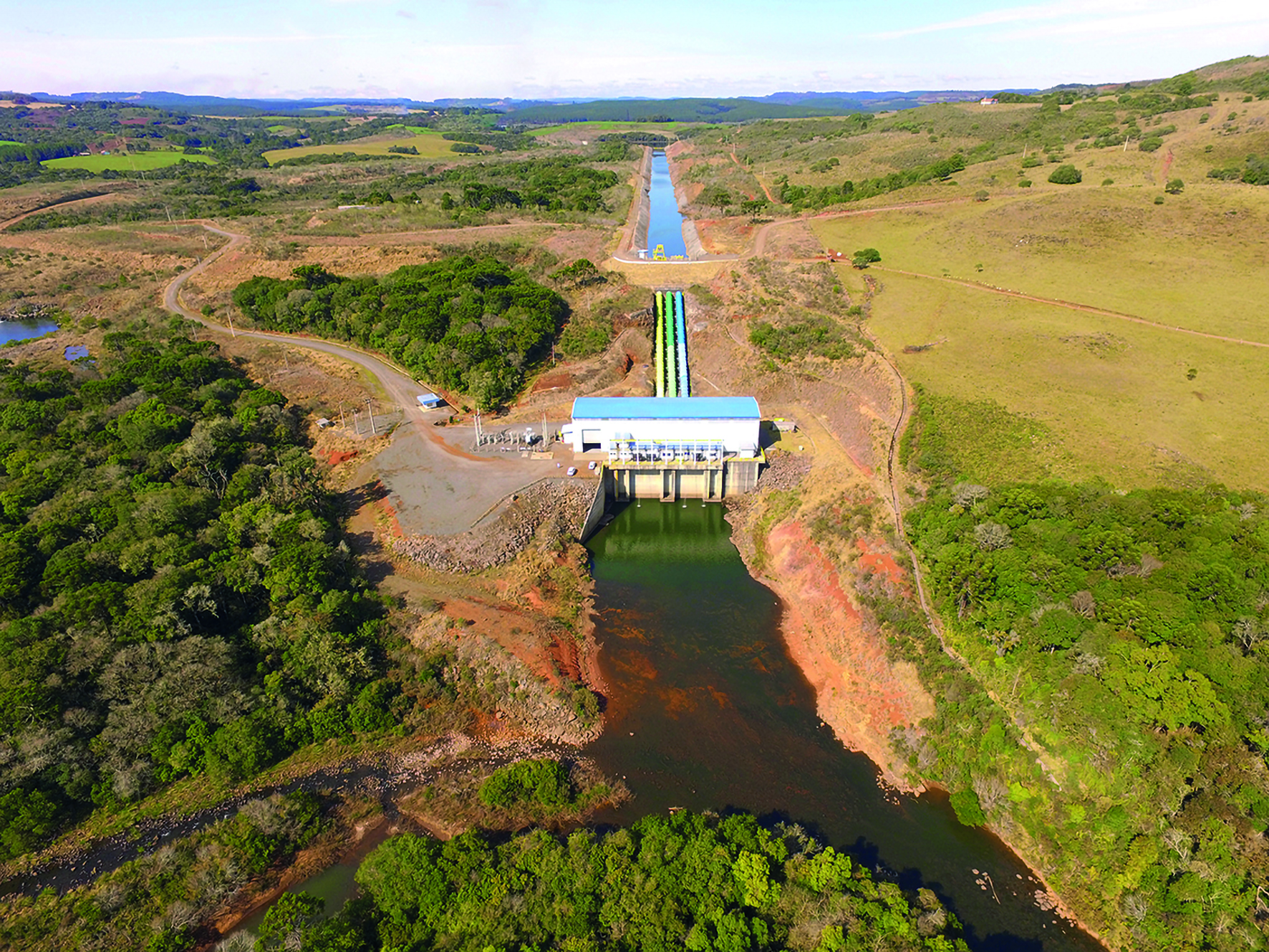
The MME is making an unprecedented effort to encourage the implementation of smaller hydraulic power plants, in line with the global trend. Two beneficial impacts stand out: the advancement of the energy transition, expanding decarbonization towards the green economy, and the promotion of social inclusion, translated into more employment and income for families, as well as more opportunities for self-employed workers and entrepreneurs.
The investment values are estimated at R$ 100 billion, with 810 Small Hydroelectric Power Plants (SHPs) in licensing, through resources from the private sector, and 300 thousand jobs generated. These are fundamental pillars to ensure a Brazil with robust and sustainable energy.
Advantages include low environmental impact. In addition, the location closer to consumer centers reduces investments in transmission. They can also act as “batteries”, given their ability to modulate energy, storing and releasing according to demand.
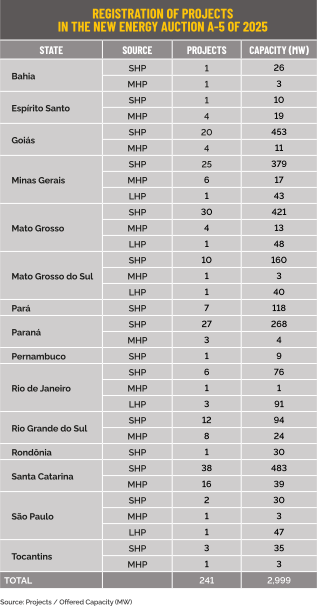
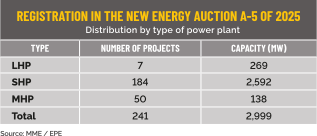
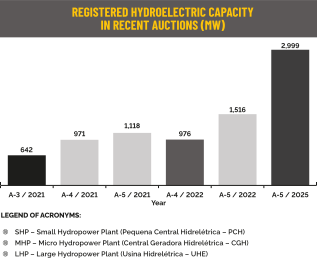
On 12/19/2024, the rules for the 2025 A-5 New Energy Auction were published, which had record power and hydroelectric projects registered. There are 241 projects in the dispute, including Small Hydroelectric Power Plants (PCH), Hydroelectric Generating Plants (CGH) and Hydroelectric Power Plants (HPP) less than 50 MW. In total, they correspond to an installed capacity of 2,999 MW. The initiative represents the resumption of hiring, with the last event of this modality being held in September 2022.
Closed in March 2024, the registration was distributed as follows by number of projects and power: 184 SHPs (2,592 MW), 50 CGH (138 MW) and 7 HPPs (269 MW). The result surpassed the mark of the 2022 A-5 Auction, in which 90 projects (1,516 MW) were registered. The energy supply should occur for 20 years, starting on 01/01/2030. The states that led the supply of SHPs were Santa Catarina (38 projects), Mato Grosso (30), Paraná (27), Minas Gerais (25) and Goiás (20). The registration was done 100% digitally, by EPE, linked to the MME.
The auction was held on 08/22/2025 and negotiated R$ 6.6 billion in energy sales contracts and investments estimated at R$ 2.95 billion, whose potential to generate jobs in the implementation period is around 20 thousand jobs
Several studies prove that SHPs have a positive social and economic impact on the communities in the municipalities where they are installed. The performance in these locations for the Municipal Human Development Index (MHDI, of the United Nations), the Gini Index, the per capita income (IBGE) and the Employment and Income Index (Firjan) is clearly higher than that achieved by their neighbors. This underscores the importance of these developments for residents.
Brazil dominates all stages of this source, such as the conception of the basic project, the engineering of the equipment, the civil construction, the electromechanical assembly and the operation. Thus, the national economy is valued, by seeking that all resources are invested directly for our population.
4 TRANSMISSION
With the transmission auctions, the MME is leveraging the electricity sector for economic and social development, with a positive impact in particular for the Northeast and North of the country, generating employment and income opportunities in the locations of the works and allowing the flow of cheaper energy in the regions. The projects consist of infrastructure works necessary to keep the electrical system operating satisfactorily, ensuring that the electricity demand is met.
In 2023 and 2024, the National Electric Energy Agency (Aneel) held four auctions at B3’s headquarters (Brasil, Bolsa, Balcão), in São Paulo.
There were 17,903 km of transmission lines, and 20,000 MVA of transformation into substations, located in the states of Alagoas, Bahia, Ceará, Espírito Santo, Goiás, Mato Grosso do Sul, Maranhão, Minas Gerais, Paraíba, Paraná, Pernambuco, Piauí, Rio de Janeiro, Rio Grande do Norte, Santa Catarina, Sergipe, São Paulo and Tocantins.
The works bring investments of around R$ 58.95 billion, with the prospect of generating approximately 108.9 thousand jobs during the construction of the projects.
It is estimated that each real invested in the transmission system has the potential to unlock three to five reais in new investments in energy generation. In total, there would be about R$ 60.7 billion in new investments in transmission alone.
The facilities are part of the Electric Energy Transmission Concession Plan, under the responsibility of the MME, with support from EPE, the National Electric System Operator and Aneel.
The planning of the transmission infrastructure seeks to enable the solutions that, in a combined way, present the lowest cost for consumers, the lowest socio-environmental impact and the greatest reliability and sustainable socioeconomic growth. The implementation demonstrates Brazil’s commitment to the energy transition.
The success of the concession procedures proves advantages offered by Brazil such as the stable regulatory framework, respect for contracts and predictability for business, in addition to political and social stability. More competitions are planned for 2025 and 2026. Another important characteristic is the diversity and complementarity of technologies so that consumers can get more benefits.
The following are the names, dates of realization and the states comprised by the four contests held:
Nº. 001/2023 – 06/30/2023 – Bahia, Espírito Santo, Minas Gerais, Pernambuco, Rio de Janeiro, São Paulo and Sergipe
Nº. 002/2023 – 12/15/2023 – Goiás, Maranhão, Minas Gerais, São Paulo and Tocantins
Nº. 001/2024 – 03/28/2024 – Alagoas, Bahia, Ceará, Maranhão, Mato Grosso do Sul, Minas Gerais, Paraíba, Pernambuco, Piauí, Rio de Janeiro, Rio Grande do Norte, Santa Catarina and Tocantins
Nº. 002/2024 – 09/27/2024 – Bahia, Espírito Santo, Minas Gerais, Paraná, Santa Catarina, São Paulo and Rio Grande do Sul
Auction Nº. 04/2025, scheduled for 10/31/2025, foresees investments of R$7.67 billion, covering 13 states: Goiás, Mato Grosso, Mato Grosso do Sul, Maranhão, Paraíba, Pernambuco, Piauí, Rio Grande do Norte, Minas Gerais, São Paulo, Paraná, Rio Grande do Sul and Rondônia.
1,178 kilometers of new transmission lines will be built and the transformation capacity will be expanded by 4,400 MVA. Installations of essential equipment such as a Fast Automatic Reactive Control and seven Synchronous Compensations are also planned. These works should generate approximately 19.1 thousand direct and indirect jobs, demonstrating the power of the electricity sector as a vector ofsocioeconomic development.
5 EXISTING ENERGY A-1 AND A-2
On 12/06/2024, in accordance with the MME guidelines, Aneel and the Electric Energy Trading Chamber (CCEE) held the Existing Energy Auctions (LEE) A-1 and A-2 for the year 2025.
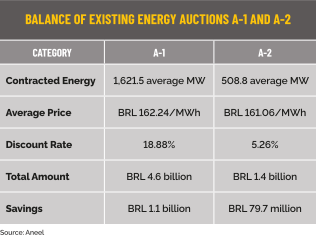
In all, R$ 6.04 billion in supply contracts were handled between January 2025 and December 2027, providing an estimated saving of R$ 1.15 billion for the Brazilian consumer.
The auctions aimed to sell electricity produced in plants already in operation, in order to guarantee the supply of distributors and, thus, ensure supply to final consumers. They will complement the demand of distributors in the states of Amazonas, Bahia, Ceará, Goiás, Maranhão, Pará, Paraíba, Pernambuco, Piauí, Rio de Janeiro, Rio Grande do Sul, Santa Catarina, São Paulo and Tocantins.
Held in a virtual format, the competitive process allowed the participation of any energy source, in accordance with the principle of technological neutrality, which increased competitiveness. In addition, the contracts from these auctions do not undergo monetary updating. The increase in competitiveness and the non-monetary updating of these contracts result in lower rates for the consumer. There was contracting of safe and cheap energy, with prices below the value of the distributors’ portfolio.
With the start of supply scheduled for January 2025, the A-1 moved R$ 4.6 billion for the contracting of 1,621.5 average MW. The discount recorded was 18.88%, which allowed a saving of R$ 1.1 billion in relation to the initial price.
The A-2, whose supply will begin in January 2026, totaled R$ 1.4 billion in negotiations, for the purchase of 508.8 average MW. It had an average discount of 5.26% and saved R$ 79.7 million compared to the ceiling price.
NUMBERS
Published: November 12, 2025
Photo credits: Getty Images, Venâncio Máximo (CGT Eletrosul) and Getty Images