
Gas for Employment
The National Energy Policy Council (CNPE) established the Gas for Employment Program Working Group (GT-GE) to conduct studies aimed at promoting more efficient use of natural gas produced in Brazil. The initiative also seeks to expand the domestic supply of natural gas at competitive prices that are less vulnerable to international market fluctuations and integrate natural gas into the national energy transition strategy.
Other objectives of the GT-GE include:
Improving the utilization and socioeconomic return of domestic production, while reducing reinjection volumes beyond what is technically necessary.
Expanding the availability of natural gas for the domestic production of nitrogen fertilizers, petrochemicals, and other industrial sectors, thereby reducing external dependence on strategic inputs.
Integrating natural gas into the national energy transition strategy to attract investments that foster the development of low-carbon solutions, such as biogas and biomethane, low-carbon hydrogen, industrial cogeneration, and carbon capture.
Establishing an appropriate policy framework for natural gas distribution, processing, and pipeline transportation infrastructure.
Affordable energy supplied by natural gas has the potential to stimulate the Brazilian industrial sector, enabling job creation, income distribution, and increased tax revenues. Lower prices enhance the competitiveness of domestic industry and reduce costs across the national production chain, including sectors such as road transportation.
This requires increased investment in infrastructure and improved regulatory frameworks. Consumers benefit from greater protection, fairer and more affordable prices, and a more competitive market, supported by a modern and predictable regulatory model for all stakeholders.
Among the expected positive impacts, the following can be highlighted:
Greater predictability and legal certainty for investors in the natural gas and biomethane sector.
Higher revenues for domestic producers of oil, natural gas, and biomethane.
Availability of the necessary infrastructure to secure national supply.
Increased competition and liquidity among market participants.
Development of a competitive domestic natural gas market insulated from international price volatility.
Contribution to the neo-industrialization and decarbonization of the industrial, transportation, and power sectors.
Reduced external dependence on fertilizers.
Expansion of the biomethane and natural gas markets, fostering sustainable fuels with a lower carbon footprint.
Gas for Employment also supports global food security by helping to reduce the prices of food and agricultural products, with the greatest benefit accruing to low-income populations. Natural gas is the main input in the production of nitrogen fertilizers, which are essential for boosting crop productivity and quality, ultimately supplying food to families across the country.
Food security is defined as “the realization of everyone’s right to regular and permanent access to quality food in sufficient quantity, without compromising access to other essential needs.” This principle was enshrined in law by President Luiz Inácio Lula da Silva at the end of his first term in 2006.
WORKING GROUP
Coordinated by the Ministry of Mines and Energy (MME), the GT-GE included representatives from 15 federal government institutions, notably the National Bank for Economic and Social Development (BNDES), the National Agency of Petroleum, Natural Gas and Biofuels (ANP), the Energy Research Company (EPE), and Pré-sal Petróleo S.A. (PPSA).
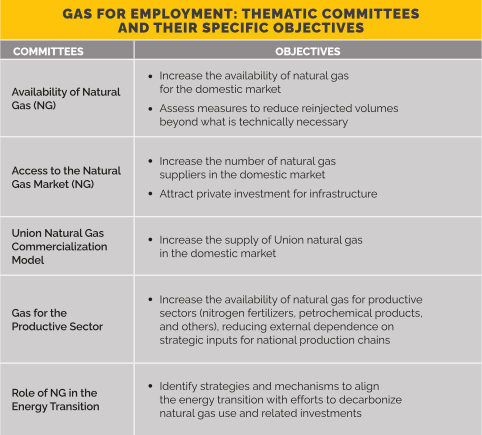
The GT-GE was structured into five thematic committees, listed below.
MEASURES ADOPTED
Based on the proposals studied by the GT-GE, in 2024 each thematic committee published a report, and several regulatory acts were issued. The resulting actions are underway, as highlighted below:
Decree No. 12,153 of 08/26/2024, resulting from GT-GE proposals
Decree No. 12,153/2024 was enacted, amending Decree No. 10,712/2021, which regulates Law No. 14,134/2021 (the Gas Law). The main points include strengthening ANP’s authority to protect the interests of natural gas consumers, integrating infrastructure planning across the sector, providing greater guarantees of third-party access to infrastructure, and enhancing transparency of sectoral information.
The Decree established principles for non-discriminatory and negotiated access to natural gas transportation, treatment, processing, and storage infrastructure, including fair and adequate remuneration for investments, based on efficient service provision.
This ensures greater legal certainty for investments in infrastructure, attracting new investors, while simultaneously promoting more secure investments in natural gas production and consumption by ensuring market access to transport and supply infrastructure. Guaranteed access also contributes to reducing the volume of reinjected gas, including in fields already in production.
In view of ANP’s extensive regulatory agenda following the enactment of the Gas Law in 2021, Decree No. 12,153/2024 reinforced ANP’s role during the transition period, providing greater legal certainty and accelerating investment approvals for private sector projects while the necessary regulations are being updated.
Ordinance GM/MME No. 805 of 09/23/2024 establishing the CMSGN
Building on GT-GE proposals, Ordinance GM/MME No. 805/2024 created the Natural Gas Sector Monitoring Committee (CMSGN) to oversee public policies related to the natural gas sector and ensure continuity and security of national supply. The committee is modeled on the Electricity Sector Monitoring Committee (CMSE).
The CMSGN, composed of MME, ANP, and EPE, has the authority to engage with public and private institutions in the natural gas industry to implement necessary measures for sectoral liberalization.
Its responsibilities include monitoring compliance with provisions of the Federal Constitution, laws, decrees, CNPE resolutions, and other rules directly or indirectly related to natural gas. Specifically, the CMSGN monitors the implementation of Decree No. 10,712/2021 and CNPE Resolution No. 03/2022, which set strategic guidelines for the natural gas market, improvements to competition, and fundamentals for the transition period.
The CMSGN may also establish technical committees to coordinate efforts among industry stakeholders to advance sectoral liberalization, thereby fostering competition and lowering prices for domestic consumers.
CNPE Resolution No. 11 of 08/26/2024, granting PPSA access to infrastructure and consumer markets
CNPE Resolution No. 11/2024 set additional guidelines for the Union’s oil and natural gas marketing policy to optimize the use of inputs from production-sharing contracts, boost industrialization, and strengthen national supply security of energy, petroleum inputs, nitrogen fertilizers, and other chemical products.
The Resolution authorizes Pré-Sal Petróleo S.A. (PPSA), a state-owned company linked to MME, to contract transportation and processing services for the Union’s share of natural gas from production-sharing contracts. PPSA may also sell natural gas, liquefied petroleum gas (LPG), and other liquids derived from gas processing directly to the domestic market, subject to technical and economic feasibility.
Memoranda of Understanding signed between the governments of Brazil, Argentina, and Bolivia
In 2024, Brazil signed two Memoranda of Understanding (MOUs), one with Argentina and another with Bolivia, aimed at strengthening regional gas integration. The objective is to expand the domestic supply of natural gas at competitive prices for consumers, with an estimated price of USD 7–8 per million BTU.
IMPORT OF NATURAL GAS FROM VACA MUERTA, ARGENTINA
On November 18, 2024, the MME signed a Memorandum of Understanding (MoU) with Argentina to enable the import of natural gas from the neighboring country, particularly from the Vaca Muerta region. The initiative is part of the Gas for Employment Program.
It is estimated that imports will begin with two million m³ per day in the short term, expanding to 10 million m³ over the next three years, and reaching 30 million m³ by 2030.
The MoU established a bilateral working group to identify the necessary measures, including a study of the economic feasibility of logistics routes, taking into account the expansion of existing infrastructure in both countries.
Vaca Muerta, located in the province of Neuquén in western Argentina, is one of the world’s largest natural gas fields. Imports from this region will expand Brazil’s natural gas supply and support reindustrialization, strengthening the production of fertilizers, glass, ceramics, petrochemicals, and other sectors, while also contributing to job creation and income generation.
Several possible routes are being evaluated to transport the gas:
Via Bolivia – reversal of the existing Gasbol pipeline
Via Paraguay – construction of a new gas pipeline
Via Rio Grande do Sul – connection through Uruguaiana
Via Uruguay
GAS REINJECTION
A critical factor in the current scenario is natural gas reinjection, a technique whereby gas is returned to the reservoirs from which it was extracted to increase oil production. While technically necessary to optimize oil recovery, reinjection levels in Brazil are very high, reducing the amount of natural gas available for domestic supply.
Currently, domestic natural gas production is about 157.64 million m³/day, with reinjection averaging 85 million m³/day, equivalent to 54% (2024 average through November).
A comparison between national production and reinjection levels shows that the amount reinjected is more than sufficient to meet the current demand of the industrial sector, which averages only 38.71 million m³/day (as of August 2024). A reduction of just 15% in reinjection (12.75 million m³/day) would provide enough supply to increase industrial demand by 31%, reaching 50 million m³/day.
Another concern is the high price of natural gas for end consumers, which remains far above that paid by industry in other countries, undermining competitiveness. Much of this cost stems from expensive infrastructure, particularly in transportation and processing.
POLICY RESULTS
EPE projections indicate the following potential results from the Gas for Employment Program:
Creation of 436,000 direct and indirect jobs
Investments of approximately R$ 94.6 billion
GDP growth of R$ 79 billion
Additional federal tax revenue of R$ 9.3 billion
During 2024, several concrete results have already been achieved (see below).
BOAVENTURA ENERGY COMPLEX
As part of the Gas for Delivery Program, Petrobras’ Boaventura Energy Complex in Itaboraí (RJ) was inaugurated on 09/13/2024 by President Luiz Inácio Lula da Silva, with the participation of Minister Alexandre Silveira, of Mines and Energy.
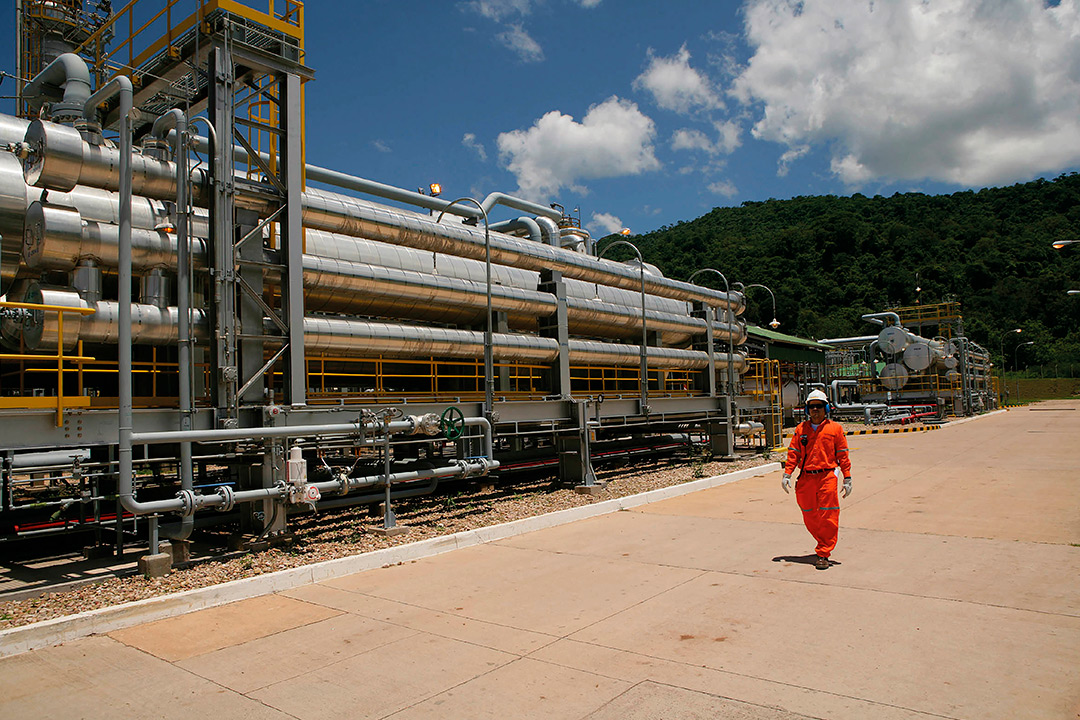
This industrial hub will expand the processing and generation capacity of natural gas, liquefied petroleum gas (LPG or cooking gas), and related products. It houses the country’s largest Natural Gas Processing Unit (UPGN), which is part of the Integrated Route 3 Project (PIR3). The facility will process gas from the Santos Basin pre-salt layer, transported through the Route 3 gas pipeline.
PIR3 will enable the flow of up to 18 million m³/day and the processing of up to 21 million m³/day of natural gas at the UPGN. This will significantly increase the domestic supply of natural gas, reduce dependence on imports, and lower the current levels of natural gas reinjection.
The complex employs more than 600 professionals directly engaged in operating, maintaining, and supporting the pipeline, processing plants, and utility units.
The Route 3 gas pipeline, which spans 355 km, had been abandoned by previous governments but was resumed as part of the Gas for Employment agenda. It is expected to have a direct positive impact on national development, particularly in industrial sectors that rely on natural gas, such as ceramics and glass.
In addition to the newly inaugurated UPGN, the Boaventura project will include two thermoelectric plants, fuel and lubricant production units, and a biofuel plant dedicated to producing 100% renewable diesel and aviation kerosene.
The natural gas supplied to the facility is raw gas that, once processed, generates at least three derivatives:
Natural Gas (NG)
Liquefied Petroleum Gas (LPG or cooking gas)
C5+, a byproduct used in petrochemicals and fuel production
These products are destined for industry, households, and electricity generation.
The commercial operation of the Boaventura UPGN is of strategic importance for Brazil, as it enables greater flow of natural gas from the Santos Basin pre-salt reserves, ensuring increased supply to the domestic market.
The complex’s name pays homage to the São Boaventura Convent, located within the facility and one of the region’s earliest historical buildings.
The Route 3 Gas Pipeline was designed to complement the existing Route 1 and Route 2 pipelines, expanding the flow capacity from the pre-salt layer to the UPGN. It has a total capacity of 18 million m³/day, covering 355 km (307 km offshore, already built, and 48 km onshore, under construction).
The Boaventura Energy Complex is the former Petrochemical Complex (Comperj), now repurposed as the Gaslub Itaboraí Hub.
Total Investments in the Boaventura Energy Complex
Total planned – R$ 12.5 billion
Route 3 – R$ 6 billion
Natural Gas Processing Unit (UPGN) – R$ 6.5 billion in UPGN (R$ 680 million already invested)
Route 3 Gas Pipeline
Length – 355 km
Capacity – 18 million m³/day
PROJECTS IN PROGRESS
Raia Field (Equinor) – Declaration of commercial viability by Equinor, with an estimated investment of R$ 45 billion and expected production of 14 million m³/day starting in 2028.
Sergipe Deepwater Project, Seap (Petrobras) – Expected production capacity of 18 million m³/day by 2030.
NATURAL GAS IMPORTED FROM BOLIVIA AND ARGENTINA
Practical results from these Memoranda of Understanding are already visible:
Publication of the Bolivian decree regulating the transport of Argentine gas to Brazil (Supreme Decree 5.206/2024).
First agreement signed for the transit of Argentine natural gas through Bolivia for delivery to Brazil – contract between YPFB (responsible for pipeline transportation in Bolivia), TotalEnergies (Argentine producer), and Matriz Energia (Brazilian trader).
Six agreements signed between Brazilian traders and natural gas producers in Argentina, with authorizations from the Argentine government to export natural gas to Brazil.
DATES
03/20/2023 – CNPE creates the Gas for Employment Program Working Group
09/21/2023 – Presentation of Commerciality Statements and Development Plans for two development areas of the BM-C-33 concession by Equinor
04/08/2024 – Conclusion of the Working Group’s activities and presentation of reports
07/09/2024 – Signing of a Memorandum of Understanding (MoU) with Bolivia for the importation of Bolivian and Argentine natural gas to Brazil
08/27/2024 – Publication of Decree No. 12,153/2024
09/10/2024 – Publication of CNPE Resolution No. 11/2024
09/13/2024 – Inauguration of the Boaventura Energy Complex in Itaboraí (RJ) to increase the supply of natural gas, cooking gas, and liquefied petroleum gas by Petrobras
09/24/2024 – Publication of MME Ordinance No. 805/2024 establishing the Natural Gas Sector Monitoring Committee (CMSGN)
11/18/2024 – Signing of a Memorandum of Understanding (MoU) with Argentina for the importation of natural gas, mainly from Vaca Muerta, including a study of logistics routes to better integrate the two countries.
03/19/2025 – Initial publication for Public Consultation of the Study of Flow and Processing Tariffs for the Integrated Flow System (SIE) and the Integrated Processing System (SIP)
04/17/2025 – Public Call to estimate the effective demand for services in the infrastructures of the natural gas chain, as well as to identify the potential supply and demand of natural gas and biomethane for the National Integrated Plan for Natural Gas and Biomethane Infrastructures (PNIIGB)
06/06/2025 – Publication of the Study of Flow and Processing Tariffs for the SIE and SIP Systems, incorporating contributions from the Public Consultation.
08/08/2025 – Publication of the Methodological Technical Note – National Integrated Plan for Natural Gas and Biomethane Infrastructures, after the Public Consultation process that took place in April 2025.
09/29/2025 – Public Consultation of the National Integrated Plan for Natural Gas and Biomethane Infrastructures, which aims to promote a strategy for the coordinated development of supply, demand and infrastructure of natural gas and biomethane in the country.

Published: November 12, 2025
Photos credits: Petrobras