Programa
Title: 3D Inversion of natural source electromagnetic data; Magnetotellurics
Short course abstract:
Three-dimensional (3D) inversion of electromagnetic (EM) data has emerged as a
fundamental tool in geophysical exploration, providing critical insights into the subsurface conductivity distribution with improved resolution and reliability. Its application has become indispensable across a range of exploration domains, notably in mineral and geothermal resource investigations, where accurate imaging of complex geological structures is essential for effective targeting and resource assessment.
Recent advancements in computational hardware, numerical algorithms, and inversion methodologies have significantly enhanced the feasibility and efficiency of 3D EM inversion. Parallel computing, graphics processing unit (GPU) acceleration, and optimized forward modeling schemes now enable the processing and inversion of large-scale datasets that were previously computationally prohibitive. In addition, improvements in data acquisition systems and noise-handling strategies have contributed to the robustness and stability of inversion results.
Consequently, 3D EM inversion is no longer limited to research-oriented applications but has become a practical and cost-effective component of modern exploration workflows, applicable across multiple spatial scales, from near-surface environmental studies to deep crustal investigations.
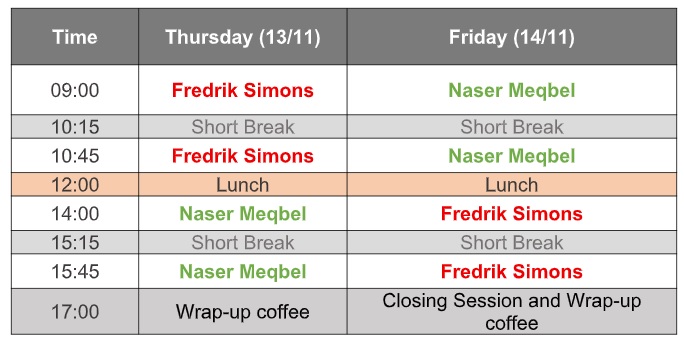
This course comprises two half-day modules in which participants gain fundamental knowledge about the physics underlying electromagnetic (EM) methods. It provides an overview of acquisition and modeling approaches for techniques such as magnetotellurics (MT), controlled-source EM (CSEM), ZTEM, and Mobile-MT, emphasizing their respective limitations and advantages. The first module introduces basic EM principles, data acquisition procedures, and the fundamentals of inversion using ModEM, illustrated with real data examples. The second module focuses on the practical use of ModEM and 3DGrid configuration, covering data loading, model generation, discretization tests including topography and bathymetry, and running inversions of independent responses.
Title: Seismic tomography, Mantle Structure, and Mobile Marine Seismometry
Short course abstract:
In the last few decades, seismologists have mapped the Earth's interior (crust, mantle, and core) in ever increasing detail. Natural earthquakes, the sources of energy used to probe the Earth's inside via seismic computerized tomography, occur mostly on tectonic plate boundaries. Seismometers, the receivers of earthquake wave motion, are located mostly on dry land. Such fundamentally inadequate 'source-receiver' coverage leaves large volumes inside the Earth entirely unexplored. Here be dragons! Placing seismic stations on the ocean bottom is among the solutions practiced successfully today. But there are exciting alternatives. Enter MERMAID: a fully autonomous marine instrument that travels deep below the ocean surface, recording global seismic activity - and marine environmental data - and reporting it by surfacing for satellite data transmission. I will discuss a century of Earth imaging, a decade of instrument design and development, and a day in the life of exploring the challenging - and wet - places that our scientific journey has taken us in our study of mantle plumes below the Galapagos Islands, and underneath French Polynesia. Beyond earthquakes, MERMAID hears the sounds of ocean waves that generate microseisms, as I will illustrate with a detailed look at oceanic infrasound recorded in situ, and underwater volcanic eruptions, as I will illustrate with an analysis of how oceanic bathymetry influences the hydroacoustic record of the Hunga-Tonga eruption.
Throughout the lecture series I will cover an overview of various inverse problems that have arisen in the context of (passive) terrestrial imaging - including but not limited to earthquakes, that is. At the smallest scale, I will discuss a source-encoded crosstalk-free Laplace-domain elastic Full Waveform Inversion (FWI) method that uses time-domain solvers, which cuts down drastically on computation time even for very data rich environments. This technique has been used in medical ultrasound, but also at the scale of the globe, and is now actively being developed for applications in the oil industry. At the regional scale, I will discuss full-waveform centroid moment tensor (CMT) inversion of passive seismic data acquired at the reservoir scale, for a field application in Tajikistan. At the largest scale, I will show how receiver function techniques are being supplemented by new technology to image mantle transition zone (MTZ) discontinuities in three-dimensional (3-D) heterogeneous background Earth models, and I will show new seismic evidence for a 1000 km mid-mantle discontinuity under the Pacific obtained by imaging via full-waveform reverse-time migration of precursors to surface-reflected seismic body waves, and its interpretation.