Notícias
DESERTIFICATION
Brazil presents its Land Degradation Neutrality target at COP17 in Mongolia
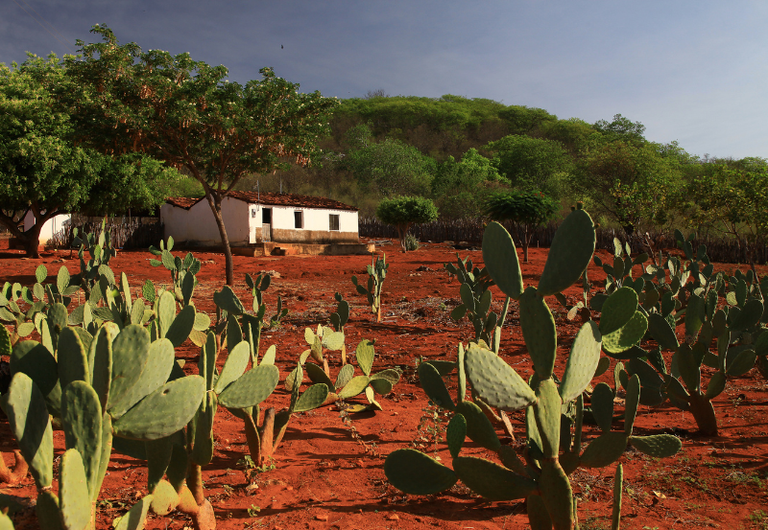
Brazil predicts recovering and restoring more than 163,000 km² of degraded land by 2030 - Foto: Eraldo Peres
On Tuesday (August 25th), Brazil presented its voluntary Land Degradation Neutrality (LDN) Target for 2030 at the 17th Session of the Conference of the Parties to the United Nations Convention to Combat Desertification (UNCCD COP17), in Ulaanbaatar, Mongolia.
Announced by the Minister of the Environment and Climate Change, João Paulo Capobianco, the target brings together 17 sub-targets linked to national policies, plans and programmes and addresses the three lines of action set out by the UNCCD: recovering or restoring degraded land, reducing ongoing degradation processes, and avoiding further degradation. By 2030, Brazil plans recovery and restoration actions across more than 163,000 km² of degraded areas, through initiatives that include native vegetation recovery, agroforestry systems, and actions in protected areas, Indigenous Territories, permanent preservation areas and river basins. A further 3.51 million km² are covered by prevention, conservation and sustainable management actions. The areas declared under the 17 sub-targets total 3.67 million km².
The target is part of Brazil’s actions to address desertification, land degradation, drought and the effects of climate change, and contributes to meeting target 15.3 of the Sustainable Development Goals (SDGs), which calls for combating desertification, restoring degraded land and soil, and striving to achieve land degradation neutrality by 2030.
The commitment responds to a nationwide challenge. The Land Degradation Index (IDT, in its Portuguese acronym) indicates that approximately 2.3 million km², around 28% of Brazil’s territory, show some level of degradation. The official LDN baseline, in turn, identifies 55.7 million hectares with a trend towards degradation in the 2020 reference year.
A study by the National Water and Sanitation Agency (ANA) on the impacts of climate change on water resources projects a downward trend in river flows across most of Brazil’s hydrographic regions, with declining-flow scenarios predominating in the North and Northeast. The projections cover the Tocantins-Araguaia, Parnaíba and São Francisco hydrographic regions, which encompass areas of MATOPIBA, the agricultural frontier spanning parts of the states of Maranhão, Tocantins, Piauí and Bahia.
“Brazil is committed to strengthening the Convention and, by presenting its Land Degradation Neutrality target, is turning that commitment into concrete action to avoid, reduce and reverse degradation. This agenda is fundamental because healthy soils sustain agricultural production, food security, biodiversity and water availability. With extreme weather events becoming increasingly frequent and intense, protecting and recovering land also means strengthening our capacity to produce food, generate income and build the resilience of people and territories,” said Capobianco.
Beyond compromising the productive capacity of soils, biodiversity and water availability, land degradation affects food security, income generation and people’s quality of life, and increases vulnerability to the effects of climate change. Around 39 million Brazilians live in 1,649 municipalities located in or around areas susceptible to desertification.
Advancing aridity reinforces the urgency
Data from the National Centre for Monitoring and Early Warning of Natural Disasters (Cemaden) show that areas classified as having a semi-arid climate in Brazil have expanded by an average of around 75,000 km² per decade since climate monitoring began, with aridity intensifying in the Caatinga and semi-arid conditions advancing into areas of the Cerrado. Combined with the growing frequency and intensity of droughts, this process reinforces the need to strengthen conservation policies, sustainable land management and the recovery of degraded areas.
Adopted in 1994 and in force since 1996, the UNCCD has 197 Parties. Brazil has been a Party to the Convention since 1997. In 2015, UNCCD member countries were invited to set voluntary Land Degradation Neutrality targets. That same year, in line with this agenda, Brazil enacted Law No. 13,153, establishing the National Policy to Combat Desertification and Mitigate the Effects of Drought and assigning responsibilities to the National Commission to Combat Desertification (CNCD), including monitoring the commitments made by the country under the Convention.
After eight years of inactivity, the CNCD was reinstated and reorganised by the federal government in 2024 through Decree No. 11,932, which regulated provisions of Law No. 13,153/2015. The Commission brings together representatives of 19 ministries, state and municipal governments, civil society and the private sector, and its responsibilities include guiding, monitoring and evaluating the implementation of the commitments made by Brazil under the UNCCD.
Brazil’s Land Degradation Neutrality target was developed within the CNCD. In all, the process involved 65 institutions. The baseline was defined with technical advice from Embrapa Soils (a research center of the Brazilian Agricultural Research Corporation (Embrapa)), the Brazilian Institute of Geography and Statistics (IBGE), the National Semi-Arid Institute (INSA) and the Caatinga and Desertification Observatory (OCA/UFCG), with technical and operational support from the Inter-American Institute for Cooperation on Agriculture (IICA).
The full text of Brazil’s Voluntary Land Degradation Neutrality (LDN) Target 2030, including the 17 sub-targets and their supporting calculations, is available here.
About COP17
The COP is the main decision-making body of the United Nations Convention to Combat Desertification. At this 17th session, negotiations and international dialogues are focused, among other topics, on financing for land restoration and drought resilience, sustainable soil and water management, the recovery of rangelands and degraded areas, and the relationship between science, technology and public policy. The high level programme is organised around four thematic days: finance; water; land and people; and food systems and soil health.