Notícias
Brazil leads global debate on human milk banks and climate change at pre-COP30 event
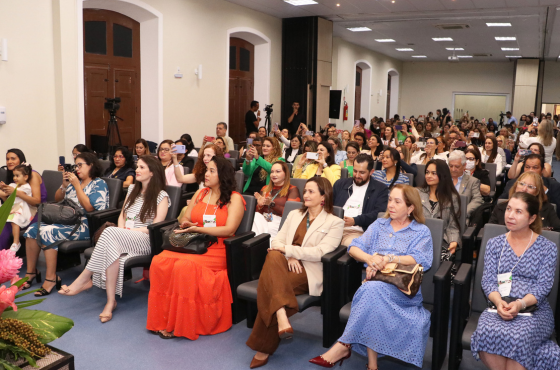
The Deputy Director of the Brazilian Cooperation Agency (ABC), Ambassador Luiza Lopes da Silva, represented the Ministry of Foreign Affairs of Brazil (MRE) at the event. She stressed the importance of having the presence of foreign representatives from Latin America (Argentina, Uruguay, Paraguay, Bolivia, Colombia, Ecuador, Peru, Panama, El Salvador and Mexico), Europe (European Milk Bank Association – EMBA) and Portuguese-Speaking African Countries (Angola, Mozambique and Cape Verde, online, which are members of the CPLP Human Milk Bank Network). 
The Ambassador recalled that FIOCRUZ started its research and technological development on Human Milk Banks in the 1980s, in tandem with the beginning of Brazilian South-South cooperation, upon the establishment of the Brazilian Cooperation Agency in 1987. Following the international recognition of the Brazilian experience in terms of human milk banks, the two institutions have developed a solid joint work that has continued to this day, which has been materialized in the growing network of international partnerships. Such partnerships were established bilaterally, country by country, and also at the regional level, upon the creation of networks in the hemisphere and within the Community of Portuguese-Speaking Countries (CPLP). As a result of Brazilian cooperation in this field, 91 units have been created abroad so far, located in 23 countries. She also brought to the attention the fact that the solid credentials that Brazil has established over four decades–by creating the largest and most complex network of human milk banks in the world–have been recognized by the UN as an international model.
The Deputy Director highlighted that there was high demand from other countries for Brazilian expertise in projects of social nature, with low implementation/maintenance cost, and comprehensive results. She stressed that one of the differentials of Brazilian technical cooperation is the possibility of sharing policies and programs designed, improved and implemented in Brazil that, because of their relatively low financial cost, can be replicated on a large scale in other countries. Moreover, she indicated that this was exactly the profile of the Human Milk Bank Program, just as was the case with the Brazilian National School Feeding Program (PNAE), the program for construction of cisterns in semi-arid regions, the vocational and technical education model, and many more.
The event also resulted in the creation of a working group to expand Human Milk Banks across the Pan-Amazon Region, a strategic region for COP30. The conclusions will be taken to the 30th UN Conference on Climate Change (COP30) in November, when Brazil will present human milk banks as an integrated public policy for health and sustainability.