Notícias
The Caatinga Flora PAN’s initiatives are moving forward through expeditions and institutional partnerships
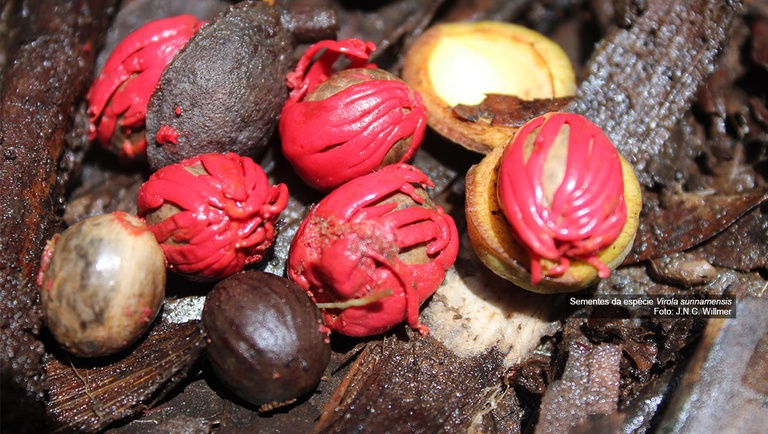
Seeds of the species ‘Virola surinamensis’ | Photo: J.N.C. Willner
By Aline Costa and Josenilson Santos
Good news this week, as we celebrate Caatinga Day—April 28—comes from the actions of the National Center for Flora Conservation (CNCFlora/JBRJ) under the National Action Plan for the Conservation of Endangered Flora in the Caatinga of Ceará–Piauí (PAN Flora da Caatinga).
The PAN Flora da Caatinga was established by Ordinance No. 52, dated December 12, 2025, and sets forth priority conservation strategies for 25 species listed on the National List of Endangered Species, in addition to including actions aimed at another 12 species considered to benefit from the plan.
With a five-year term, the PAN aims to promote the conservation and recovery of the threatened flora of the Caatinga in the states of Piauí and Ceará through the implementation of integrated strategic actions. The initiatives aim to ensure the protection of natural habitats, the sustainable management of resources, and the active participation of local communities, contributing to the maintenance of biodiversity and ecosystem services in the region.
Between March 8 and 21, a field expedition was conducted in the PAN’s coverage area, led by the National Center for Flora Conservation (CNCFlora) through the Coordination of Projects for the Conservation of Endangered Species (COESC). The activity included the participation of analysts Jessyca Santos, Josenilson Santos, Juliana Monteiro, Juliana Oliveira, and Julian Wilmer.
During the expedition, seeds were collected from species such as Erythroxylum bezerrae, Virola surinamensis, and Pitcairnia limae, in addition to marking new occurrence sites and identifying parent plants of other target species and those benefiting from the PAN.
Activities also involved coordination with local stakeholders and visits to areas strategic for conservation, including Serra da Meruoca (CE), Sete Cidades National Park (PI), Ubajara National Park (CE), and the Natureza Divina Private Nature Reserve (CE). Throughout the expedition, meetings were held with institutional partners to identify synergies between actions already underway in the region and the strategies outlined in the PAN, as well as to strengthen the engagement of the stakeholders involved.
The PAN’s actions are part of the GEF Terrestrial project, expanding the scope of conservation initiatives.
In addition to the field expedition, other strategic activities were carried out, such as the Workshop on the Development of PAN Indicators and Targets, held on March 3 and 4, focused on defining parameters for evaluating the plan’s effectiveness. The first meeting of the Technical Advisory Group (GAT) was also held, during which the frequency of PAN follow-up meetings was established, with the aim of monitoring the implementation of actions, identifying bottlenecks, and proposing necessary adjustments. These initiatives strengthen the implementation of the National Action Plan (NAP) and contribute to the continuation of efforts aimed at conserving the biodiversity of the Caatinga biome.