Notícias
Rio Botanical Garden launches the Mysterious Plants Trail on Halloween (October 31)
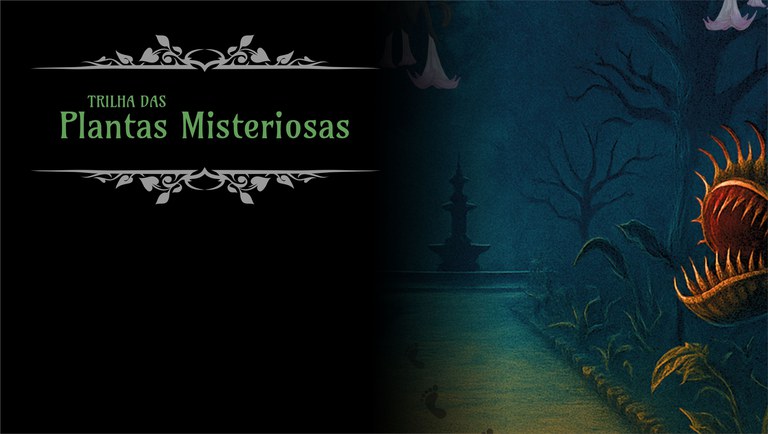
This Friday (October 31), Halloween and also Saci Day, the Rio de Janeiro Botanical Garden launches the Mysterious Plants Trail! On this guided tour, visitors will learn about plants shrouded in legends and mysteries. Since ancient times, different societies have used these species for healing, food, decoration, and rituals. They carry symbolic meanings that inspire myths and beliefs about magical forces and hidden mysteries. Some have medicinal powers, while others conceal lethal poisons.
The itinerary, which combines science, culture, and a bit of suspense, includes, among others:
Devil's tree (Alstonia scholaris) - In villages in India, there is a tree that no one dares to approach at night. They say that the plant is home to spirits, and its white sap looks like poison or blood. Its flowers only open in the dark and give off a strong scent, like a spell in the air. After sunset, legend has it that when you get close, you can hear someone whispering your name.
Star cactus (Stapelia gigantea), a succulent that blooms one day a year. The shape of the flower is often compared to the face of Demogorgon, star of the series Stranger Things. Because of this, some call the plant the “Demogorgon flower.” The flower gives off a strong, unpleasant odor, similar to rotting meat. For this reason, the species is called the miniature corpse plant or corpse flower. The odor attracts flies, with the intention of the insects carrying pollen from one flower to another.
Turkey vine (Aristolochia gigantea) - The Greeks saw the placenta and a baby in this flower and believed it helped with difficult births. With the smell of rotten meat, it attracts flies and traps them in sticky hairs, just enough to cover them with pollen and spread its trap throughout the forest. Beautiful on the outside, deadly on the inside.
Guinea, amansa-senhor (Petiveria alliacea) - Smells like garlic, reputed to ward off evil, and has a history of revenge and madness. It was called “amansa-senhor” because enslaved women used it to take revenge on their oppressive masters, who ended up weak, confused, mute, and sometimes dead. Used in protection rituals, guinea bears stories of resistance and mystery.
Witch's stick, tree of judgment (Erythrophleum suaveolens) - This tree was once a character in dark courts. In Africa, those who drank its poison called muave faced judgment: survival proved innocence, death confirmed guilt.
The Mysterious Plants Trail takes place at two times, at 10 a.m. and 2 p.m. The meeting point is the Visitor Center. The guided tour is free, but you need to purchase a ticket for the Botanical Garden.
Service - Mysterious Plants Trail
Date: October 31, at 10 a.m. and 2 p.m.
Meeting point: Visitor Center
Rio de Janeiro Botanical Garden
Rua Jardim Botânico, 1008
Admission fee
Visitors residing in Brazil: R$ 40.00 (full price) and R$ 20.00 (half price)
Foreign visitors: R$ 80.00
Children under 5 years old are free. Residents of Brazil over 60 years old, people with disabilities, students, among others, are entitled to half-price admission and pay R$ 20.00.
Payment at the box office is cash and pix only. Online tickets are available at jbrj.eleventickets.com with pix or credit card.