Notícias
Restinga bed in Rio's Botanical Garden revitalized
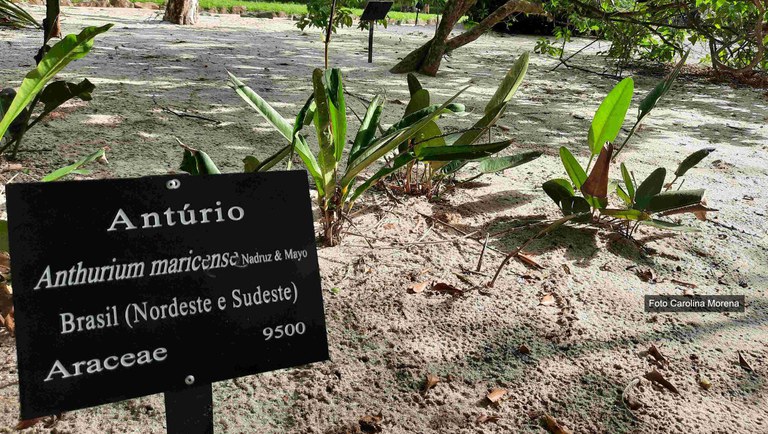
Anthurium maricense is one of the species reintroduced to the flowerbed
The restinga flowerbed in Rio de Janeiro's Botanical Garden has been revitalized. The initiative included the reintroduction of 10 species, the introduction of a new species, the removal of parasitic plants, the pruning of tree branches, the removal of plants with thorns along the edge of the bed and the installation of new explanatory signs. Restinga species need a lot of sunlight, which is why trees and shrubs need to be managed on site.
Unlike the other beds in the arboretum, the sandbank is covered in sand. Around 80 cubic meters of sand are used to house the restinga plants and reproduce the conditions of the coastal ecosystem.
The term restinga refers to coastal vegetation found on almost 80% of the Brazilian coastline. These areas are characterized by marine influence, sandy soil and intense sun exposure, among other factors.
- As well as attracting visitors, the project to revitalize the flowerbed aims to contribute to the knowledge and conservation of the species, fulfilling the mission of the Rio de Janeiro Botanical Garden - says biologist Marcus Nadruz, coordinator of the institution's Living Collection.
The 10 species reintroduced are anthurium (Anthurium maricense), cipó-imbé (Philodendron corcovadense), gravatá (Neoregelia cruenta), gravatá-bromélia (Vriesea neoglutinosa), cacto-três-quina (Selenicereus setaceus), facheiro da praia (Pilosocereus arrabidae), cabeça branca (Pilosocereus ulei) - in danger of extinction -, sumaré (Cyrtopodium flavum), capim (Renvoizea trinii) and Stigmaphyllon paralias. Rhipsalis pentaptera, endemic to Rio de Janeiro and classified as critically endangered, is the new species introduced to the flowerbed.