Notícias
Researchers review Neotropical flora genus and describe two new species from Northeast Brazil
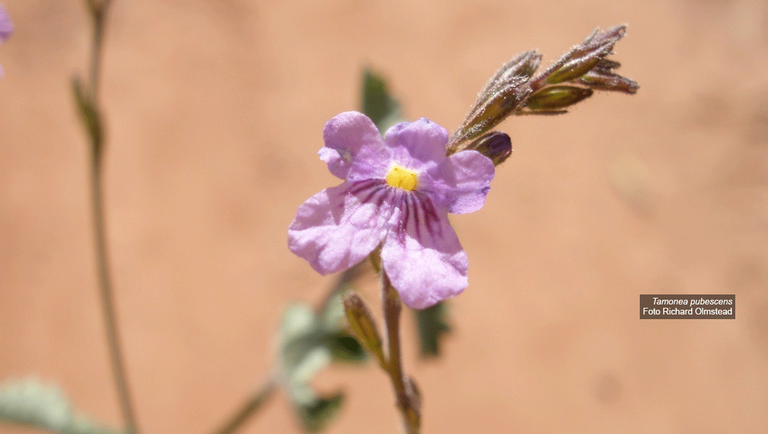
Tamonea pubescens | Photo: Richard Olmstead
On October 30, the journal Wildenowia published an article reviewing the taxonomy and nomenclature, as well as the geographical distribution, of the genus Tamonea, a small group of plants belonging to the Verbenaceae family. The study involved researchers from the Rio de Janeiro Botanical Garden, the Darwinion Botanical Institute (Argentina), the Federal University of Juiz de Fora, and the Federal University of Rio de Janeiro. One of the results of the research was the description of two new species of this genus, recorded in the Northeast Region of Brazil.
The genus Tamonea occurs throughout the Neotropical Region (South America, Central America, and Mexico) and can be recognized by a set of unique morphological characteristics, such as flowers with pedicels (thin stems that support the flower), corollas with nectar guides that function as visual trails for pollinators, fruits partially inserted in the persistent calyx, with four seeds, usually with horn-shaped protuberances.
This genus was last studied in 2008 and included six known species, one of which, Tamonea curassavica, was divided into five varieties. Based on new and thorough investigations, researchers now recognize a total of 11 species, six of which occur in Brazil, four of which are endemic, i.e., unique to the country.
The two new species described to science were named Tamonea maxima and Tamonea pubescens. Tamonea maxima occurs in the states of Alagoas, Bahia, Pernambuco, and Sergipe, in areas of Atlantic Forest and Caatinga. Tamonea pubescens has a more restricted distribution, being known only in the rocky fields of Chapada Diamantina, in the Espinhaço Range, state of Bahia, within the Caatinga.
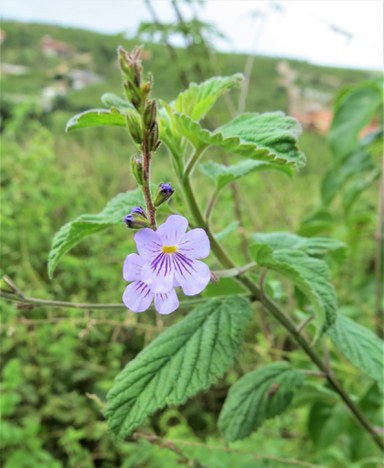
- Tamonea maxima | Foto: Gustavo Sandres

Researcher Pedro Cardoso (ENBT/JBRJ) explains that the review was essential to clarify the morphological differences between species, map their geographical distributions, and resolve complex aspects of nomenclature. "The research reinforces the critical importance of work in herbarium collections, which is essential for understanding the extent of Brazilian biodiversity. The work also highlights the importance of conserving areas of high biological richness, such as Chapada Diamantina and the remnants of original vegetation in the Atlantic Forest and Caatinga, regions that still harbor species unknown to science and suffer intense anthropic pressure," he concludes.