Notícias
Graduate Programs progress in the CAPES evaluation
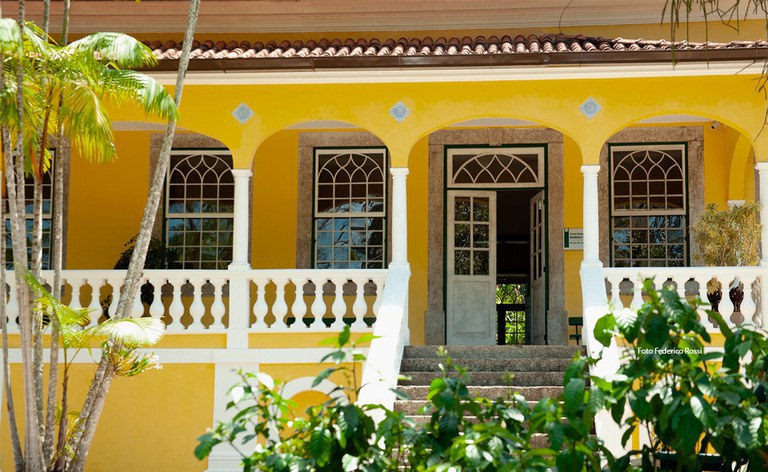
Empress Manor House, headquarters of ENBT | Photo: Federico Rossi
The two Postgraduate Programs (PPGs) of the National School of Tropical Botany (ENBT) of the Botanical Garden of Rio de Janeiro (JBRJ) progressed from grade 4 to 5 in the evaluation carried out by the Coordination for the Improvement of Higher Level Personnel (CAPES-MEC). CAPES is responsible for the regulation of post-graduation courses in the country and carries out its evaluation every four years. The Academic PPG in Botany and the Professional PPG Biodiversity in Protected Areas train highly specialized personnel to work in research, teaching and management in several themes in the area of Biodiversity. In all, 375 masters and doctors have already graduated from the JBRJ.
The CAPES evaluation considers several qualitative and quantitative indicators during the four-year period, relating to the scientific production of the faculty and students, the training offered and the quality of the theses and dissertations, as well as the infrastructure, organization and planning of the courses. Today there are more than 7,500 courses assessed throughout the country.
The result released this week refers to the 2017-2020 period and was surrounded by expectations, due to changes in evaluation guidelines in relation to previous cycles. One of the changes refers to the appreciation of production with insertion in society, a highlight of the Botanical Garden's programs, due to the leading role in projects of great relevance to public policy, conservation and sustainable use of our biodiversity and support for research programs in the country.
Post-graduate education is a multi-authored task, uninterrupted and dynamic at the same time, and the progress achieved reflects the competence and collective effort of the faculty, students, technical-administrative staff and directors of the Botanical Garden. The coordinators of the PPGs play a fundamental role, acting both in planning and organization for the day-to-day functioning, and also in fundraising and gathering and synthesizing all the information on the programs' activities to feed CAPES' detailed public databases, through the annual report.
The PPGs authorized to function by CAPES receive grades from 3 to 7, with grade 5 representing the consolidated and high quality programs. The increase in the grades obtained in this quadrennial evaluation was one of the main goals of the strategic plans of ENBT and the PPGs, positioning them to seek in the next evaluation cycle to join the select group of PPGs with grades 6 and 7, which are references in each area of knowledge and represent excellence in graduate studies at the international level. The challenge is great, demanding from the JPGS the maintenance of the quality already achieved in their training activities and intellectual production, the expansion of leadership and recognition on the national scene, and the increase in internationalization, through the establishment of cooperation with groups and institutions abroad, which are reflected in the research and scientific and technological production of teachers and students, as well as through institutional mobility programs, sending and receiving people; in addition to a more internationalized institutional performance, with selection processes for public abroad and the signing of double degree agreements (cotutela).
The ENBT/JBRJ PPGs annually hold open selection processes for new master's and doctoral students. Learn more in Education.