Notícias
From Flower to Flower - The Botanical Garden Museum's holiday program continues in January
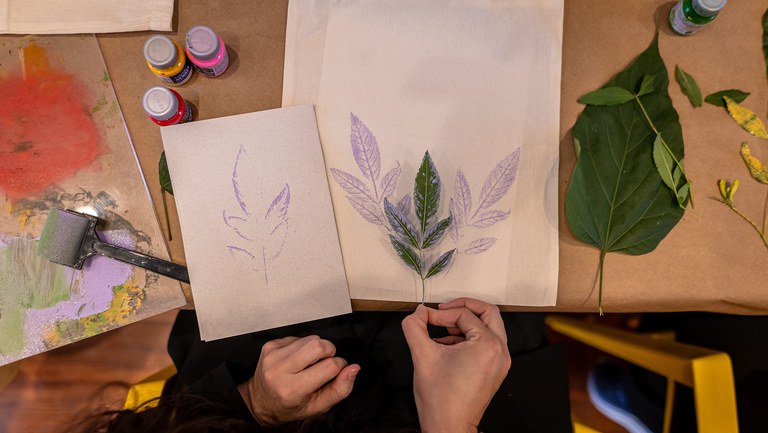
Art and Nature Workshop: Botanical printing | Photo: Leandro Ferreira
De Flor em Flor (From Flower to Flower), the special holiday program at the Botanical Garden Museum, continues this January with the participation of the Moleque Mateiro Institute, offering activities every weekend—Fridays, Saturdays, and Sundays. The IMM activities transform the Museum's gardens into a vast territory of discovery, through games, trails, play, and workshops that stimulate emotional and curious contact with nature. The proposal invites children to enjoy the freedom to play, sensory exploration, and recreational practices that promote group interaction and integration.
Among the highlights of the vacation program is also the special edition of Semear (Sowing), with As Pirilampas, a sensory activity aimed at babies from 0 to 3 years old, which promotes closeness to nature through stories, textures, aromas, and songs. The month's agenda also includes several “Art and Nature” workshops—such as floral arrangements, clay flowers, and botanical printing—in addition to the traditional “Botanical Games” and Garden Games, which encourage creativity and autonomy amid the landscapes of the Arboretum.
The public can also participate in educational tours that cover different areas of the Rio de Janeiro Botanical Garden, such as the Atlantic Forest Trail, the Arboretum, and the Sensory Garden, bringing children, families, and babies closer to Brazilian biodiversity and the research conducted by the institution.
The Botanical Garden Museum reinforces its commitment to offering experiences that combine science, art, culture, and nature, celebrating the holidays with activities that spark imagination, enchantment, and care for the environment from childhood.
Check out the Museum's schedule for January 2026:
Friday, January 2
Educational visit: Sensory cognition
Time: 9:00 a.m. to 10:00 a.m.
Meeting point: Reception Room
Audience: People with intellectual and/or mental disabilities and their companions
Spaces: 20, on a first-come, first-served basis
During this time reserved exclusively for people with intellectual and/or mental disabilities and their companions, in accordance with Municipal Law No. 6,278, the Museum adapts its exhibitions with sound adjustments and sensory objects, creating a welcoming environment. The guided tour invites the public to explore the space through different senses.
Botanical Games - From Flower to Flower
Time: 10 a.m. to 12 p.m.
Location: Museum gardens
Audience: children, families, and the general public.
Spots: 10 spots per session
Through educational games, visitors can have fun in group activities and learn about botanical species, characteristics of our biomes, and facts about Brazilian biodiversity.
Flora at stake - Target audience: ages 6 and up. This activity presents information about endangered Brazilian flora through a card game featuring illustrations of species found in the Monitoring Arena installation, which is part of the Botanical Garden Museum exhibition. The game promotes knowledge about species diversity, their conservation status, the main threats, and important measures to reverse the biodiversity crisis.
Checkers - Recycling to play. Target audience: ages 6 and up. In this activity, we will work on what we understand about waste and whether our “trash” could become a toy. To stimulate creativity, we will bring the traditional game of checkers, made with recycled materials.
Fruits of the Atlantic Forest - Target audience: ages 7 and up. A playful experience to spark curiosity about the native fruits of the Atlantic Forest. Through interactive games, participants explore colors, shapes, and flavors, expanding their knowledge about Brazilian biodiversity.
Sustainability in action - Target audience: ages 10 and up. The game challenges players to find solutions that reconcile urban growth with nature conservation, protecting endangered species and their habitats. Inspired by National Action Plans (NAPs), the game encourages participants to think about ways to implement, monitor, and develop sustainable strategies.
Garden games
Time: 10 a.m. to 12 p.m.
Location: museum gardens
Audience: children, families, and the general public.
Spots: 20 spots per session
We invite the public to learn more about Brazilian flora through games and activities. Playing is an opportunity to bring back childhood memories and introduce the public to more interesting facts about botanical diversity.
Moleque Mateiro
Time: 2:00 p.m. to 5:00 p.m.
Location: museum gardens
Audience: children, families, and the general public.
Spots: 20 spots per session
Through games, trails, activities, and workshops, the Moleque Mateiro Institute of Environmental Education (IMM) occupies the museum gardens during the holiday program. The activities focus on environmental education with an emphasis on emotional and curious contact with nature, free play, and recreational practices for group integration.
Saturday, January 3
Art and Nature Workshop: Botanical Printing
Time: 10 a.m. to 11 a.m.
Location: Museum gardens
Spaces: 20 spaces per session.
Garden games
Time: 10 a.m. to 12 p.m.
Location: Museum gardens
Audience: children, families, and the general public.
Spaces: 20 spaces per session.
We invite the public to learn more about Brazilian flora through games and activities. Playing is an opportunity to bring back childhood memories and introduce the public to more interesting facts about botanical diversity.
Moleque Mateiro
Time: 2pm to 5pm
Location: museum gardens
Audience: children, families, and the general public.
Spaces: 20 spaces per session
Through games, trails, activities, and workshops, the Moleque Mateiro Institute of Environmental Education (IMM) occupies the museum gardens during the holiday program. The activities focus on environmental education with an emphasis on emotional and curious contact with nature, free play, and recreational practices for group integration.
Sunday, January 4
Educational visit: Sensory cognition
Time: 9:00 a.m. to 10:00 a.m.
Meeting point: Reception Room
Audience: People with intellectual and/or mental disabilities and their companions
Spaces: 20, on a first-come, first-served basis
During this time reserved exclusively for people with intellectual and/or mental disabilities and their companions, in accordance with Municipal Law No. 6,278, the Museum adapts its exhibitions with sound adjustments and sensory objects, creating a welcoming environment. The guided tour invites the public to explore the space through different senses.
Garden games
Time: 10 a.m. to 12 p.m.
Location: museum gardens
Audience: children, families, and the general public.
Spots: 20 spots per session
We invite the public to learn more about Brazilian flora through games and activities. Playing is an opportunity to bring back childhood memories and introduce the public to more curiosities about botanical diversity.
Sowing with Lekolé
Time: sessions from 10:30 a.m. to 11:15 a.m. and 11:30 a.m. to 12:15 p.m.
Location: museum gardens
Audience: session 1: babies aged 0 to 3; session 2: children aged 4 to 10.
Places: 20, on a first-come, first-served basis
Description: Musical activity.
Moleque Mateiro (Woodland Kid)
Time: 2:00 p.m. to 5:00 p.m.
Location: museum gardens
Audience: children, families, and the general public.
Spaces: 20 spaces per session
Through games, trails, activities, and workshops, the Moleque Mateiro Institute for Environmental Education (IMM) takes over the museum gardens during the holiday program. The activities focus on environmental education with an emphasis on emotional and curious contact with nature, free play, and recreational group integration practices.
Educational visit + Arboretum
Time: 2:30 p.m. to 3:30 p.m.
Meeting point: Reception Room
Audience: children and families.
Spaces: 20, on a first-come, first-served basis
During this visit, the public is invited to learn about the scientific research carried out at the Rio de Janeiro Botanical Garden—from fieldwork in the forests to laboratory investigations. It reveals how scientists study, monitor, and help conserve the rich diversity of Brazilian flora, bringing visitors closer to the fascinating world of science and botany. The itinerary brings visitors closer to the fascinating world of science and botany. The starting point will be the Museum, ending at the Arboretum. In this edition of De Flor em Flor, the Moleque Mateiro institute will participate in the visit to the arboretum, bringing adventures and discoveries to the trail.
Monday, January 5
Garden games
Time: 10 a.m. to 12 p.m.
Location: museum gardens
Audience: children, families, and the general public.
Spaces: 20 spaces per session
We invite the public to learn more about Brazilian flora through games and activities. Playing is an opportunity to bring back childhood memories and introduce the public to more interesting facts about botanical diversity.
Art and Nature Workshop: clay flowers
Time: 2pm to 5pm
Location: museum gardens
Audience: children, families, and the general public.
Spaces: 20 spaces per session
In this activity, we propose a new perspective on Brazilian flora through an artistic workshop with clay.
Tuesday, January 6
Garden games
Time: 10 a.m. to 12 p.m.
Location: museum gardens
Audience: children, families, and the general public.
Spaces: 20 spaces per session
We invite the public to learn more about Brazilian flora through games and activities. Playing is an opportunity to bring back childhood memories and introduce the public to more interesting facts about botanical diversity.
Art and Nature Workshop: floral arrangements
Time: 2pm to 5pm
Location: museum gardens
Audience: children, families, and the general public.
Spaces: 20 spaces per session
Description: In addition to learning a little more about the characteristics and curiosities of our flora, participants will be able to make their own floral arrangements with recycled materials and plants that can be found in the Botanical Garden Arboretum.
Thursday, January 8
Botanical Games - From Flower to Flower
Time: 10 a.m. to 12 p.m.
Location: Museum gardens
Audience: children, families, and the general public.
Spaces: 10 spaces per session
Through educational games, visitors can have fun in group activities and learn about botanical species, characteristics of our biomes, and facts about Brazilian biodiversity.
Flora in Play - Target audience: ages 6 and up. The activity presents information about endangered Brazilian flora through a card game with illustrations of species featured in the Monitoring Arena installation, which is part of the Botanical Garden Museum exhibition. The game promotes knowledge about species diversity, their conservation status, the main threats, and important measures to reverse the biodiversity crisis.
Checkers - Recycling to play. Target audience: ages 6 and up. In this activity, we will work on what we understand about trash and whether our “trash” could become a toy. To stimulate creativity, we will bring the traditional game of checkers, made with recycled materials.
Fruits of the Atlantic Forest - Target audience: ages 7 and up. A playful experience to spark curiosity about the native fruits of the Atlantic Forest. Through interactive games, participants explore colors, shapes, and flavors, expanding their knowledge of Brazilian biodiversity.
Sustainability in action - Target audience: ages 10 and up. The game challenges players to find solutions that reconcile urban growth with nature conservation, protecting endangered species and their habitats. Inspired by National Action Plans (NAPs), the game encourages participants to think about ways to implement, monitor, and develop sustainable strategies.
Garden games
Time: 10 a.m. to 12 p.m.
Location: museum gardens
Audience: children, families, and the general public.
Spaces: 20 spaces per session
We invite the public to learn more about Brazilian flora through games and activities. Playing is an opportunity to bring back childhood memories and introduce the public to more interesting facts about botanical diversity.
Art and Nature Workshop: Kokedama
Time: 2:00 p.m. to 5:00 p.m.
Target audience: ages 10 and up.
Location: Multipurpose Room
Spaces: 20 spaces per session.
In this activity, participants will be invited to learn the Japanese technique of kokedama, creating arrangements of plants suspended in moss-covered spheres.
Friday, January 9
Educational visit: Sensory cognition
Time: 9:00 a.m. to 10:00 a.m.
Meeting point: Reception Room
Audience: People with intellectual and/or mental disabilities and their companions
Spaces: 20, on a first-come, first-served basis
During this time reserved exclusively for people with intellectual and/or mental disabilities and their companions, in accordance with Municipal Law No. 6,278, the Museum adapts its exhibitions with sound adjustments and sensory objects, creating a welcoming environment. The guided tour invites the public to explore the space through different senses.
Botanical Games - From Flower to Flower
Time: 10 a.m. to 12 p.m.
Location: Museum gardens
Audience: children, families, and the general public.
Spaces: 10 spaces per session
Through educational games, visitors can have fun in group activities and learn about botanical species, characteristics of our biomes, and data on Brazilian biodiversity.
Flora at stake - Target audience: ages 6 and up. The activity presents information about endangered Brazilian flora through a card game with illustrations of species featured in the Monitoring Arena installation, which is part of the Botanical Garden Museum exhibition. The game promotes knowledge about species diversity, their conservation status, the main threats, and important measures to reverse the biodiversity crisis.
Checkers - Recycling to play. Target audience: ages 6 and up. In this activity, we will work on what we understand about trash and whether our “trash” could become a toy. To stimulate creativity, we will bring the traditional game of checkers, made with recycled materials.
Fruits of the Atlantic Forest - Target audience: ages 7 and up. A playful experience to spark curiosity about the native fruits of the Atlantic Forest. Through interactive games, participants explore colors, shapes, and flavors, expanding their knowledge of Brazilian biodiversity.
Sustainability in action - Target audience: ages 10 and up. The game proposes finding solutions that reconcile the growth of cities with the preservation of nature, protecting endangered species and their habitats. Inspired by the National Action Plans (PAN), the game encourages participants to think about ways to implement, monitor, and develop sustainable strategies.
Garden Games
Time: 10 a.m. to 12 p.m.
Location: museum gardens
Audience: children, families, and the general public.
Spaces: 20 spaces per session
We invite the public to learn more about Brazilian flora through games and activities. Playing is an opportunity to bring back childhood memories and introduce the public to more interesting facts about botanical diversity.
Moleque Mateiro (Woodland Kids)
Time: 2:00 p.m. to 5:00 p.m.
Location: museum gardens
Audience: children, families, and the general public.
Spaces: 20 spaces per session
Through games, trails, activities, and workshops, the Moleque Mateiro Institute of Environmental Education (IMM) occupies the museum gardens during the holiday program. The activities focus on environmental education with an emphasis on emotional and curious contact with nature, free play, and recreational practices for group integration.
Saturday, January 10
Art and Nature Workshop: capoeira class De Flor em Flor (From Flower to Flower)
Location: museum gardens
Time: 10 a.m. to 11 a.m.
Audience: ages 3 and up
Spots: 30 spots available on a first-come, first-served basis.
In this presentation, the swing and musicality of Capoeira meet the strength and ancestry of the Atlantic Forest, to the sound of the Berimbau, which is made from Biriba (Eschweilera ovata), a wood that grows in this forest. Visitors will discover how Capoeira itself, which also gives its name to the secondary forest that sprouts after cutting, connects us with nature. The action will be followed by a Capoeira Circle for children. Participants will be invited to try out the basic movements of this Afro-Brazilian cultural expression, which is dance, fight, and game, learning about its history of resistance and community. The circle will be formed so that everyone can experience the importance of bodily dialogue, respect for others, and connection with the roots that strengthen us, just like the trees in the forest.
Garden games
Time: 10 a.m. to 12 p.m.
Location: museum gardens
Audience: children, families, and the general public.
Spaces: 20 spaces per session
We invite the public to learn more about Brazilian flora through games and activities. Playing is an opportunity to bring back childhood memories and introduce the public to more interesting facts about botanical diversity.
Moleque Mateiro
Time: 2pm to 5pm
Location: museum gardens
Audience: children, families, and the general public.
Spots: 20 spots per session
Through games, trails, activities, and workshops, the Moleque Mateiro Institute of Environmental Education (IMM) occupies the museum gardens during the holiday program. The activities focus on environmental education with an emphasis on emotional and curious contact with nature, free play, and recreational practices for group integration.
Sunday, January 11
Educational visit: Sensory cognition
Time: 9:00 a.m. to 10:00 a.m.
Meeting point: Reception Room
Audience: People with intellectual and/or mental disabilities and their companions
Spaces: 20, on a first-come, first-served basis
During this time reserved exclusively for people with intellectual and/or mental disabilities and their companions, in accordance with Municipal Law No. 6,278, the Museum adapts its exhibitions with sound adjustments and sensory objects, creating a welcoming environment. The guided tour invites the public to explore the space through different senses.
Sowing, with Pirilampas
Time: 10:30 a.m. to 11:30 a.m.
Location: Multipurpose Room
Audience: children aged 2 to 6
Spots: 20, on a first-come, first-served basis
In this experience, music and theater intertwine through play and interaction between artist-educators and babies, children, and adults.
Moleque Mateiro
Time: 2:00 p.m. to 5:00 p.m.
Location: museum gardens
Audience: children, families, and the general public.
Spots: 20 spots per session
Through games, trails, play, and workshops, the Moleque Mateiro Institute of Environmental Education (IMM) occupies the museum gardens during the holiday program. The activities focus on environmental education with an emphasis on emotional and curious contact with nature, free play, and recreational practices for group integration.
Educational tour + Arboretum
Time: 2:30 p.m. to 3:30 p.m.
Meeting point: Reception Room
Audience: children and families.
Spaces: 20, on a first-come, first-served basis
During this tour, visitors are invited to learn about the scientific research conducted at the Rio de Janeiro Botanical Garden—from fieldwork in the forests to laboratory investigations. It reveals how scientists study, monitor, and help conserve the rich diversity of Brazilian flora, bringing visitors closer to the fascinating world of science and botany. The itinerary brings visitors closer to the fascinating world of science and botany. The starting point will be the Museum, ending at the Arboretum. In this edition of De Flor em Flor, the Moleque Mateiro institute will participate in the visit to the arboretum, bringing adventures and discoveries to the trail.
Monday, January 12
Garden games
Time: 10 a.m. to 12 p.m.
Location: museum gardens
Audience: children, families, and the general public.
Spots: 20 spots per session
We invite the public to learn more about Brazilian flora through games and activities. Playing is an opportunity to bring back childhood memories and introduce the public to more curiosities about botanical diversity.
Art and Nature Workshop: clay flowers
Time: 2:00 p.m. to 5:00 p.m.
Location: museum gardens
Audience: children, families, and the general public.
Spaces: 20 spaces per session
In this activity, we propose a new perspective on Brazilian flora through an artistic workshop with clay.
Tuesday, January 13
Garden games
Time: 10 a.m. to 12 p.m.
Location: museum gardens
Audience: children, families, and the general public.
Spaces: 20 spaces per session
We invite the public to learn more about Brazilian flora through games and activities. Playing is an opportunity to bring back childhood memories and introduce the public to more interesting facts about botanical diversity.
Art and Nature Workshop: floral arrangements
Time: 2pm to 5pm
Location: museum gardens
Audience: children, families, and the general public.
Spaces: 20 spaces per session
Description: In addition to learning a little more about the characteristics and curiosities of our flora, participants will be able to make their own floral arrangements with recycled materials and plants that can be found in the Botanical Garden Arboretum.
Thursday, January 15
Botanical Games - From Flower to Flower
Time: 10 a.m. to 12 p.m.
Location: Museum gardens
Audience: children, families, and the general public.
Spaces: 10 spaces per session
Through educational games, visitors can have fun in group activities and learn about botanical species, characteristics of our biomes, and facts about Brazilian biodiversity.
Flora in Play - Target audience: ages 6 and up. The activity presents information about endangered Brazilian flora through a card game with illustrations of species present in the Monitoring Arena installation, which is part of the Botanical Garden Museum exhibition. The game promotes the construction of knowledge about species diversity, their conservation status, the main threats, and important measures to reverse the biodiversity crisis.
Checkers - Recycling to play. Target audience: ages 6 and up. In this activity, we will work on what we understand about trash and whether our “trash” could become a toy. To stimulate creativity, we will bring the traditional game of checkers, made with recycled materials.
Fruits of the Atlantic Forest - Target audience: ages 7 and up. A playful experience to spark curiosity about the native fruits of the Atlantic Forest. Through interactive games, participants explore colors, shapes, and flavors, expanding their knowledge of Brazilian biodiversity.
Garden games
Time: 10 a.m. to 12 p.m.
Location: museum gardens
Audience: children, families, and the general public.
Spaces: 20 spaces per session
We invite the public to learn more about Brazilian flora through games and activities. Playing is an opportunity to bring back childhood memories and introduce the public to more interesting facts about botanical diversity.
Art and Nature Workshop: papier-mâché, with Embrapa Solos
Time: 2:00 p.m. to 5:00 p.m.
Target audience: children, families, and the general public.
Location: museum gardens.
Spaces: 20 spaces per session.
Friday, January 16
Educational visit: Sensory cognition
Time: 9:00 a.m. to 10:00 a.m.
Meeting point: Reception Room
Audience: people with intellectual and/or mental disabilities and their companions
Spaces: 20, on a first-come, first-served basis
During this time reserved exclusively for people with intellectual and/or mental disabilities and their companions, in accordance with Municipal Law No. 6,278, the Museum adapts its exhibitions with sound adjustments and sensory objects, creating a welcoming environment. The guided tour invites the public to explore the space through different senses.
Botanical Games - From Flower to Flower
Time: 10 a.m. to 12 p.m.
Location: Museum gardens
Audience: children, families, and the general public.
Spaces: 10 spaces per session
Through educational games, visitors can have fun in group activities and learn about botanical species, characteristics of our biomes, and data on Brazilian biodiversity.
Flora at stake - Target audience: ages 6 and up. The activity presents information about endangered Brazilian flora through a card game with illustrations of species featured in the Monitoring Arena installation, which is part of the Botanical Garden Museum exhibition. The game promotes knowledge about species diversity, their conservation status, the main threats, and important measures to reverse the biodiversity crisis.
Checkers - Recycling to play. Target audience: ages 6 and up. In this activity, we will work on what we understand about trash and whether our “trash” could become a toy. To stimulate creativity, we will bring the traditional game of checkers, made with recycled materials.
Fruits of the Atlantic Forest - Target audience: ages 7 and up. A playful experience to spark curiosity about the native fruits of the Atlantic Forest. Through interactive games, participants explore colors, shapes, and flavors, expanding their knowledge of Brazilian biodiversity.
Sustainability in action - Target audience: ages 10 and up. The game proposes finding solutions that reconcile the growth of cities with the preservation of nature, protecting endangered species and their habitats. Inspired by the National Action Plans (PAN), the game encourages participants to think about ways to implement, monitor, and develop sustainable strategies.
Garden Games
Time: 10 a.m. to 12 p.m.
Location: museum gardens
Audience: children, families, and the general public.
Spaces: 20 spaces per session
We invite the public to learn more about Brazilian flora through games and activities. Playing is an opportunity to bring back childhood memories and introduce the public to more interesting facts about botanical diversity.
Saturday, January 17
Art and Nature Workshop: capoeira class
Location: museum gardens
Time: 10 a.m. to 11 a.m.
Audience: ages 3 and up
Spots: 30 spots available on a first-come, first-served basis.
In this presentation, the swing and musicality of Capoeira meet the strength and ancestry of the Atlantic Forest, to the sound of the Berimbau, which is made from Biriba (Eschweilera ovata), a wood that grows in this forest. Visitors will discover how Capoeira itself, which also gives its name to the secondary forest that sprouts after cutting, connects us with nature. The action will be followed by a Capoeira Circle for children. Participants will be invited to try out the basic movements of this Afro-Brazilian cultural expression, which is dance, fight, and game, learning about its history of resistance and community. The circle will be formed so that everyone can experience the importance of bodily dialogue, respect for others, and connection with the roots that strengthen us, just like the trees in the forest.
Garden games
Time: 10 a.m. to 12 p.m.
Location: museum gardens
Audience: Children, families, and the general public.
Spaces: 20 spaces per session
We invite the public to learn more about Brazilian flora through games and activities. Playing is an opportunity to bring back childhood memories and introduce the public to more interesting facts about botanical diversity.
Children's Festival - From Flower to Flower
Time: 2:00 p.m. to 5:00 p.m.
Location: museum gardens
Audience: Children, families, and the general public.
Program:
2:00 p.m. to 3:00 p.m. - Children's theater: The Cicada and the Ant
3:00 p.m. to 4:00 p.m. - Art and Nature: Petek'as - with Carmel Puri
4:00 p.m. to 5:00 p.m. - Children's show by the Carimbaby group
Sunday, January 18
Educational visit: Cognitive sensory
Time: 9:00 a.m. to 10:00 a.m.
Meeting point: Reception Room
Audience: People with intellectual and/or mental disabilities and their companions
Spaces: 20, on a first-come, first-served basis
During this time reserved exclusively for people with intellectual and/or mental disabilities and their companions, in accordance with Municipal Law No. 6,278, the Museum adapts its exhibitions with sound adjustments and sensory objects, creating a welcoming environment. The guided tour invites the public to explore the space through different senses.
Sowing, with Cirandinha Bebê e Cia
Time: 10:30 a.m. to 11:30 a.m.
Location: Multipurpose Room
Audience: babies from 0 to 3 years old
Spaces: 20, on a first-come, first-served basis
Sensory activity for babies that, through music, stories, aromas, and textures, promotes an affectionate and creative connection with nature.
Educational tour + Arboretum
Time: 2:30 p.m. to 3:30 p.m.
Meeting point: Reception Room
Audience: children and families.
Spaces: 20, on a first-come, first-served basis
During this tour, visitors are invited to learn about the scientific research conducted at the Rio de Janeiro Botanical Garden—from fieldwork in the forests to laboratory investigations. It reveals how scientists study, monitor, and help conserve the rich diversity of Brazilian flora, bringing visitors closer to the fascinating world of science and botany. The itinerary brings visitors closer to the fascinating world of science and botany. The starting point will be the Museum, ending at the Arboretum. In this edition of De Flor em Flor, the Moleque Mateiro institute will participate in the visit to the arboretum, bringing adventures and discoveries to the trail.
Monday, January 19
Garden games
Time: 10 a.m. to 12 p.m.
Location: museum gardens
Audience: children, families, and the general public.
Spaces: 20 spaces per session
We invite the public to learn more about Brazilian flora through games and activities. Playing is an opportunity to bring back childhood memories and introduce the public to more interesting facts about botanical diversity.
Art and Nature Workshop: clay flowers
Time: 2pm to 5pm
Location: museum gardens
Audience: children, families, and the general public.
Spaces: 20 spaces per session
In this activity, we propose a new perspective on Brazilian flora through an artistic workshop with clay.
Tuesday, January 20
Garden games
Time: 10 a.m. to 12 p.m.
Location: museum gardens
Audience: children, families, and the general public.
Places: 20 places per session
We invite the public to learn more about Brazilian flora through games and activities. Playing is an opportunity to bring back childhood memories and introduce the public to more interesting facts about botanical diversity.
Art and Nature Workshop: floral arrangements
Time: 2pm to 5pm
Location: museum gardens
Audience: children, families, and the general public.
Spaces: 20 spaces per session
Description: In addition to learning a little more about the characteristics and curiosities of our flora, participants will be able to make their own floral arrangements with recycled materials and plants that can be found in the Botanical Garden Arboretum.
Thursday, January 22
Botanical Games - From Flower to Flower
Time: 10 a.m. to 12 p.m.
Location: Museum gardens
Audience: children, families, and the general public.
Spaces: 10 spaces per session
Through educational games, visitors can have fun in group activities and learn about botanical species, characteristics of our biomes, and facts about Brazilian biodiversity.
Flora in Play - Target audience: ages 6 and up. The activity presents information about endangered Brazilian flora through a card game with illustrations of species present in the Monitoring Arena installation, which is part of the Botanical Garden Museum exhibition. The game promotes the construction of knowledge about species diversity, their conservation status, the main threats, and important measures to reverse the biodiversity crisis.
Checkers - Recycling to play. Target audience: ages 6 and up. In this activity, we will work on what we understand about trash and whether our “trash” could become a toy. To stimulate creativity, we will bring the traditional game of checkers, made with recycled materials.
Fruits of the Atlantic Forest - Target audience: ages 7 and up. A playful experience to spark curiosity about the native fruits of the Atlantic Forest. Through interactive games, participants explore colors, shapes, and flavors, expanding their knowledge of Brazilian biodiversity.
Sustainability in action - Target audience: ages 10 and up. The game challenges players to find solutions that reconcile urban growth with nature conservation, protecting endangered species and their habitats. Inspired by National Action Plans (NAPs), the game encourages participants to think about ways to implement, monitor, and develop sustainable strategies.
Garden games
Time: 10 a.m. to 12 p.m.
Location: museum gardens
Audience: children, families, and the general public.
Spaces: 20 spaces per session
We invite the public to learn more about Brazilian flora through games and activities. Playing is an opportunity to bring back childhood memories and introduce the public to more interesting facts about botanical diversity.
Art and Nature Workshop: Kokedama
Time: 2pm to 5pm
Target audience: ages 10 and up.
Location: Multipurpose Room
Spaces: 20 spaces per session.
In this activity, the public will be invited to learn the Japanese technique of kokedama, creating arrangements of plants suspended in moss-covered spheres.
Friday, January 23
Educational visit: Sensory cognition
Time: 9:00 a.m. to 10:00 a.m.
Meeting point: Reception Room
Audience: people with intellectual and/or mental disabilities and their companions
Spaces: 20, on a first-come, first-served basis
During this time reserved exclusively for people with intellectual and/or mental disabilities and their companions, in accordance with Municipal Law No. 6,278, the Museum adapts its exhibitions with sound adjustments and sensory objects, creating a welcoming environment. The guided tour invites the public to explore the space through different senses.
Botanical Games - From Flower to Flower
Time: 10 a.m. to 12 p.m.
Location: Museum gardens
Audience: children, families, and the general public.
Spaces: 10 spaces per session
Through educational games, visitors can have fun in group activities and learn about botanical species, characteristics of our biomes, and data on Brazilian biodiversity.
Flora at stake - Target audience: ages 6 and up. The activity presents information about endangered Brazilian flora through a card game with illustrations of species featured in the Monitoring Arena installation, which is part of the Botanical Garden Museum exhibition. The game promotes knowledge about species diversity, their conservation status, the main threats, and important measures to reverse the biodiversity crisis.
Checkers - Recycling to play. Target audience: ages 6 and up. In this activity, we will work on what we understand about trash and whether our “trash” could become a toy. To stimulate creativity, we will bring the traditional game of checkers, made with recycled materials.
Fruits of the Atlantic Forest - Target audience: ages 7 and up. A playful experience to spark curiosity about the native fruits of the Atlantic Forest. Through interactive games, participants explore colors, shapes, and flavors, expanding their knowledge of Brazilian biodiversity.
Sustainability in Action - Target audience: ages 10 and up. The game proposes finding solutions that reconcile the growth of cities with the preservation of nature, protecting endangered species and their habitats. Inspired by the National Action Plans (PAN), the game encourages participants to think about ways to implement, monitor, and develop sustainable strategies.
Garden games
Time: 10 a.m. to 12 p.m.
Location: museum gardens
Audience: children, families, and the general public.
Spaces: 20 spaces per session
We invite the public to learn more about Brazilian flora through games and activities. Playing is an opportunity to bring back childhood memories and introduce the public to more interesting facts about botanical diversity.
Botanical Discoveries: Sounds of Nature
Time: 3:30 p.m. to 4 p.m.
Location: Botanical Garden Museum + Tom Jobim Space
Audience: children, families, and the general public.
Spaces: 20 spaces per session.
The activity offers a sensory and reflective immersion in the sounds of nature, such as birdsong, the rustling of leaves, and the flow of water, elements that greatly inspired the work of maestro Tom Jobim.
Saturday, January 24
Art and Nature Workshop: Capoeira Class De Flor em Flor (From Flower to Flower)
Location: Museum gardens
Time: 10:00 a.m. to 11:00 a.m.
Audience: ages 3 and up
Spots: 30 spots available on a first-come, first-served basis.
In this presentation, the swing and musicality of Capoeira meet the strength and ancestry of the Atlantic Forest, to the sound of the Berimbau, which is made from Biriba (Eschweilera ovata), a wood that grows in this forest. Visitors will discover how Capoeira itself, which also gives its name to the secondary forest that sprouts after cutting, connects us with nature. The action will be followed by a Capoeira Circle for children. Participants will be invited to try out the basic movements of this Afro-Brazilian cultural expression, which is dance, fight, and game, learning about its history of resistance and community. The circle will be formed so that everyone can experience the importance of bodily dialogue, respect for others, and connection with the roots that strengthen us, just like the trees in the forest.
Garden games
Time: 10 a.m. to 12 p.m.
Location: museum gardens
Audience: children, families, and the general public.
Spaces: 20 spaces per session
We invite the public to learn more about Brazilian flora through games and activities. Playing is an opportunity to bring back childhood memories and introduce the public to more curiosities about botanical diversity.
Children's Festival - From Flower to Flower
Time: 2:00 p.m. to 5:00 p.m.
Location: museum gardens
Audience: children, families, and the general public.
Program:
2pm - 3pm - Roda Gigante Group
3pm - 4pm - Art and Nature: Seed Guardian Necklace - with Carmel Puri
4pm - 5pm - Farra dos Brinquedos Show.
Sunday, January 25 - Accessible Sunday
Educational visit: Sensory cognition
Time: 9:00 a.m. to 10:00 a.m.
Meeting point: Reception Room
Audience: people with intellectual and/or mental disabilities and their companions
Spaces: 20, on a first-come, first-served basis
During this time reserved exclusively for people with intellectual and/or mental disabilities and their companions, in accordance with Municipal Law No. 6,278, the Museum adapts its exhibitions with sound adjustments and sensory objects, creating a welcoming environment. The guided tour invites the public to explore the space through different senses.
Sowing, with Lekolé
Time: sessions from 10:30 a.m. to 11:15 a.m. and 11:30 a.m. to 12:15 p.m.
Location: museum gardens
Audience: session 1: babies from 0 to 3 years old; session 2: children from 4 to 10 years old.
Places: 20, on a first-come, first-served basis
Description: Musical activity
Educational tour + Arboretum - From Flower to Flower
Time: 2:30 p.m. to 3:30 p.m.
Meeting point: Reception Room
Audience: children and families.
Spaces: 20, on a first-come, first-served basis
During this tour, visitors are invited to learn about the scientific research conducted at the Rio de Janeiro Botanical Garden—from fieldwork in the forests to laboratory investigations. It reveals how scientists study, monitor, and help conserve the rich diversity of Brazilian flora, bringing visitors closer to the fascinating world of science and botany. The itinerary brings visitors closer to the fascinating world of science and botany. The tour will start at the Museum and end at the Arboretum. This tour will provide deaf or hearing-impaired people with full access to educational and exhibition content, enabling interaction and active participation.
Monday, January 26
Garden games
Time: 10 a.m. to 12 p.m.
Location: museum gardens
Audience: children, families, and the general public.
Spaces: 20 spaces per session
We invite the public to learn more about Brazilian flora through games and activities. Playing is an opportunity to bring back childhood memories and introduce the public to more interesting facts about botanical diversity.
Art and Nature Workshop: clay flowers
Time: 2pm to 5pm
Location: museum gardens
Audience: children, families, and the general public.
Spaces: 20 spaces per session
In this activity, we propose a new look at Brazilian flora through an artistic workshop with clay.
Tuesday, January 27
Garden games
Time: 10 a.m. to 12 p.m.
Location: museum gardens
Audience: children, families, and the general public.
Spaces: 20 spaces per session
We invite the public to learn more about Brazilian flora through games and activities. Playing is an opportunity to bring back childhood memories and introduce the public to more interesting facts about botanical diversity.
Art and Nature Workshop: floral arrangements
Time: 2pm to 5pm
Location: museum gardens
Audience: children, families, and the general public.
Spaces: 20 spaces per session
Description: In addition to learning a little more about the characteristics and curiosities of our flora, participants will be able to make their own floral arrangements with recycled materials and plants that can be found in the Botanical Garden Arboretum.
Thursday, January 29
Botanical Games - From Flower to Flower
Time: 10 a.m. to 12 p.m.
Location: Museum gardens
Audience: children, families, and the general public.
Spaces: 10 spaces per session
Through educational games, visitors can have fun in group activities and learn about botanical species, characteristics of our biomes, and facts about Brazilian biodiversity.
Flora in Play - Target audience: ages 6 and up. The activity presents information about endangered Brazilian flora through a card game with illustrations of species present in the Monitoring Arena installation, which is part of the Botanical Garden Museum exhibition. The game promotes the construction of knowledge about species diversity, their conservation status, the main threats, and important measures to reverse the biodiversity crisis.
Checkers - Recycling to play. Target audience: ages 6 and up. In this activity, we will work on what we understand about trash and whether our “trash” could become a toy. To stimulate creativity, we will bring the traditional game of checkers, made with recycled materials.
Fruits of the Atlantic Forest - Target audience: ages 7 and up. A playful experience to spark curiosity about the native fruits of the Atlantic Forest. Through interactive games, participants explore colors, shapes, and flavors, expanding their knowledge of Brazilian biodiversity.
Sustainability in action - Target audience: ages 10 and up. The game challenges players to find solutions that reconcile urban growth with nature conservation, protecting endangered species and their habitats. Inspired by National Action Plans (NAPs), the game encourages participants to think about ways to implement, monitor, and develop sustainable strategies.
Garden games
Time: 10 a.m. to 12 p.m.
Location: museum gardens
Audience: children, families, and the general public.
Spaces: 20 spaces per session
We invite the public to learn more about Brazilian flora through games and activities. Playing is an opportunity to bring back childhood memories and introduce the public to more interesting facts about botanical diversity.
Art and Nature Workshop: papier-mâché, with Embrapa Solos
Time: 2:00 p.m. to 5:00 p.m.
Target audience: children, families, and the general public.
Location: museum gardens.
Spaces: 20 spaces per session.
Friday, January 30
Educational visit: Sensory cognition
Time: 9:00 a.m. to 10:00 a.m.
Meeting point: Reception Room
Audience: people with intellectual and/or mental disabilities and their companions
Spaces: 20, on a first-come, first-served basis
During this time reserved exclusively for people with intellectual and/or mental disabilities and their companions, in accordance with Municipal Law No. 6,278, the Museum adapts its exhibitions with sound adjustments and sensory objects, creating a welcoming environment. The guided tour invites the public to explore the space through different senses.
Botanical Games - From Flower to Flower
Time: 10 a.m. to 12 p.m.
Location: Museum gardens
Audience: children, families, and the general public.
Spaces: 10 spaces per session
Through educational games, visitors can have fun in group activities and learn about botanical species, characteristics of our biomes, and data on Brazilian biodiversity.
Flora at stake - Target audience: ages 6 and up. The activity presents information about endangered Brazilian flora through a card game with illustrations of species featured in the Monitoring Arena installation, which is part of the Botanical Garden Museum exhibition. The game promotes knowledge about species diversity, their conservation status, the main threats, and important measures to reverse the biodiversity crisis.
Checkers - Recycling to play. Target audience: ages 6 and up. In this activity, we will work on what we understand about trash and whether our “trash” could become a toy. To stimulate creativity, we will bring the traditional game of checkers, made with recycled materials.
Fruits of the Atlantic Forest - Target audience: ages 7 and up. A playful experience to spark curiosity about the native fruits of the Atlantic Forest. Through interactive games, participants explore colors, shapes, and flavors, expanding their knowledge of Brazilian biodiversity.
Sustainability in action - Target audience: ages 10 and up. The game proposes finding solutions that reconcile the growth of cities with the preservation of nature, protecting endangered species and their habitats. Inspired by the National Action Plans (PAN), the game encourages participants to think about ways to implement, monitor, and develop sustainable strategies.
Garden Games
Time: 10 a.m. to 12 p.m.
Location: museum gardens
Audience: children, families, and the general public.
Spaces: 20 spaces per session
We invite the public to learn more about Brazilian flora through games and activities. Playing is an opportunity to bring back childhood memories and introduce the public to more interesting facts about botanical diversity.
Saturday, January 31
Art and Nature Workshop: capoeira class
Location: museum gardens
Time: 10 a.m. to 11 a.m.
Audience: ages 3 and up
Spots: 30 spots available on a first-come, first-served basis.
In this presentation, the swing and musicality of Capoeira meet the strength and ancestry of the Atlantic Forest, to the sound of the Berimbau, which is made from Biriba (Eschweilera ovata), a wood that grows in this forest. Visitors will discover how Capoeira itself, which also gives its name to the secondary forest that sprouts after cutting, connects us with nature. The action will be followed by a Capoeira Circle for children. Participants will be invited to try out the basic movements of this Afro-Brazilian cultural expression, which is dance, fight, and game, learning about its history of resistance and community. The circle will be formed so that everyone can experience the importance of bodily dialogue, respect for others, and connection with the roots that strengthen us, just like the trees in the forest.
Garden games
Time: 10 a.m. to 12 p.m.
Location: museum gardens
Audience: Children, families, and the general public.
Spaces: 20 spaces per session
We invite the public to learn more about Brazilian flora through games and activities. Playing is an opportunity to bring back childhood memories and introduce the public to more interesting facts about botanical diversity.
Moleque Mateiro
Time: 2:00 p.m. to 5:00 p.m.
Location: museum gardens
Audience: children, families, and the general public.
Spaces: 20 spaces per session
Through games, trails, activities, and workshops, the Moleque Mateiro Institute of Environmental Education (IMM) occupies the museum gardens during the holiday program. The activities focus on environmental education with an emphasis on emotional and curious contact with nature, free play, and recreational practices for group integration.
Sunday, February 1
Educational visit: Sensory cognition
Time: 9:00 a.m. to 10:00 a.m.
Meeting point: Reception Room
Audience: People with intellectual and/or mental disabilities and their companions
Spaces: 20, on a first-come, first-served basis
During this time reserved exclusively for people with intellectual and/or mental disabilities and their companions, in accordance with Municipal Law No. 6,278, the Museum adapts its exhibitions with sound adjustments and sensory objects, creating a welcoming environment. The guided tour invites the public to explore the space through different senses.
Sowing, with Cirandinha Bebê e Cia.
Time: 10:30 a.m. to 11:30 a.m.
Location: museum gardens
Audience: children aged 2 to 6.
Spots: 20, on a first-come, first-served basis
Sensory activity for babies that, through music, stories, aromas, and textures, promotes an affectionate and creative connection with nature.
Moleque Mateiro (Woodland Kid)
Time: 2:00 p.m. to 5:00 p.m.
Location: museum gardens
Audience: children, families, and the general public.
Spaces: 20 spaces per session
Through games, trails, activities, and workshops, the Moleque Mateiro Institute for Environmental Education (IMM) takes over the museum gardens during the holiday program. The activities focus on environmental education with an emphasis on emotional and curious contact with nature, free play, and recreational group integration practices.
Educational visit + Arboretum
Time: 2:30 p.m. to 3:30 p.m.
Meeting point: Reception Room
Audience: children and families.
Spaces: 20, on a first-come, first-served basis
During this visit, the public is invited to learn about the scientific research carried out at the Rio de Janeiro Botanical Garden—from fieldwork in the forests to laboratory investigations. It reveals how scientists study, monitor, and help conserve the rich diversity of Brazilian flora, bringing visitors closer to the fascinating world of science and botany. The itinerary brings visitors closer to the fascinating world of science and botany. The starting point will be the Museum, ending at the Arboretum. In this edition of De Flor em Flor, the Moleque Mateiro institute will participate in the visit to the arboretum, bringing adventures and discoveries to the trail.