Notícias
Course on collecting and herbarium preparation strengthens documentation of Amazonian socio-biodiversity
IFAC - Federal Institute of Acre*
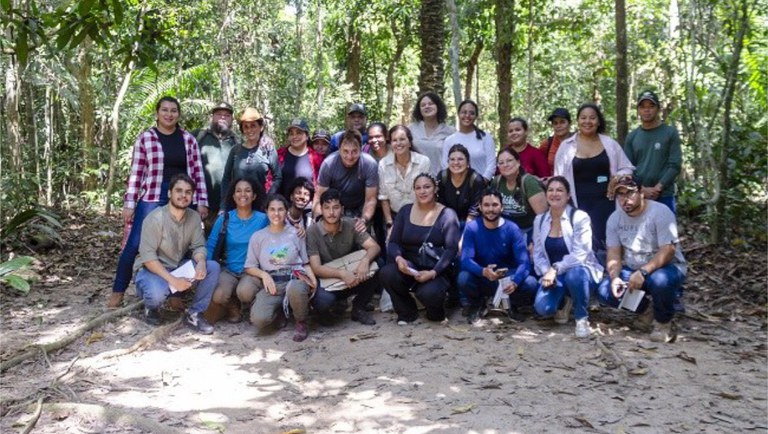
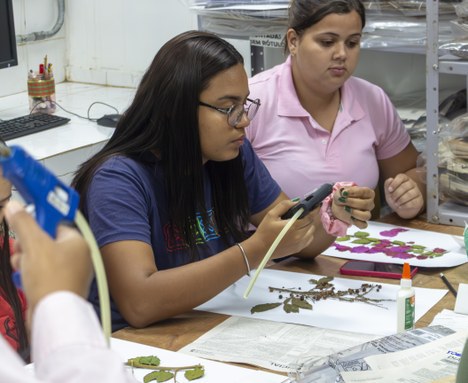
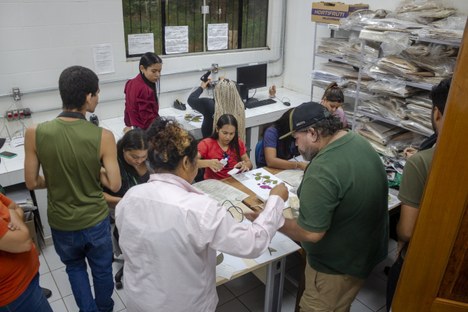
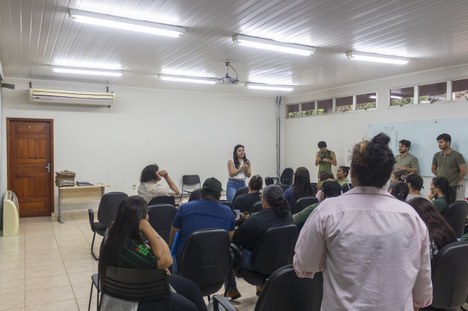
Students from the Federal Institute of Acre (IFAC) participated in the course “Collection and Herbarium: Supporting the Documentation of Sociobiodiversity in the Amazon,” held at the Zoobotanical Park of the Federal University of Acre (UFAC) on August 20 and 21, 2025.
The initiative is the result of a partnership between IFAC, UFAC, and the Rio de Janeiro Botanical Garden (JBRJ), with the aim of introducing students to the practices of collection and herbarium preparation, which are fundamental tools for recording and valuing the biological and cultural diversity of the Amazon region.
|
|
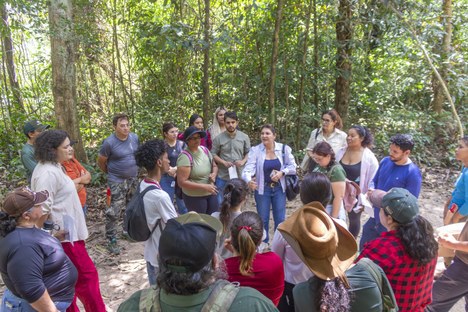
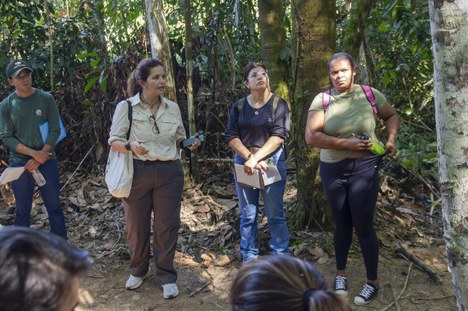
The course is part of the postdoctoral project in Ethnobotany applied to Sociobiodiversity, developed by Professor Rosana Cavalcante, a lecturer at IFAC, in collaboration with the Postgraduate Program of the National School of Tropical Botany (ENBT/JBRJ). Researchers Viviane Fonseca Kruel (JBRJ) and Almecina Balbino, from UFAC, also participated in the articulation.
Forest in Evidence - The activity was connected to the program of the event “Forest in Evidence,” held on August 20, which brought together students, teachers, and researchers in a space for reflection and exchange of knowledge. On that occasion, two lectures marked the discussion: “Climate justice and academic production in the Amazon,” with Professor Andréia Rocha, from UFAC; and “Ethnobotany in the Amazon: the importance of collection and herbarium documentation in sociobiodiversity,” with researcher Viviane Kruel, from JBRJ.
|
|
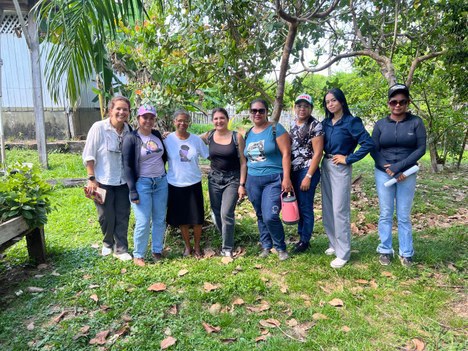
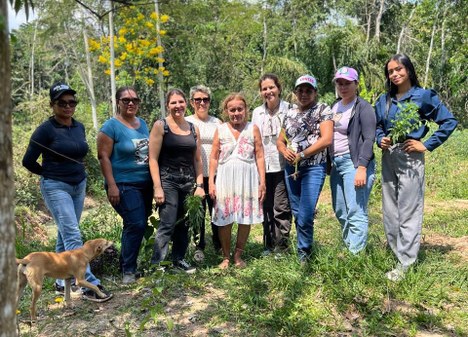
Meetings and field visits - The program also included opportunities for practical integration: on August 19, a meeting was held with project fellows at the IFAC campus, located in Transacreana; and on August 22, a field visit to the region's agroforestry gardens was organized by Layane Furtado, representative of the peasant women's movement.
The visits included the farms of Solange Maria da Silva (Km 47), Helena Luiza Ferreira (Km 58), and Maria da Natividade, known in the community as Dona Lora (Km 26). "These women are true guardians of agrobiodiversity. They preserve seeds, grow food, keep knowledge about medicinal plants alive, and strengthen food security in their communities. Their gardens show that traditional knowledge and forest preservation make all the difference in tackling climate change," says researcher Rosana Cavalcante.
|
|
After visiting the Transacreana region, researcher Viviane Fonseca Kruel assessed what she had observed. “This visit gave me some clear insights: the health of communities is directly linked to the health of the environment. Climate change is not a theory here, but a visible reality. I saw burning and deforestation, which replace native forest with pasture, affecting air quality. The saddest part was seeing people and animals getting sick with respiratory problems, such as dogs having difficulty breathing."
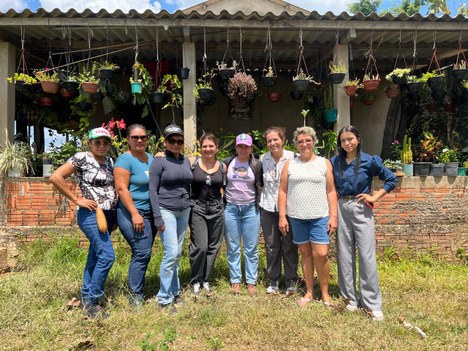
- Field visit
The researcher also expressed concern about water and the health of local communities. "As a source of life, water is also at risk. It is worrying to see families already buying mineral water, when they can, because local water no longer seems safe for consumption. Observing the backyards and talking to residents about the plants revealed the urgency of addressing health and well-being in an integrated way with the health of our planet. It is a reminder that the evidence of climate change is right in front of us," emphasized Viviane Kruel.
|
|
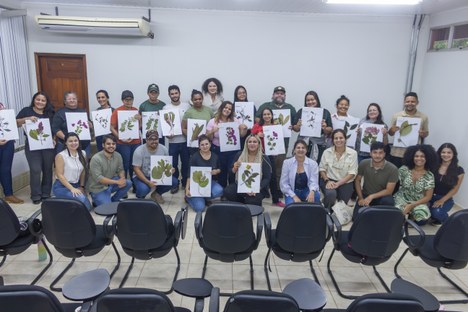
Training and appreciation of the Amazon - According to the organizers, the course, lectures, and field visits reinforce the importance of scientific training combined with environmental preservation and appreciation of traditional knowledge. “For IFAC students, the experience represented not only direct contact with field techniques, but also an understanding of the relevance of documenting socio-biodiversity for the conservation of the Amazon,” concluded Rosana Cavalcante.
(With information and photos from the event organizers)