Notícias
Bromeliarium reopened for visitation on April 17
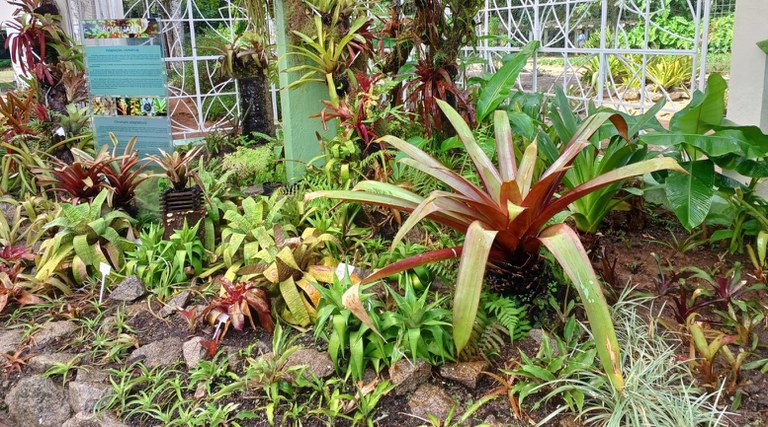
Closed for nine months for renovation work, the Bromeliarium of the Rio de Janeiro Botanical Garden reopened for visitors on Monday (April 17), at 10am. Approximately R$ 179,000 were invested in the restoration of the roof, among other interventions. The reopening took place on a special commemorative date for the Botanical Garden: the National Botanical Day!
The Bromeliarium collection is composed of 15,180 specimens, formed from numerous scientific expeditions of researchers from the Botanical Garden and other institutions. The scientific collection is composed of 2,167 specimens of 704 species. Of these, 96 are threatened with extinction. The plants come from various Brazilian biomes, such as the Atlantic Forest and Cerrado, and the collection also includes specimens from other countries in South and Central America.
The emphasis is on ex situ conservation (outside the natural environment) of endemic, rare and/or endangered species, raising the collection and, consequently, the Rio de Janeiro Botanical Garden to the status of a world reference center in the conservation of the Bromeliaceae family.
The bromeliads are distributed in two large cultivation spaces. The Burle Marx greenhouse - the visiting bromeliarium - and the Dimitri Sucre greenhouse, a space closed to the public, where the scientific collection is located, whose flowering and fruiting plants are temporarily exposed in the visiting area.
Many bromeliads are also present in several beds in the Arboretum, either in the form of spontaneous epiphytes (those that grow on trees and palm trees) or introduced from clonal surpluses from the scientific collection.
The Burle Marx greenhouse, named after the great Brazilian exponent of landscaping and visual arts, generates an environment protected from direct sunlight and herbivores, creating favorable conditions for the cultivation of these plants.
For more than 100 years, the Rio de Janeiro Botanical Garden has kept a collection of bromeliads among the plants in its collection. Former botanists of the institution, such as João Geraldo Kuhlmann, already collected these species for research. In 1975, the then director of the institution, Raulino Reitz, a renowned specialist in Bromeliaceae, inaugurated the Ecological Bromeliarium of the Garden. The Brazilian Bromeliad Society was also founded during the event. The Burle Marx greenhouse was inaugurated in 1996.