Notícias
Brazil participates in international exchange on national biodiversity strategies
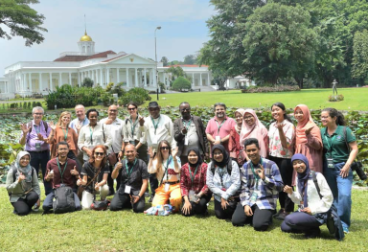
The meeting was organized by the MMA, in partnership with the project “Strengthening the National Implementation of Global Biodiversity Targets,” which is supported by GIZ and the Partnership for Accelerating the Implementation of Epanbs | Photo: GIZ
Source: MMA
Between September 29 and October 4, the Ministry of the Environment and Climate Change (MMA) participated in the second stage of the international exchange on National Biodiversity Strategies and Action Plans (Epanb), which discussed the strengthening and implementation of global goals. In addition to Brazil, the meeting brought together representatives from Indonesia, the country that hosted the event, and the Democratic Republic of Congo, nations considered megadiverse, with a concentration of much of the planet's biodiversity and tropical forests.
The ministry was represented by the director of the Department of Conservation and Sustainable Use of Biodiversity of the National Secretariat for Biodiversity, Forests, and Animal Rights, Braulio Dias. The director of Biodiversity and Forests at the Brazilian Institute of the Environment and Renewable Natural Resources (Ibama), Lívia Martins; the director of Scientific Research at the Rio de Janeiro Botanical Garden Research Institute, Leonardo Salgado; and the director of Forest Development at the Brazilian Forest Service, Clarisse Cruz, also participated.
According to Braulio Dias, the exchange “identified policy issues and instruments to be further explored in the next stages of strategic cooperation between Brazil, Indonesia, and Congo.”
Activities included dialogue on mechanisms for capacity building, monitoring, financing, and communication of national biodiversity targets. The planning and coordination of Epanbs, community management of protected areas and OMECs (Other Effective Area-based Conservation Measures), in situ and ex situ conservation of threatened species, forest management, and restoration of degraded areas were also on the agenda.
Discussions also addressed access to genetic resources and benefit sharing, promoting synergy in the implementation of the three Rio Conventions, and innovative financial mechanisms such as the Tropical Forest Forever Fund (TFFF), which will make payments to countries that ensure the conservation of these forests.
The Epanbs are fundamental planning tools for fulfilling the commitments made by the signatory countries to the Convention on Biological Diversity (CBD). Each plan brings together guidelines, objectives, and targets, in addition to providing for monitoring, financing, and communication actions to ensure the conservation and sustainable use of biodiversity, as well as access to genetic resources and associated traditional knowledge and the sharing of benefits. Learn more here.
The meeting was promoted by the MMA, in partnership with the project “Strengthening the National Implementation of Global Biodiversity Targets (GBF Implementation),” which is supported by German Development Cooperation (GIZ) and the Partnership for Accelerating the Implementation of Epanbs.
The first stage was held in Brazil between April 20 and 27, 2025, with official activities in Rio de Janeiro, Brasília, and Belém.
About Epanb
Brazil's new National Biodiversity Strategy and Action Plan (Epanb) was established in June this year by President Luiz Inácio Lula da Silva. The plan is the main planning tool for implementing the Convention on Biological Diversity (CBD). Coordinated by the MMA, Epanb defines goals, strategies, and actions that guide public policies aimed at biodiversity conservation, sustainable use of natural resources, and fair and equitable sharing of the benefits generated by genetic heritage and associated traditional knowledge.
Brazil was one of the first countries to develop a national strategy, which is aligned with the Kunming-Montreal Global Framework and the Convention on Biological Diversity (CBD), international commitments undertaken by Brazil. Learn more here.