Notícias
CLIMA
Brazil cuts greenhouse gas emissions by 27% from 2022 to 2024
- Credit: Fernando Frazão/Agência Brasil
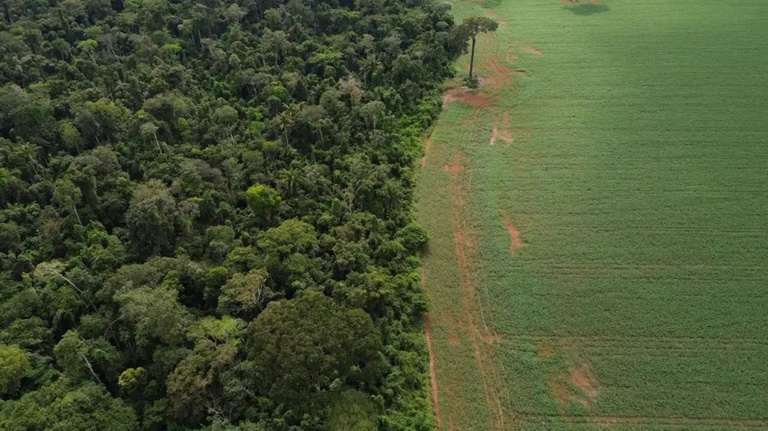
Brazil’s net greenhouse gas emissions fell by 27% from 2022 to 2024, from 2.07 to 1.51 gigatons of carbon dioxide equivalent (Gt CO2 eq), a reduction of 560 million tons over two years. This result mainly reflects lower deforestation rates, as deforestation accounts for a significant share of emissions from the Land Use, Land-Use Change and Forestry (LULUCF) sector.
The data were obtained from the National Inventory of Greenhouse Gas Emissions and Removals, prepared by the Ministry of Science, Technology and Innovation (MCTI), with support from the Ciência&Clima international technical cooperation project.
Emissions fell by 41.6% compared with 2005, the reference year for Brazil’s Nationally Determined Contribution (NDC) targets.
The 2024 result marks progress toward reducing national emissions and provides an important reference point for tracking Brazil’s NDC, which sets an emissions limit of 1.32 Gt CO2 eq for 2025.
With the decline in emissions associated with lower deforestation rates, a change in the sectoral shares of Brazil’s emissions was observed. In 2024, Agriculture accounted for 38.4% of emissions, followed by Energy (28.3%), LULUCF (18.9%), Industrial Processes and Product Use (7.2), and Waste (7.2%). (See the breakdown by sector below.)
Net emissions are the difference between the greenhouse gases emitted and those removed from the atmosphere. The results are expressed in carbon dioxide equivalent (CO2 eq), a unit that allows emissions of different gases to be compared and added together based on their respective global warming potentials.
The National Inventory is Brazil’s official source of data on greenhouse gas emissions and removals resulting from anthropogenic actions, that is, human and economic activities. The results make it possible to track progress in implementing actions to meet climate targets, such as those in the NDC, and inform the planning and evaluation of mitigation policies. The National Inventory is part of Brazil’s Fifth National Communication and Second Biennial Transparency Report, which will be submitted to the United Nations Framework Convention on Climate Change (UNFCCC) in the coming days.
The information will be made available through Sistema de Registro Nacional de Emissões (Sirene) (National Emissions Registry System), the Brazilian government’s official platform for publishing greenhouse gas emissions and removals data, and in the National Inventory Report (NIR), which details the methodologies, data sources, and emission factors used.
“The National Inventory is one of the most important tools for guiding climate action. In Brazil, this effort is coordinated by the MCTI, involves hundreds of national institutions and experts, and follows rigorous international methodologies. The aim is to provide the best data so that Brazil continues to have up-to-date, reliable information to monitor, evaluate, and make decisions on public policies based on the best available science”, says Luciana Santos, the Minister of Science, Technology and Innovation.
About the National Inventory
The National Inventory estimates greenhouse gas emissions and removals from human (anthropogenic) activities across five sectors: Energy, Industrial Processes and Product Use (IPPU), Agriculture, LULUCF, and Waste. The estimates follow the international guidelines and principles of the Intergovernmental Panel on Climate Change (IPCC) and the Paris Agreement’s Modalities, Procedures and Guidelines (MPGs). The methodological details are provided in the National Inventory Report.
The full National Inventory time series, which begins in 1990, was updated and extended with new results for 2023 and 2024. The two-year gap between the latest inventory period and submission of the report to the UNFCCC follows the international reporting rules established under the Paris Agreement, which apply to all Parties, including developed countries.
“Climate transparency goes beyond reporting results. The challenge is to ensure that estimates are consistent over time, comparable internationally, and supported by robust methodologies. Brazil has been improving its reporting processes, incorporating lessons learned from international technical expert reviews and making progress toward meeting the MPGs. This process is essential to ensuring the credibility of the information and the effective tracking of climate commitments”, explains Renata Grisoli, technical coordinator for the Fifth National Communication and Second Biennial Transparency Report under the Ciência&Clima project.
In addition to the national overview, the National Inventory presents results by sector and by gas. This breakdown shows which categories contribute most to national emissions. The data inform decision-making on mitigation policies.
Overview of emissions by sector
LULUCF — The LULUCF sector alone saw net emissions fall by 67% from 2022 to 2024, from 867,993 kt CO2 eq to 285,636 kt CO2 eq. The decline was mainly associated with the reduction in deforestation across Brazil’s biomes. In the Amazon, the area deforested fell by 50% over the period, from 13,200 km² to 6,625 km². Declines were also recorded in the Cerrado (24%), Atlantic Forest (54%), and Pampa (31%).
The sector also accounts for carbon dioxide removals from the atmosphere by vegetation. In 2024, an estimated 365,693 kt CO2 eq was removed through the growth and maintenance of primary native vegetation in conservation units, Indigenous Lands, and rural properties whose Rural Environmental Registry (CAR, in the Portuguese acronym) records had been reviewed.
Agriculture — Emissions from Agriculture reached 579,322 kt CO2 eq in 2024, up 1.1% from 2022. Enteric fermentation, the digestive process in ruminants that releases methane, accounted for 62% of the sector’s emissions. The agricultural soils category, which includes emissions associated with the use of fertilizers and agricultural management, accounted for 26%.
The National Inventory also showed efficiency gains in livestock production over the time series. Between 1990 and 2024, enteric methane emissions per kilogram of cattle carcass produced fell by 58%.
Energy — Emissions from the Energy sector reached 426,906 kt CO2 eq in 2024, up 2% from 2022. The transport category, which covers road, rail, air, and water transport, accounted for 52% of the sector’s emissions. The change in the sector’s emissions was associated with increased electricity generation at coal-fired power plants due to less favorable hydrological conditions than in 2022, higher fuel consumption in transport, and a recovery in aviation activity.
IPPU — Industrial emissions reported under Industrial Processes and Product Use (IPPU) rose by 2% to 108,602 kt CO2 eq. Increased use of refrigerant gases in refrigeration and air-conditioning equipment contributed to the increase.
Waste — Emissions from the Waste sector, including those from sanitary landfills, open dumps, and other sanitation systems, rose by 7% to 109,325 kt CO2 eq in 2024. The main sources were solid waste disposal, which accounted for approximately 67% of the sector’s emissions, and wastewater treatment and discharge, which accounted for 31%.
Overview of emissions by gas
In 2024, net emissions fell by 41.4% for carbon dioxide, 2.0% for methane, and 1.4% for nitrous oxide compared with 2022. Hydrofluorocarbon emissions rose by 13.9%.
The National Inventory covers the main greenhouse gases (GHGs). It accounts for emissions of carbon dioxide (CO2), methane (CH4), nitrous oxide (N2O), hydrofluorocarbons (HFCs), perfluorocarbons (PFCs), sulfur hexafluoride (SF6), and nitrogen trifluoride (NF3). Greenhouse gas precursors were also included, such as carbon monoxide (CO), nitrogen oxides (NOₓ), sulfur dioxide (SO2), and other non-methane volatile organic compounds (NMVOCs).
This edition also expands the range of fluorinated gases covered in the IPPU sector. These synthetic gases are used in refrigeration and air-conditioning equipment, and some have a high global warming potential. The expanded coverage reflects updated information on the gases used in Brazil and makes the National Inventory more complete.
See the infographic with the results of Brazil’s 2024 National GHG Inventory.
Learn more
The Ciência&Clima international technical cooperation project is implemented by the Ministry of Science, Technology and Innovation (MCTI), with implementation support from the United Nations Development Programme (UNDP) and funding from the Global Environment Facility (GEF). The project supports the Brazilian government in preparing and submitting climate transparency reports. Over three decades, the project has supported the Brazilian government in the preparation of five National Communications, five Biennial Update Reports, and two Biennial Transparency Reports for submission to the UNFCCC. The project aims to strengthen national capacity to implement the UNFCCC and raise awareness of the impacts of climate change in Brazil. Visit: https://www.gov.br/mcti/cienciaclima.