Data and smoking numbers
Smoking Prevalence
The National Policy on Tobacco Control in Brazil has contributed to a substantial decline in the proportion of adult smokers over the last decades. In 1989, 34.8% of the population aged 18 years or more smoked, according to the National Survey on Health and Nutrition (PNSN). A marked decline was observed in 2003, when the World Health Survey reported a prevalence of 22.4%, and in 2008, when the Special Survey on Tobacco Use (PETab) found 18.5%. In the 2013 National Health Survey (PNS), adult smoking prevalence was 14.7%, decreasing to 12.6% in 2019, with a reduction from 18.9% to 15.9% among men and from 11.0% to 9.6% among women.
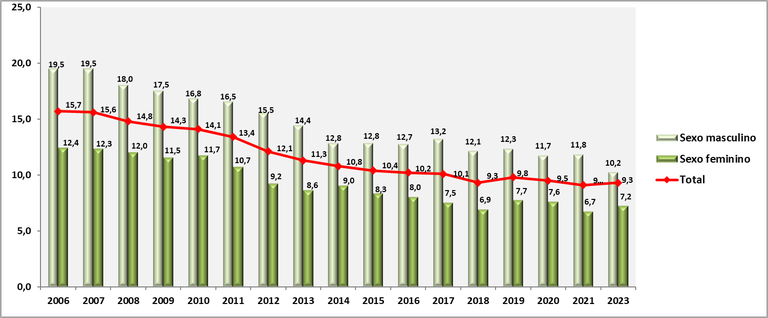
In addition to these national household surveys, the percentage of smokers in Brazil has also been estimated since 2006 through annual telephone surveys – the Surveillance of Risk and Protective Factors for Chronic Diseases by Telephone Survey (Vigitel). This survey is conducted in the 26 state capitals and the Federal District among adults aged 18 years or more living in households with landlines. According to Vigitel 2023, the prevalence of smokers aged 18 years or more in the Brazilian capitals is 9.3%, corresponding to 10.2% of men and 7.2% of women, maintaining the downward trend observed since 2006.
According to the 2019 National Survey of School Health (PeNSE), 6.8% of students aged 13–17 years were current smokers, corresponding to 7.1% of boys and 6.5% of girls. Among students aged 13–15 years, experimentation with cigarettes at least once in life decreased among boys, from 19.2% in 2015 to 15.6% in 2019, and remained almost stable among girls, from 18.9% in 2015 to 18.4% in 2019. The survey also showed higher experimentation with electronic cigarettes among students in private schools and higher percentages in the Central-West region.
Exposure to secondhand smoke remains a relevant public health issue. According to PNS 2019, among non-smokers aged 18 years or more, 7.9% were exposed to secondhand smoke at home and 8.4% at work in enclosed environments, with higher exposure at home among women and higher exposure at work among men. In the capitals, Vigitel 2023 estimated passive smoking at home at 6.4% and passive smoking in the workplace at 7.0%.
Graph 1 – Smoking prevalence among adults (18 years or older) in the Brazilian capitals and the Federal District, Vigitel 2006–2023.
Source: SE-Conicq/INCA with data from Vigitel/Ministry of Health.
Diseases, mortality and costs
Tobacco use and exposure to secondhand smoke are causally related to approximately 50 diseases, including several types of cancer, chronic respiratory diseases and cardiovascular diseases. Compared with non-smokers, smokers have a two- to fourfold higher risk of coronary heart disease and stroke, a 23-fold higher risk of lung cancer among men and a 13-fold higher risk among women, and a 12- to 13-fold higher risk of death from chronic obstructive pulmonary disease (COPD).
In Brazil, cardiovascular diseases are the leading cause of death, followed by cancer. Tobacco is a major risk factor for lung cancer — approximately 85% of diagnosed cases are associated with tobacco use — and an important contributor to cancers of the oral cavity, larynx, bladder and other sites. For the 2020–2022 triennium, approximately 17,760 new lung cancer cases among men and 12,440 among women were estimated per year, in addition to 11,180 oral cancer cases among men and 4,010 among women.
Earlier studies estimated that smoking-attributable health-care costs reached 21 billion reais per year based on 2011 monetary values, rising to 23.3 billion reais when years of life lost and reduced quality of life were included. Updated analyses indicated that in 2015 smoking generated almost 40 billion reais in direct health-care costs (8.04% of all health expenditures) and more than 17 billion reais in indirect costs, resulting in annual losses of approximately 57 billion reais, equivalent to 0.96% of the national GDP. Tax revenue from the sale of tobacco products reached approximately 13 billion reais in 2015, covering only 33% of the direct costs and 23% of the total costs attributable to smoking.
A 2020 study by the Institute for Clinical and Healthcare Effectiveness (IECS) estimated that tobacco-related diseases cost Brazil 125.148 billion reais per year in 2020, and that smoking was responsible for 161,853 deaths that year (443 per day), representing 13% of all deaths in the country. The breakdown of annual deaths attributable to smoking included: 37,686 from COPD; 33,179 from heart diseases; 25,683 from other cancers; 24,443 from lung cancer; 18,620 from secondhand smoking and other causes; 12,201 from pneumonia; and 10,041 from stroke. Direct health-care costs totaled 50.289 billion reais (7.8% of all health spending), indirect costs from lost productivity due to premature death and disability reached 42.452 billion reais, and costs related to informal caregiving amounted to 32.4 billion reais. Tax revenue from tobacco products was approximately 12.227 billion reais, covering only 10% of total economic costs.
In 2024, a new study conducted in partnership with the Ministry of Health and the IECS, using 2022 data, estimated that tobacco use generated 67.2 billion reais in direct medical costs (7% of all health expenditures), 45 billion reais in indirect costs due to productivity losses from premature death and disability, and 41.3 billion reais related to informal caregiving, totaling annual losses of 153.5 billion reais, or 1.55% of the national GDP. This study also expanded the scope of tobacco-related diseases to include diabetes type II, liver cancer and tuberculosis. The annual death toll attributable to smoking was estimated at 477 deaths per day.
Tobacco Leaf Production
According to data from the Brazilian Institute of Geography and Statistics (IBGE), tobacco leaf production in Brazil increased by 41% between 1990 and 1999 and by 36% between 2000 and 2010, resulting in a 77% increase over the period 1990–2010. IBGE data originate from Municipal Agricultural Production (PAM), where data are collected through Technical Assistance and Rural Extension companies (Ater) and municipal authorities.
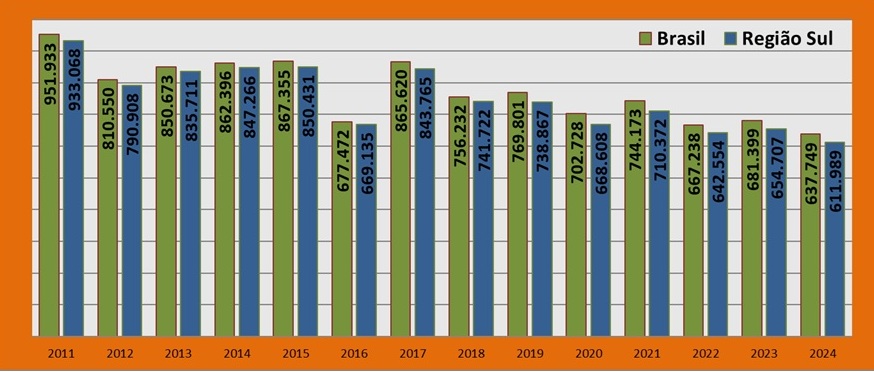
Between 2011 and 2024, however, tobacco leaf production decreased by 33%. The South region, which accounts for approximately 96% of national tobacco production, experienced a reduction of around 34% in output during this period. The average area planted with tobacco was 329,000 hectares between 1990 and 2003, rising to approximately 462,000 hectares in 2004 and remaining around 451,000 hectares per year thereafter. From 2011 to 2024, planted area followed the same downward trend as production.
According to the Association of Tobacco Growers of Brazil (Afubra), between 2009 and 2018 the number of tobacco-growing families in the southern state of Rio Grande do Sul decreased by approximately 20%, while planted area fell by 20% and production by 7.8%. Despite the reduction in area and workforce, productivity increased slightly (3.26%), indicating a more efficient use of remaining farmland. Tobacco farming in Brazil is predominantly carried out by smallholder family farmers — approximately 95% of tobacco-producing establishments belong to this category — and currently involves an estimated 130,000 families in more than 500 municipalities.
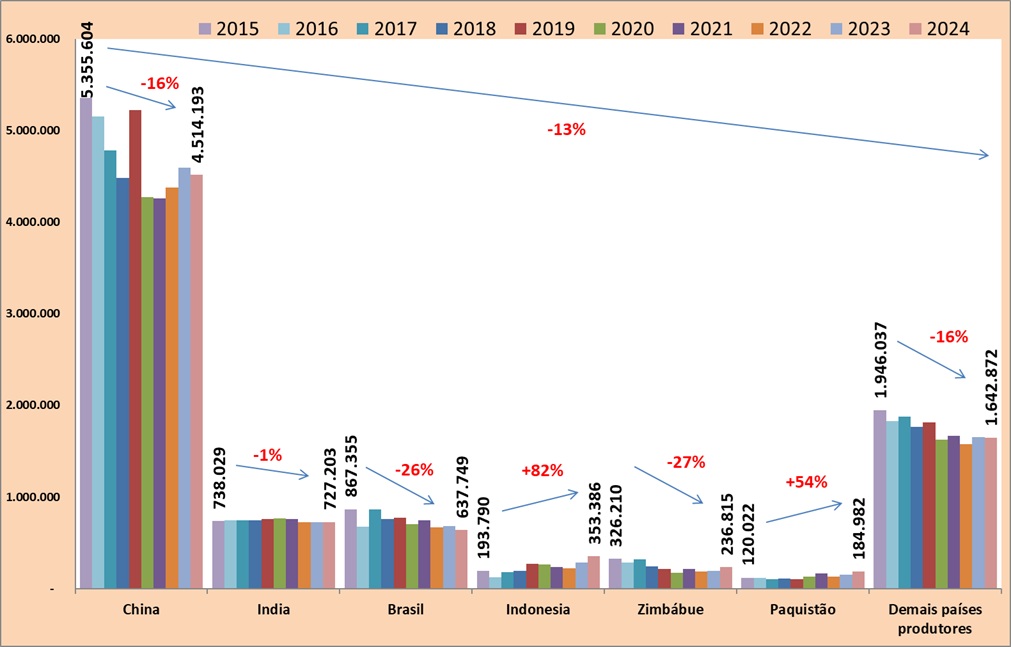
Brazil is the third largest tobacco leaf producer in the world, behind China and India. Data compiled from FAOSTAT show that after 2015, production fell by approximately 16% in China, 26% in Brazil and 27% in Zimbabwe, contributing to an overall reduction of approximately 13% in world production. The United States, previously the fifth-largest producer, dropped to seventh place in the global ranking due to declining output.
.
Graph 2 – Tobacco leaf production/tons – Brazil, 1990–2024
Source: SE-Conicq/INCA with data from IBGE.
Graph 3 – Tobacco leaf production in the world – main producers
Source: SE-Conicq with data from FAOSTAT.
Tobacco Exportation
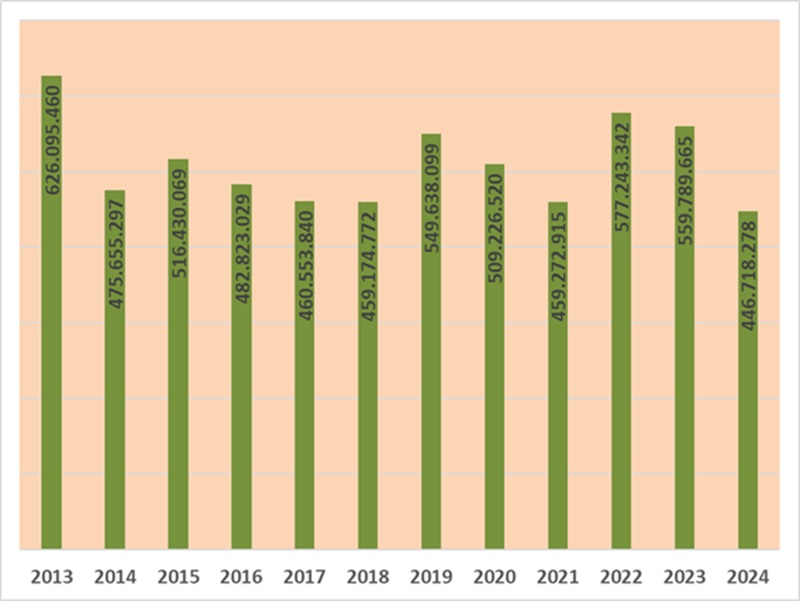
Data on Brazilian tobacco exports obtained from the ComexStat system of the Ministry of Development, Industry, Trade and Services (MDIC) show that exports of pre-processed and post-processed leaf tobacco increased between 2000 and 2009, surpassing 500,000 metric tons per year from 2007 onwards. After a decline in 2010, the upward trend resumed until 2012, when exports began to decrease. In 2014, there was a sharp drop of 24% compared to the previous year, bringing volumes below the levels observed in 2010.
The depreciation of the Brazilian real allowed a small increase in exported volume in 2015, although revenues fell. Between 2016 and 2018, the volume exported showed further small reductions. In 2018, China — which had been purchasing between 40,000 and 45,000 metric tons per year — delayed part of its orders, which were only shipped in early 2019, affecting the annual totals for both years.
In 2020 and 2021, exports continued to decline, reflecting both the reduction in global tobacco consumption and the expansion of electronic nicotine delivery systems, which use significantly less tobacco leaf or replace it altogether with synthetic nicotine. Between 2021 and 2024, total Brazilian leaf tobacco exports decreased by approximately 3%.
According to 2024 ComexStat/MDIC data, the main importing countries of Brazilian tobacco leaves were: Belgium (24%), China (16%), the United States (9%), Egypt (7%), Indonesia (5%), the United Arab Emirates (4%), Vietnam (4%), Paraguay (3%), Turkey (3%), South Korea (2%) and Argentina (2%). In 2024, tobacco and its derivatives represented approximately 0.8% of total Brazilian exports in value.
Pre-processed tobacco refers to volumes of unmanufactured tobacco products — before the processing step — corresponding to categories 2401.10.10 to 2401.20.90 of the Mercosur Common Nomenclature (NCM). Post-processed tobacco refers to tobacco products after processing, corresponding to categories 24.01.30.00 and the entire section 24.03 of the NCM.
Graph 4 – Brazilian leaf tobacco exports – 2013–2024 (kg)
Source: SE-Conicq/INCA with data from ComexStat.
Graph 5 – Main destinations of Brazilian tobacco exports – 2013-2021 (kg)
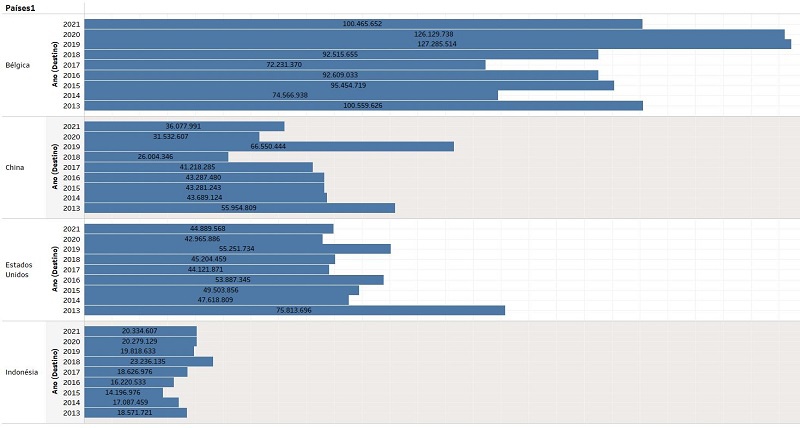
- Main destinations of Brazilian tobacco exports – 2013–2021
Source: SE-Conicq/INCA with data from ComexStat.
Graph 6 – Main destinations of Brazilian tobacco exports – 2024 (kg)
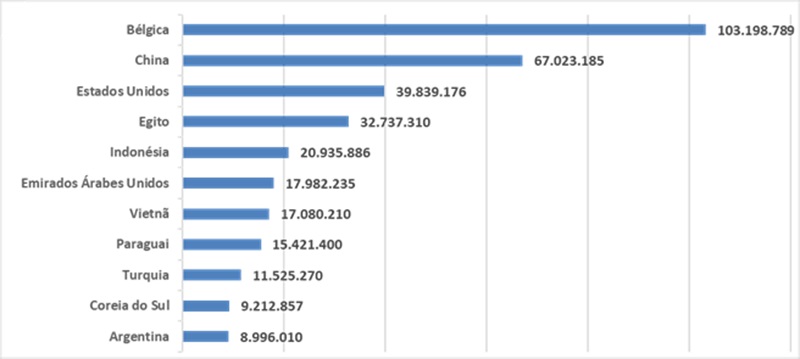
- Destinations of Brazilian tobacco leaves – 2024
Source: SE-Conicq/INCA with data from ComexStat.
Graph 7 – Cigarette exports – 2012–2024 (kg)
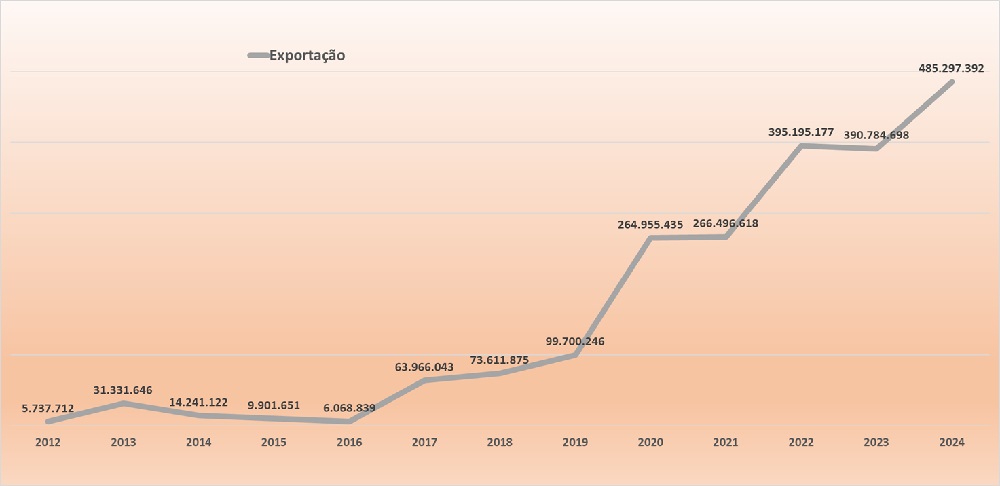
Source: SE-Conicq/INCA based on data from the Brazilian Federal Revenue Service.
Per Capita Consumption
Along with smoking prevalence, the apparent per capita consumption of cigarettes is an important indicator of the National Tobacco Control Policy. The method used to calculate apparent cigarette consumption follows the World Health Organization recommendation: cigarette production minus cigarette exports plus cigarette imports. Apparent per capita consumption for individuals aged 18 years or more is calculated by dividing this apparent consumption by the population aged 18 years or more.
Data on cigarette production and exports are obtained from the Brazilian Federal Revenue Service, while data on imports come from the ComexStat system of the Ministry of Development, Industry, Trade and Services. Population estimates for individuals aged 18 years or more are taken from the IBGE population projections.
Between 1980 and 2010, official apparent per capita cigarette consumption in Brazil decreased by 65%, with a sharper and continuous decline beginning in the late 1990s. In 2016, Brazil reached the lowest apparent per capita consumption in the historical series, followed by a slight increase in subsequent years, which may reflect the stagnation of cigarette tax burdens. The decrease in consumption directly affected cigarette production: between 2007 and 2016, there was a 53% decline in the production of 20-unit cigarette packs, according to the Federal Revenue Service.
According to the Tobacco Atlas (2018), an estimated 5.7 trillion cigarettes were consumed worldwide in 2016. Significant reductions in smoking rates in countries such as the United Kingdom, Australia and Brazil, which have implemented stringent tobacco control legislation, have been offset by increased consumption in China.
The time series of per capita consumption and prevalence for Brazil shows simultaneous downward trends, despite recent fluctuations. Prevalence data from Vigitel for the year 2022 were not published, creating a gap in the otherwise annual series, which is available for all other years from 2006 to 2023
.
Graph 8 – Per capita cigarette consumption × prevalence – Brazil, 2007–2023
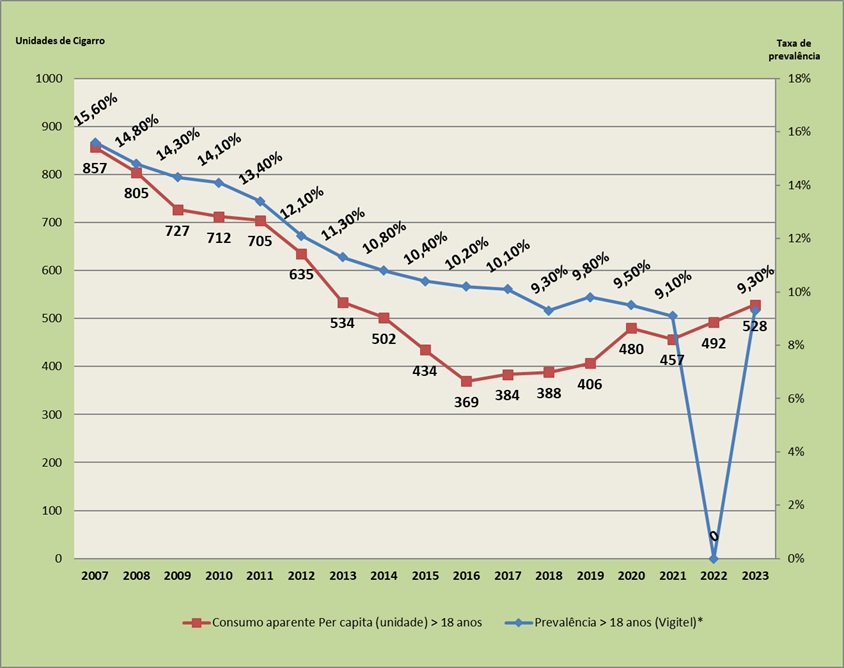
Source: SE-Conicq/INCA with data from IBGE, Federal Revenue Service and Vigitel.