Research: Impact of FUNAG on the Teaching of International Relations
- .
- .
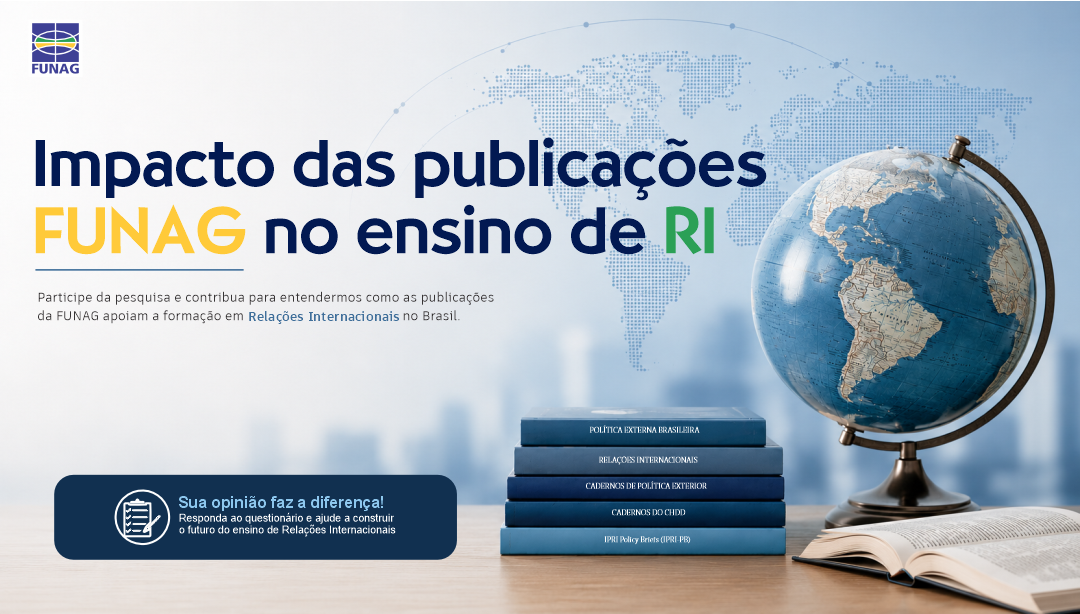
Considering the need to understand how the publications and audiovisual content produced by FUNAG impact the teaching of International Relations and related fields, it is proposed to conduct a survey with faculty members from these programs.
The general objective of the research is to gather data that may contribute to the improvement of the services and products developed by the Foundation. The specific objectives are: a) to demonstrate the public relevance and value of the services offered by FUNAG; b) to identify the most frequently used collections and map the visibility of Brazilian intellectual production within the research ecosystem; c) to detect possible barriers to use and promote continuous improvements in the processes of accessing and downloading publications; and d) to analyze the social and academic impact of the publications from the perspective of open science and the democratization of knowledge.
Through a questionnaire, the survey aims to reach the academic community across more than 191 higher education institutions at the undergraduate level and 33 active graduate programs registered with the Ministry of Education and Culture. The survey instrument will be distributed via email and will also be available on the IPRI page on the FUNAG website.
The data will be processed in an aggregated manner, without identifying respondents, in compliance with the ethical principles governing research involving human subjects (Resolution No. 510 of 2016 of the National Commission for Ethics in Research in the Human and Social Sciences) and the Brazilian General Data Protection Law (Law No. 13,709 of 2018). Aggregated data may be made publicly available.
Within the scope of its engagement activities with academia, IPRI and FUNAG will also rely on a management tool for institutional visits, covering processes from the selection of institutions to the organization of meeting agendas, with the aim of strengthening the presence of FUNAG’s content in teaching practices.