Notícias
International Convergence
Rio Declaration: an unprecedented commitment to the convergence of regulatory processes in Latin America
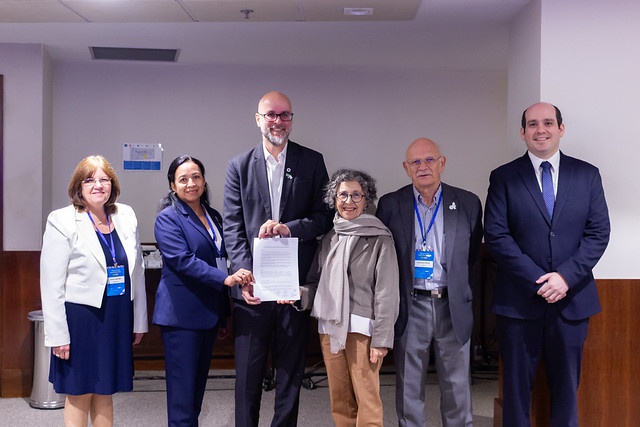
On March 25, 2026, the Brazilian Health Regulatory Agency (Anvisa) signed the Rio Declaration, a document endorsed by the regulatory authorities of Chile, Colombia, Cuba, Mexico, Paraguay, Panama, and Brazil. According to Anvisa CEO, Leandro Safatle, the document is a strategic alliance between the main health authorities of Latin America. The primary goal is to strengthen public health surveillance and protection in the region.
The declaration establishes an unprecedented commitment to technical cooperation and mutual trust, based on scientific evidence and institutional transparency. The document seeks convergence of regulatory processes.
“The Rio de Janeiro Declaration clearly recognizes Latin America diversity in institutional contexts, legal frameworks, and levels of regulatory maturity, but it also shows that cooperation and the strengthening of regional capacities are the way to overcome asymmetries,” Safatle emphasized. With this commitment, Latin America regulatory agencies reaffirm that the union is the safest way to protect the population and build a resilient future, where technical collaboration overcomes geographical barriers to favor life.
Health systems strengthening and resilience
The central goal of the declaration is to increase health systems resilience, through the promotion of regulatory trust, expansion of cooperation, and strengthening of the region. Through principles of faith and responsibility, the authorities seek to optimize regional capacities, allowing the shared use of inspections and technical knowledge. This strategic integration aims not only at efficiency in resource management, but also at strengthening local institutions in face of global health challenges.
The operationalization of this network is based on the adoption of international regulatory best practices, focusing on risk analysis, traceability, and quality management. Having a fast exchange of technical information is an essential pillar of the agreement, which must operate under strict confidentiality and legal security protocols. The authorities understand that institutional trust is an asset built through technical robust decisions, a necessary foundation for a high-performance regional infrastructure.
Concerning the international level, the declaration projects Latin America as a more cohesive and influential bloc in multilateral forums. By acting in solidarity, countries ensure a more balanced participation in global health mechanisms, promoting measures that mitigate large scale health risks.
Rio Declaration is a novel and strong commitment for protecting the health of the Latin American population, a commitment that points to cooperation: an indispensable tool to raise the safety and efficacy standards of products and services throughout the continent.