Notícias
G20 English
Labor and Employment debate social security and the universalization of access
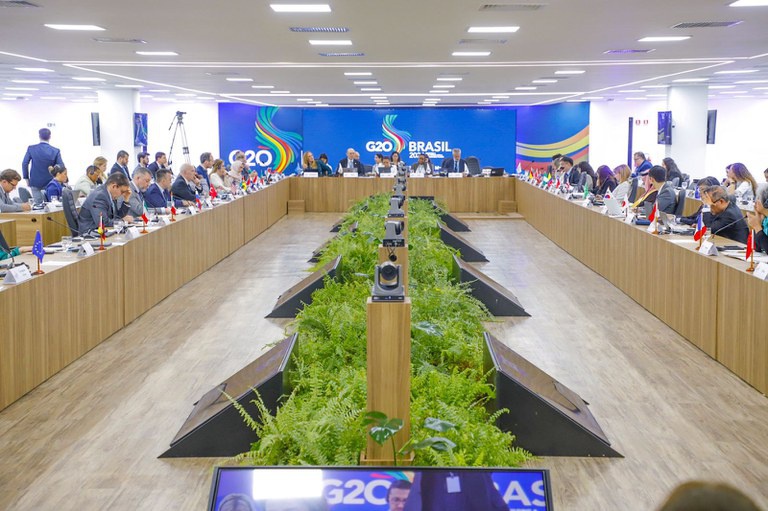
The challenge of improving the public social security system and its singularities in Brazil and in the world were at the center of the debates in Session II, called Social Security and Gender Equality, on Wednesday afternoon (27th), within the agenda of the 2nd Technical Meeting of the Working Group on Employment, of the G20 Brazil, held in Brasília (DF).
The Minister of Social Security, Carlos Lupi, opened the proceedings by presenting a general picture of the Brazilian social security system and the challenges for it to be universal, fairer and more egalitarian. "Spaces of power have to work permanently so that human beings are treated with dignity and respect," Lupi said. According to him, “the numbers are important, but without the human being, there is no State that can be maintained", he concluded.
It is not possible to discuss Social Security only because of what it represents as an investment for the Government. We have to look at Social Security as a great social capital, and we have to seek equality in this world that has sophisticated forms of discrimination," Lupi pointed out. "Our role is to make the G20 echo a voice to the world of what we want, that it seeks, when it has space of power, to act so that discriminated minorities are included through the efficiency of the State.
The Director of Employment, Labor and Social Affairs of the International Labour Organization (ILO) and the Director-General of the International Social Security Association (ISSA), Raul Ruggia-Frick, presented the major challenges for achieving universal social protection by 2030. Social protection aims to ensure income security, and results in stability and promotion of decent employment, reducing the poverty rate. The Sustainable Development Goals call for universal social protection.
Economist Stefano Scarpetta, director of Employment, Labor and Social Affairs at the Organization for Economic Co-operation and Development (OECD), addressed the issue of maternity parental leave in the countries that make up the group.
In Brazil, the issue is still in its infancy, some companies have adhered to extended parental leave, based on the Empresa Cidadã program, which, in 2016, allows registered companies to extend the benefit to 20 days for fathers, and 180 days for mothers in exchange for tax incentives.
Congress has less than 18 months to draft and approve a law that improves the rules of paternity leave, following the determination of the Federal Supreme Court (STF). The 2017 Labor Reform now provides for the possibility of absence from work for five days, but the Supreme Court assesses that the omission of the Legislature persists.