Notícias
“BOM DIA, MINISTRA” PROGRAM
Marina Silva on licensing bill: "Our fight should be to protect even more"
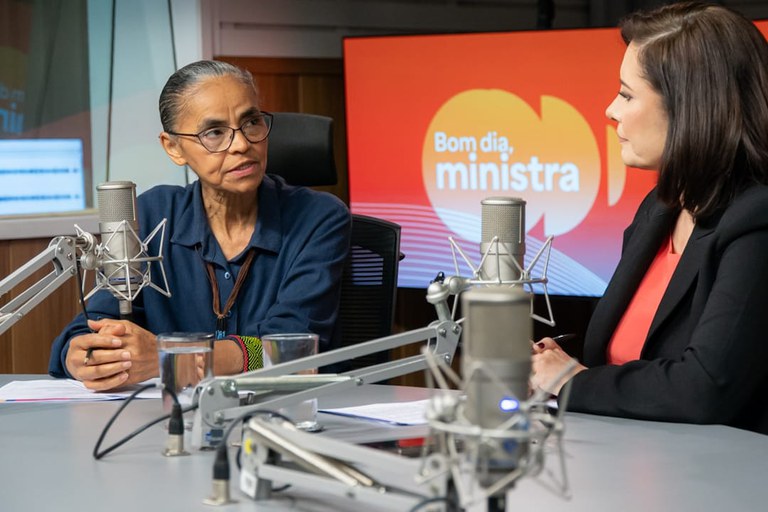
Marina Silva explained that the President's 63 vetoes maintained relevant progress while correcting gaps and unconstitutional aspects - Credit: Diego Campos / Secom PR
In a video interview with “Bom Dia, Ministra” (or “Good Morning, Minister”) on Thursday, August 14, Brazil’s Minister of Environment and Climate Change Marina Silva highlighted that the country's new environmental licensing milestone — sanctioned by President Luiz Inácio Lula da Silva with vetoes and technical adjustments — ensures the protection of ecosystems, the integrity of the licensing process, and the rights of traditional communities, while modernizing strategic projects and making their processing more agile.
In my understanding, we were able to correctly mediate, ensuring that environmental protection and licensing integrity are preserved. Under the terms in which the project was previously approved, we would have had an overwhelming wave of judicialization that would lead to a real shutdown"
MARINA SILVA
Brazil’s Minister of the Environment and Climate Change
“In my understanding, we were able to correctly mediate, ensuring that environmental protection and licensing integrity are preserved. Under the terms in which the project was previously approved, we would have had an overwhelming wave of judicialization that would lead to a real shutdown — and those who thought they would be speeding up environmental licensing would in fact be hindering it," said the minister.
According to Marina Silva, this is why Brazil’s Federal Government — based on technical and legal assessments — chose to preserve the constitutional pillars of environmental protection, ensuring a balance between pace, legal certainty, and social responsibility. Altogether, the president vetoed 63 provisions of the project approved by Congress, maintaining relevant advances, correcting gaps, and unconstitutional aspects that could compromise both the environment and legal security.
The minister explained that the decision was based on four guidelines: to preserve the integrity of the licensing process; to ensure the rights of Indigenous and Quilombola peoples and traditional communities; to offer legal security to entrepreneurs and investors; and to incorporate innovations to streamline procedures without compromising quality.
DIALOGUE — The minister stressed the Federal Government's willingness to engage with parliament to clarify the vetoes. "We will discuss with representatives, with Congress leaders, with the presidents of the Chamber of Deputies and the Senate, with the parliamentary fronts that are willing to engage in this discussion — and strive to convince them that the path taken by the Federal Government is the best for everyone," stated Marina Silva.
PROTECTION — In Marina Silva's opinion, the decision to veto certain provisions is strategic even for those who want to expedite the licensing process. "This is better for those who want their companies to have legal security — but this legal security does not happen if the laws that protect the environment are not respected, and if the Constitution, in its article 225, is violated. Because then there is room for judicialization. Moreover, we are facing one of the worst environmental crises the world has ever seen. Presently, our fight should not be to protect less, but to protect even more," emphasized the minister.
INDIGENOUS AND QUILOMBOLA PEOPLE — When talking to radios and websites from across the country, Marina Silva stressed that one of the most relevant vetoes was to the provision that restricted participation of Indigenous and Quilombola communities in licensing processes. "In the approved project, these communities would have been deprived of being heard. President Lula correctly vetoed this provision, ensuring that the communities that Brazil’s National Indigenous Peoples’ Foundation (Fundação Nacional dos Povos Indígenas/FUNAI) has technically established to be in fact original peoples in the area will all be heard. The same goes for the Palmares Foundation," she explained.
RISKS — When discussing the subject, the minister warned of the risks of regression if the vetoes are overturned — since the new legislation is expected to make environmental licensing in Brazil more modern and efficient, and less bureaucratic. "We are facing a very serious environmental crisis, and I think that, if the adjustments are not understood and Congress overturns the vetoes, this would be an additional negative influence.
PARTICIPANTS — "Bom Dia, Ministra" is co-produced by the Brazilian Presidency’s Social Communications Secretariat (Secretaria de Comunicação Social da Presidência da República/SECOM-PR) and Empresa Brasil de Comunicação (EBC). Journalists from Rádio Nacional Brasília, Amazônia, and Alto Solimões; Rádio TV Metropolitana; Portal A Crítica; Rádio Cidade em Dia; Portal Campo Grande News; Rádio Executiva; Rádio Vox; and Portal Voz do Paraná took part in Thursday's program.