Notícias
CULTURE
International Seminar on Cultural Policies opens call for paper submissions
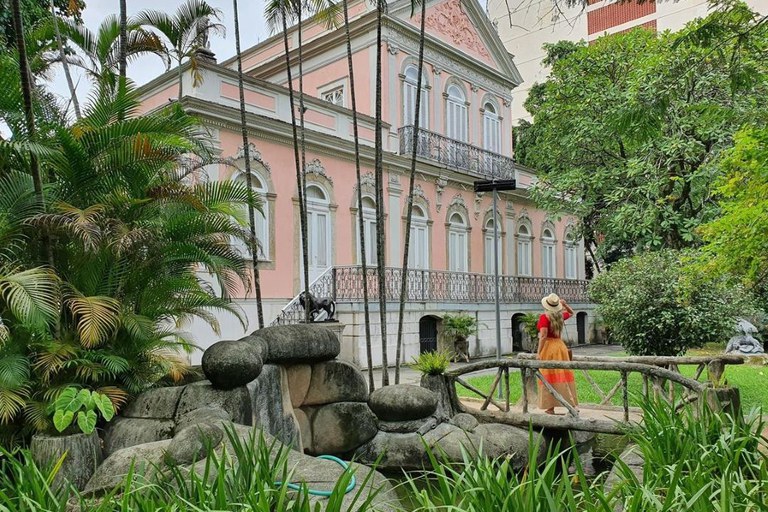
The event will be held at the Casa de Rui Barbosa Foundation in Rio de Janeiro. Image: Ministry of Culture
Registration for academic papers to be presented at the 14th International Seminar on Cultural Policies [XIV Seminário Internacional de Políticas Culturais] is open until February 23. The Seminar will be held from May 26 to 30 at the Casa de Rui Barbosa Foundation [Fundação Casa de Rui Barbosa/FCRB] in Rio de Janeiro — with the participation of international researchers, professors, students and cultural managers to discuss the role of cultural policies in strengthening democracy and social participation.
This edition will highlight Brazil’s National Policy for Living Culture [Política Nacional de Cultura Viva/PNCV] — which recognizes, values and promotes cultural groups and entities within Brazilian territories — and the IberLiving Culture [IberCultura Viva] cooperation program, created to strengthen community-based cultural policies in Ibero-America. The incentive to submit papers related to these initiatives are the 20th anniversary of Cultura Viva and the 10th of IberCultura, contributing to the study of the impacts of these public policies on cultural diversity and social inclusion.
The Ministry of Culture’s [Ministério da Cultura/MinC] Secretary of Citizenship and Cultural Diversity Márcia Rollemberg emphasizes that the initiative is an opportunity to strengthen the debate and educational networks on the topic. “This meeting invites us to reflect on how these experiences have transformed territories promoting inclusion, diversity and social participation, and inspires us to design new paths for community-based culture as a tool for strengthening democracy across Ibero-America,” explained Márcia, who also chairs IberCultura Viva.
This meeting invites us to reflect on how these experiences have transformed territories promoting inclusion, diversity and social participation, and inspires us to design new paths for community-based culture as a tool for strengthening democracy across Ibero-America”
Márcia Rollemberg, secretary of Citizenship and Cultural Diversity at the Ministry of Culture
Alexandre Santini, president of the Casa de Rui Barbosa Foundation, highlights the historical significance of this edition: “We are celebrating the 20th anniversary of Cultura Viva in Brazil and the 10th anniversary of IberCultura Viva. Our goal is to bring together Latin American researchers and cultural managers to discuss the implementation of policies inspired by Cultura Viva and Pontos de Cultura, analyzing how these experiences have developed in other countries. This reflection is essential to identify challenges and possibilities for progress, two decades after the beginning of this story”.
The event will also feature communication panels concerning the topic. Up to five Latin American researchers and cultural managers whose works are selected will receive support for travel and accommodation costs, ensuring their participation in the event. Works in Portuguese and Spanish will be accepted. Full articles should be sent to seminariopoliticasculturais@gmail.com, with the subject “Submissão de artigo” [“Article submission”]. More information is available on the FCRB website.
IMPLEMENTATION — The Seminar is a joint initiative of the Casa de Rui Barbosa Foundation and the UNESCO Chair of Cultural Policies and Management [Cátedra Unesco de Políticas Culturais e Gestão] committed to connecting academia, civil society and public managers. This partnership works towards promoting political and scientific innovations, as well as strengthening cultural diversity and encouraging new educational proposals. The full program will be released soon on the FCRB website and social media.
CULTURA VIVA — Cultura Viva is the community-based policy of Brazil’s National Culture System [Sistema Nacional de Cultura], which certifies cultural collectives and entities as Pontos and Pontões de Cultura, enabling their access to funds allocated in public notices. It was created in 2004 as a government program and became the National Policy for Cultura Viva [Política Nacional de Cultura Viva/PNCV] with Law No. 13,018/2014.
IBERCULTURA VIVA — IberCultura Viva is a technical and financial cooperation program between Ibero-American governments, created to strengthen community-based cultural policies. It supports both government initiatives and projects carried out by community cultural organizations and indigenous peoples. The following countries are currently part of the program: Argentina, Brazil, Chile, Colombia, Costa Rica, El Salvador, Ecuador, Spain, Mexico, Paraguay, Peru, Uruguay and the Dominican Republic.
CASA DE RUI BARBOSA — The Casa de Rui Barbosa Foundation, linked to the Ministry of Culture, is a federal institution that works towards preserving memory and promoting culture. The FCRB promotes studies, conferences and events that connect research, teaching and cultural dissemination, contributing to the appreciation of Brazilian cultural heritage.
In collaborarion with the Ministry of Culture (MinC).