Notícias
Mercosur energy and mineral integration gathers momentum
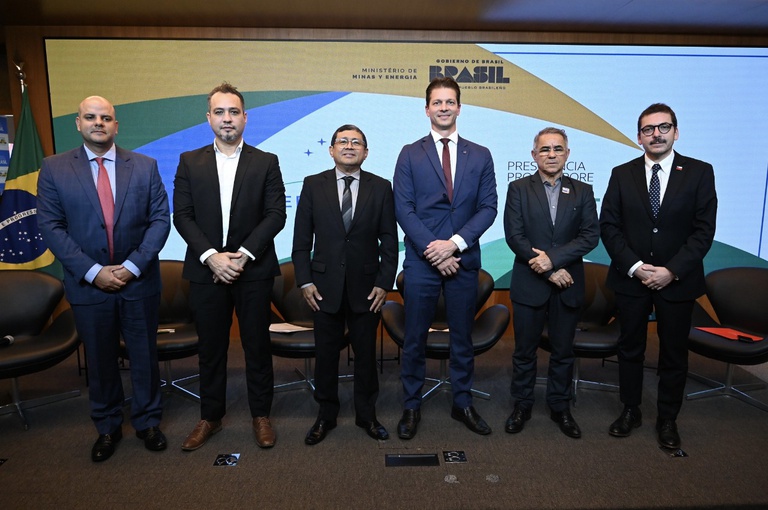
The Ministry of Mines and Energy (MME) hosted, on Tuesday (25), the Mercosur Seminar on Energy and Mineral Integration, bringing together representatives from Brazil, Argentina, Paraguay and Chile to align strategies for the region’s future: the expansion of clean fuels, the consolidation of essential mineral supply chains, the role of natural gas in industrial development and the modernisation of power interconnections.
Participants highlighted that South America holds unique conditions to lead the global decarbonisation agenda — provided it advances in a coordinated manner, reducing regulatory asymmetries, expanding investment and strengthening shared institutional frameworks.
Discussions on strategic minerals reinforced the region’s singular geological potential — and the understanding that turning this endowment into robust industrial chains represents a historic opportunity for electric mobility, batteries and clean technologies.
The Geological Survey of Brazil (SGB) was represented by its President, Francisco Valdir Silveira, who noted that only 30% of Brazil’s territory has been mapped in detail, limiting investment, increasing project costs and delaying the full development of its mineral potential.
According to him, Minas Gerais is currently the country’s leading mineral market precisely because it is the most extensively studied territory, with the widest availability of geoscientific information. For the countries present, the data underlined a shared principle: without systematic geological knowledge, there is no competitive mineral industry nor sustainable attraction of investment.
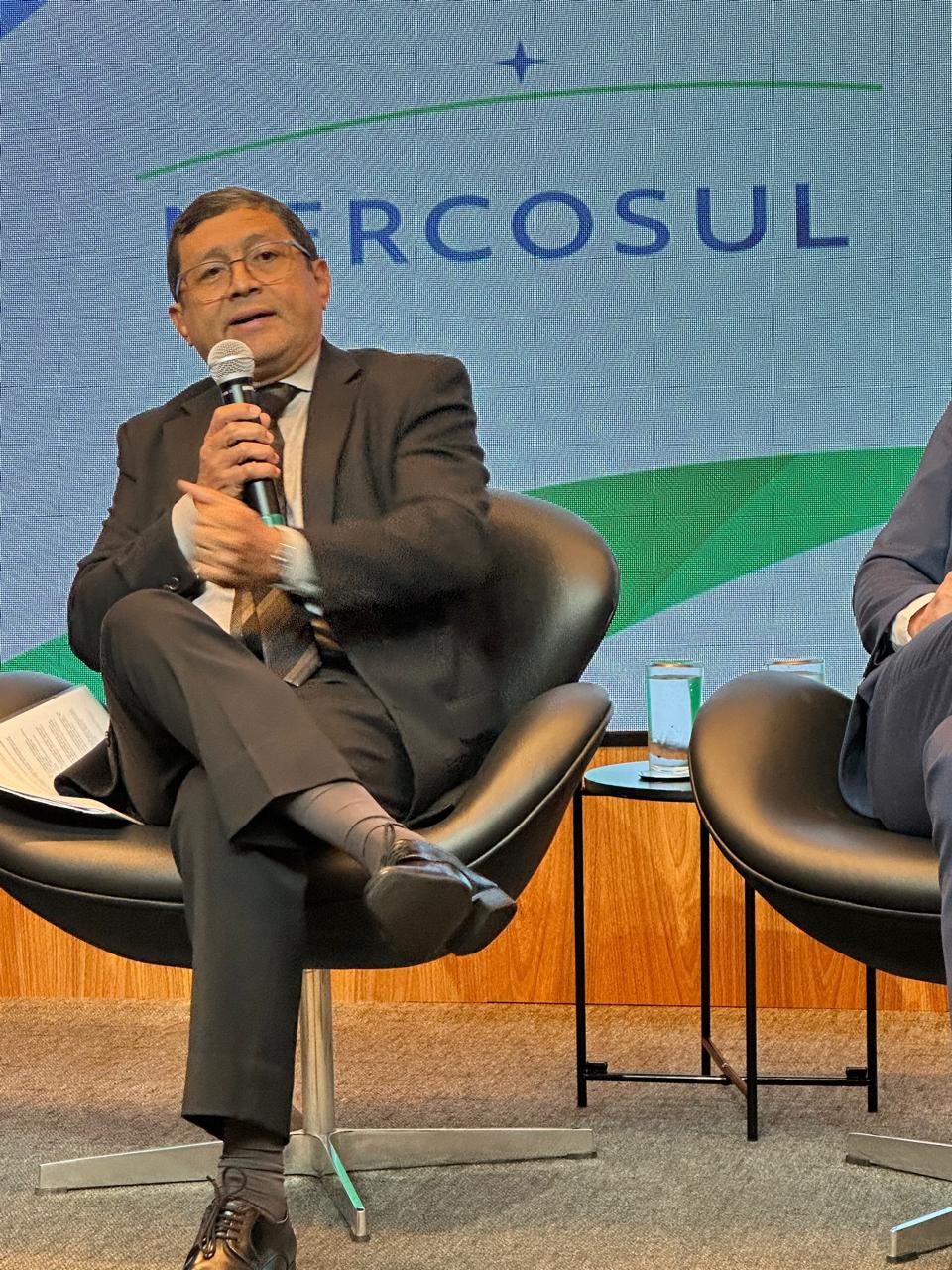
In his remarks, Mauro Sousa, Director-General of the Brazilian Mining Agency, stressed that the region will only be able to convert its mineral potential into real development through effective cooperation, innovation and consistent investment.
- ㅤㅤㅤ
“We need to acknowledge our differences, harmonise regulations and act as a bloc. We cannot fall under the illusion that we can manage everything alone. To internalise technology and attract capital, it is essential to build alliances with those who already master the techniques and to develop productive capacity with realism and cooperation,” he said.
“Free enterprise and private investment are indispensable drivers. If we establish convergent frameworks, regulatory clarity and confidence, we will be able to turn South America’s potential into added value, vertical integration and industrial competitiveness.”
The Director-General also emphasised the importance of integrating social, environmental and cultural parameters:
“Integration must respect communities, our traditional peoples and international norms such as ILO Convention 169. Investors need to understand these specificities, and we, as the State, must ensure protocols and standards that provide legal certainty and predictability.”
The Chilean Ambassador to Brazil, Sebastián Depolo, noted that the combined critical mineral reserves of the region’s countries surpass those of any other economic bloc in the world, creating favourable conditions for joint development and wealth generation.
Jokingly, he suggested that the countries could develop a “Latin American battery” as a symbol of an integrated regional supply chain capable of providing strategic inputs for the global energy transition.
Representatives from the countries argued that harmonising rules, standardising procedures and deepening the exchange of information between agencies, operators and state-owned enterprises is essential to unlock projects and scale up investment.
The reactivation of the Mercosur Working Subgroup — after two years of inactivity — was celebrated as an important step towards building joint resolutions and launching thematic committees to advance on natural gas, minerals, electricity and sustainability.
Watch the full seminar: