Notícias
Critical Minerals, Technology and the Future: Reflections from a Brazilian Specialist on a Sustainable Path Forward
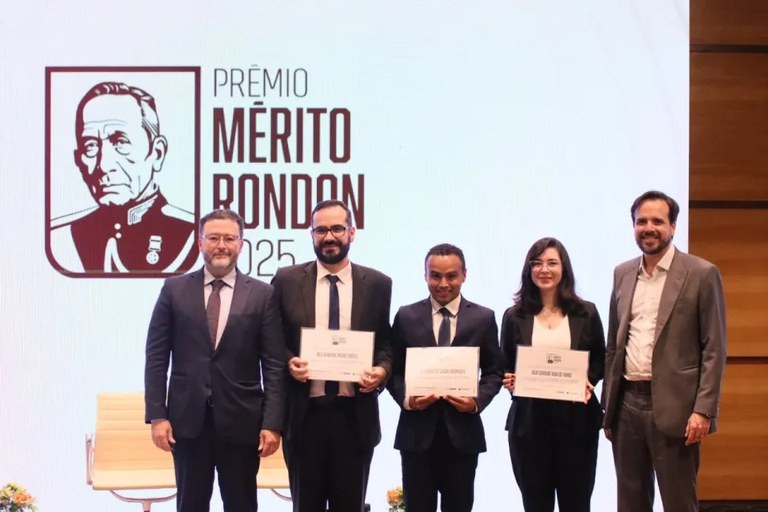
Imagine a Brazil capable of turning rocks into progress, technology into sustainability, and what lies underground into clean energy for the future. It may sound like science fiction, yet it is already becoming reality. This transformation is being driven by specialists dedicated to showing that mining can also be synonymous with innovation, science and environmental responsibility.
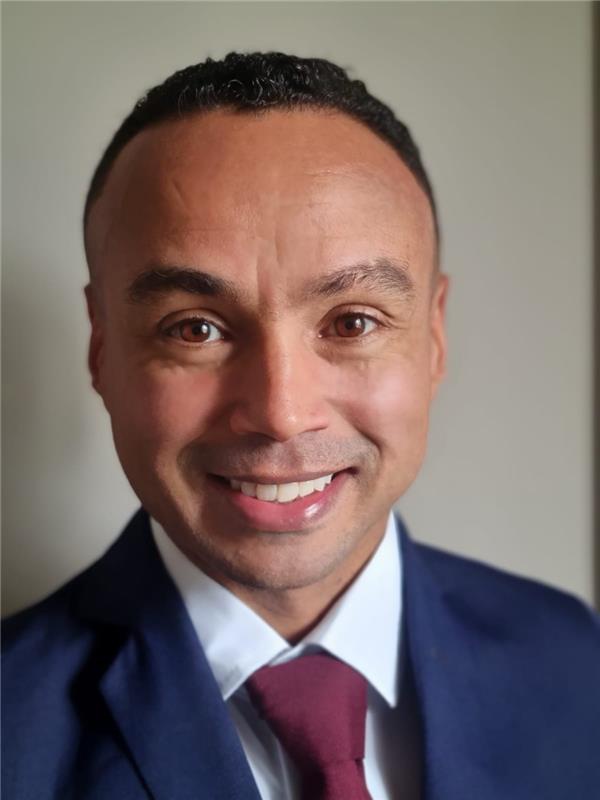
One of these specialists is Alexandre de Cássio Rodrigues, Mineral Resources expert and Superintendent of Revenue Collection at the Brazilian Mining Agency. He has just been awarded second place in the Mérito Rondon Prize, promoted by Anatel, with the article Critical minerals and digital connectivity: challenges and opportunities for mitigating climate change.
A career civil servant at the ANM since 2006, Alexandre has been instrumental in modernising the management of mining revenues in Brazil and in leading projects that defined the criteria for distributing mining royalties to municipalities. Now, with this recognition, he contributes to placing Brazil and the Agency at the forefront of a global debate: how to connect mining, technology and sustainability.
We spoke with him about the meaning of the award, the role of critical minerals in the energy and digital transitions, and how the Brazilian Mining Agency is preparing for a greener and smarter future.
Interview with the Superintendent
Ascom ANM – The Mérito Rondon Prize recognises outstanding trajectories in strategic areas for the country. What does this recognition represent for you and for the work of the Agency?
Alexandre – For me, the Mérito Rondon Prize represents recognition of a career dedicated to bringing science, public policy and sustainability closer together, demonstrating that mining can be an essential part of Brazil’s climate and digital solution. For the Brazilian Mining Agency, the award symbolises the institutional maturity of a federal agency that seeks to integrate innovation, governance and socioenvironmental responsibility, consolidating itself as a national reference in building a mineral agenda committed to sustainable development and to Brazil’s technological sovereignty.
Ascom ANM – To what extent does this award reflect the institutional effort to place critical minerals at the centre of the sustainable development agenda?
Alexandre – The award reflects the Agency’s effort to reposition critical and strategic minerals as a central element in discussions on sustainability and innovation. It shows that the Agency plays a significant role in connecting mineral, digital and environmental dimensions, demonstrating that the energy transition and digital transformation rely on a mineral base that is solid, responsible and strategically managed. The recognition reinforces the relevance of the Brazilian Mining Agency as an institution that anticipates challenges and formulates responses capable of aligning economic growth with environmental preservation.
- ㅤㅤㅤ
Ascom ANM – When we talk about critical and strategic minerals, what exactly do we mean, and why have they become so relevant globally?
Alexandre – While critical minerals express global vulnerability, with a high risk of supply shortages due to production concentrated in a few countries, strategic minerals reflect national priorities. Many, such as lithium and nickel, are both critical and strategic. This intersection has gained relevance because these minerals support the energy transition — grounded in batteries and clean energy — as well as the digital transition — anchored in semiconductors, cables and data centres. In a scenario of dependency and geopolitical competition, Brazil stands out as a key country due to its large reserves and its clean energy matrix, placing it in a privileged position within global mineral supply chains.
Ascom ANM – How can Brazil transform its mineral abundance into technological and climate sovereignty without repeating predatory models of the past?
Alexandre – Brazil can transform its mineral abundance into technological and climate sovereignty by developing an integrated strategy that aligns mineral, industrial and digital policies, prioritising innovation, domestic processing and supply-chain traceability. It is essential to replace the extractive model with value-added production in Brazil, promoting research, technology and circularity. This will allow the country to move from being an exporter of primary inputs to becoming a producer of knowledge and sustainable technological solutions.
Ascom ANM – What are the main challenges today for positioning the country as a leading actor in the energy and digital transitions?
Alexandre – The main challenge is transforming mineral potential into technological and industrial capacity, reducing dependence on external refining and strengthening national value chains. Brazil must advance institutional coordination and integration across public policies, while ensuring that mineral expansion takes place with transparency, sustainability and social inclusion. The country’s leadership will depend on its ability to balance innovation, economic efficiency and socioenvironmental responsibility.
Ascom ANM – What role has the Brazilian Mining Agency played in shaping the critical minerals agenda?
Alexandre – The Agency has played a central role in developing a national agenda for critical and strategic minerals, combining technical expertise, regulation and long-term vision. Recently, the Agency created the Critical and Strategic Minerals Division, linked to the Mineral Economy and Geoinformation Superintendency, with the aim of providing specialised attention to this segment from research to extraction. The division monitors public policies, regulations and global trends, prepares diagnostics on supply, demand and value chains, and coordinates projects aimed at strengthening the sector. The initiative consolidates the Agency’s commitment to sustainable development and reinforces Brazil’s role as a reliable supplier of essential inputs for the global green economy, aligning regulation, science and geoeconomic strategy.
Ascom ANM – Could you highlight any initiative, study or partnership that the Agency has been developing in this area?
Alexandre – My study was developed in partnership with Professor Luiz Antônio Abrantes, from the Federal University of Viçosa, who supervises my postdoctoral research in Public Administration. Our work analyses the economic, social and institutional impacts of the Financial Compensation for Mineral Exploitation (CFEM). CFEM is a significant source of revenue for mining municipalities and those affected by mining activities, which together receive 75% of the total collected. In this context, mining royalties play a decisive role and generate strong expectations in regions where projects for the extraction of critical minerals are being implemented or expanded.
Ascom ANM – How can the Agency balance the encouragement of innovation with its commitment to environmental and social sustainability?
Alexandre – The Agency can balance innovation and sustainability by adopting modern regulation that promotes value addition and productive circularity without compromising environmental and social responsibility. This includes promoting traceability in mineral supply chains, ensuring transparency in data, and strengthening community participation so that technological innovation is always accompanied by socioenvironmental justice and public commitment.
Ascom ANM – What personal lessons do you take from this trajectory?
Alexandre – I have learned that sustainability and innovation are two sides of the same transformation. Mining, when guided by science, ethics and public purpose, can drive development that combines economic efficiency, social responsibility and environmental balance. This trajectory has reinforced my belief that true progress occurs when technical knowledge translates into policies that generate shared prosperity.
Ascom ANM – What message would you leave for the Agency’s professionals and everyone working to make the mineral sector more sustainable and strategic for Brazil?
Alexandre – My message is one of commitment and collective purpose. Working at the Brazilian Mining Agency means contributing to a national project that transforms natural resources into sustainable development, innovation and sovereignty. It is our responsibility to ensure that Brazilian mining becomes an example of how science, regulation and social responsibility can advance together to drive a fair energy and digital transition — one that reduces inequalities, protects the environment and strengthens Brazil’s role as a leader in the global green economy.