Notícias
WOAH
Minister Fávaro discusses regional response strategies for animal health crises at WOAH Headquarters in Paris
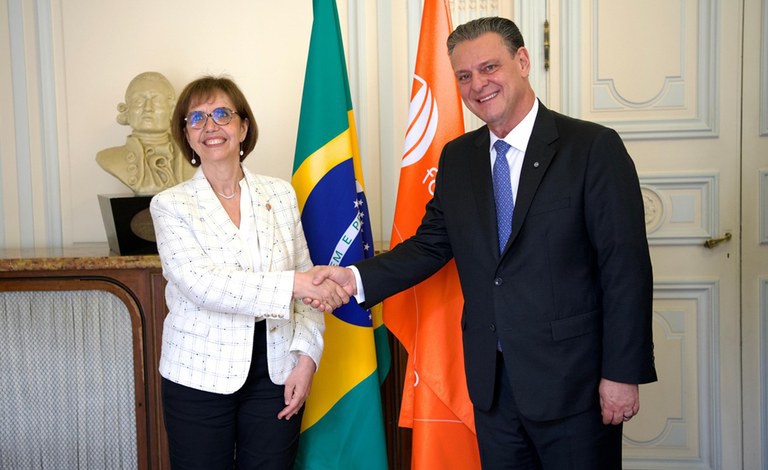
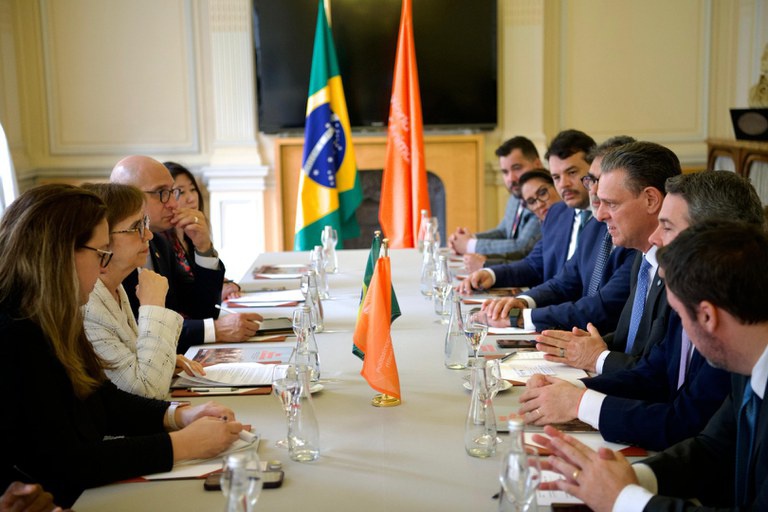
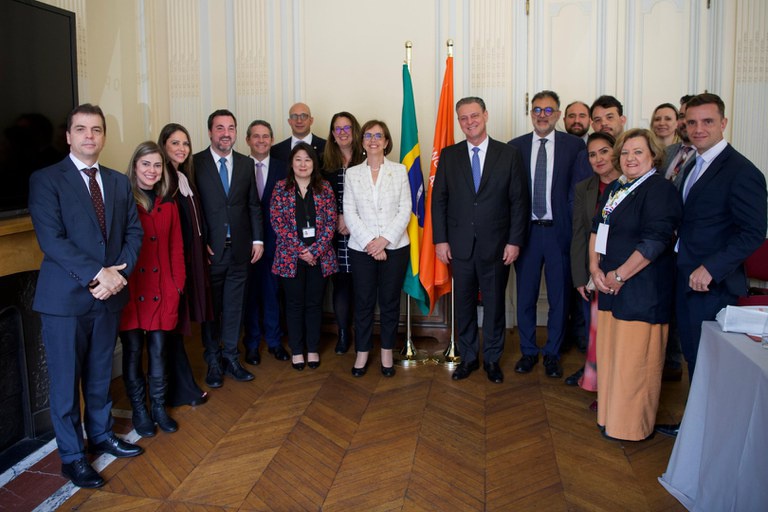
On Friday, June 6, Brazil’s Minister of Agriculture and Livestock, Carlos Fávaro, met with the Director General of the World Organisation for Animal Health (WOAH), Emmanuelle Soubeyran, at the organization’s headquarters in Paris. The meeting centered on advancing strategies to safeguard animal health while ensuring the continuity and integrity of global food supply chains.
During the meeting, Minister Fávaro emphasized the importance of regionalization as a strategic approach to managing animal health emergencies. “Brazil is a continental country and one of the world’s top exporters of animal protein. We cannot address a potential animal health crisis as if it affects the entire national territory in the same way. Regionalization is essential to keeping trade flows secure while protecting jobs, incomes, and the stability of food prices,” he stated.
Fávaro also proposed hosting a Global Conference on Animal Health in Brazil, suggesting the city of Foz do Iguaçu, Paraná—an important poultry production hub—as the venue. The aim would be to promote the exchange of best practices among countries, with a focus on regional solutions that allow for faster and more effective responses to disease outbreaks, such as avian influenza. “This is a way to ensure sanitary protection without penalizing unaffected regions. Science must be our guiding principle,” he emphasized.
WOAH Director General Emmanuelle Soubeyran acknowledged Brazil’s leadership in animal health and commended the country’s long-standing commitment. “Brazil has been a highly engaged and technically strong partner. Regionalization is increasingly embraced by countries, and WOAH fully supports this approach,” she said.
Carlos Goulart, Secretary of Agricultural Defense at the Ministry of Agriculture and Livestock, also underscored the importance of aligning with international standards. “Our success in animal health is also a success for WOAH. We work actively to encourage countries to follow international protocols, as they improve animal health standards and contribute to the resilience of global trade,” he concluded.
Press information
imprensa@agro.gov.br