Notícias
GOVERNMENT MISSION
Minister Carlos Fávaro Concludes Mission to Southeast Asia with Major Gains for Brazilian Agribusiness

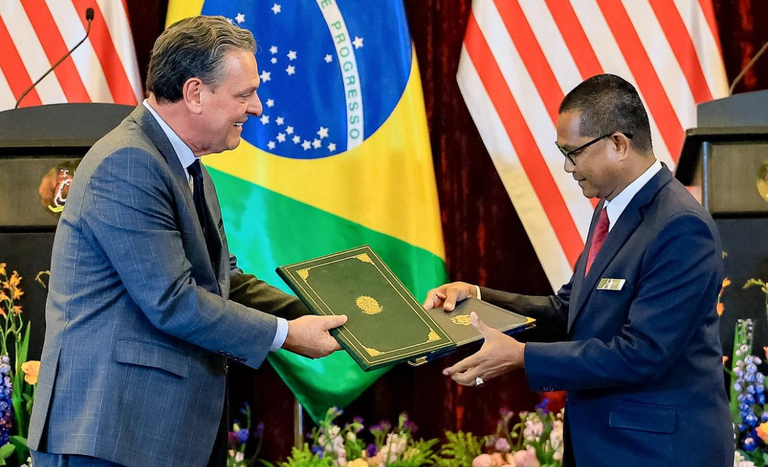
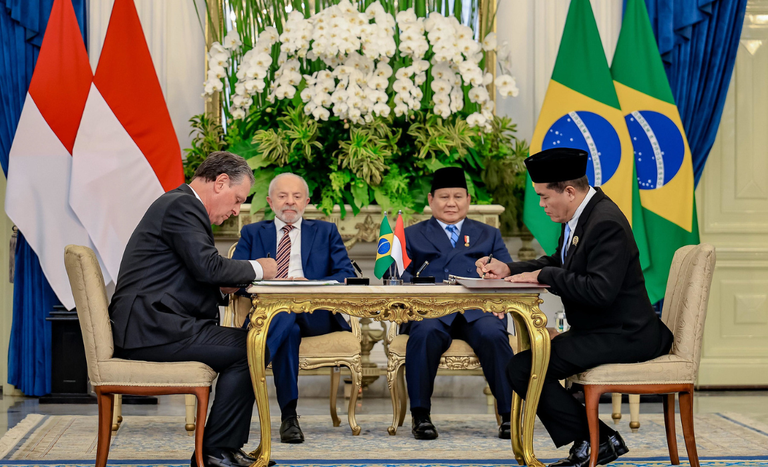
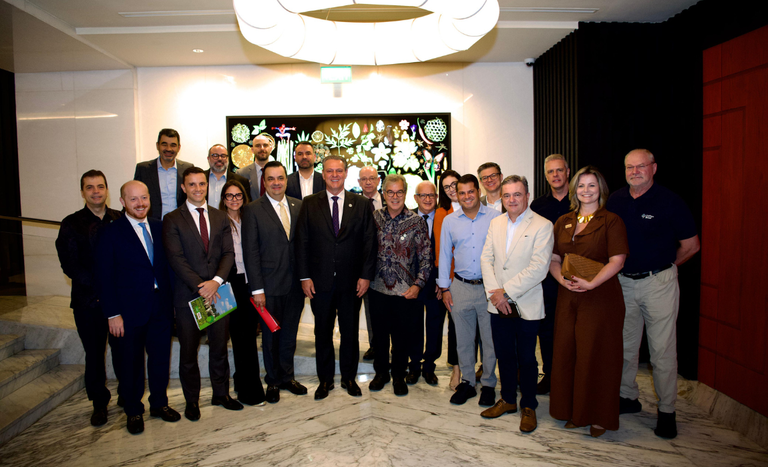
The official Brazilian government mission to Indonesia and Malaysia, held from October 23 to 28, delivered significant results for the country’s agricultural sector. Led by President Luiz Inácio Lula da Silva and accompanied by the Minister of Agriculture and Livestock, Carlos Fávaro, the mission resulted in the opening of six new markets, updates to sanitary protocols, the resumption of strategic exports, and the signing of technical and scientific cooperation agreements.
The outcomes underscore the leading role of the Ministry of Agriculture and Livestock (MAPA) in expanding trade and promoting agricultural diplomacy. Since the beginning of the current administration, Brazil has opened 466 new markets, consolidating its position as a global leader in sustainable food production.
“We conclude another successful government mission with excellent results. Our focus is on opening new markets, strengthening diplomatic and commercial ties, and creating more opportunities for Brazilian producers. Together with President Lula, we are expanding the reach and influence of Brazilian agribusiness worldwide,” said Minister Fávaro.
During the first agriculture-focused bilateral meeting, held in Kuala Lumpur, Brazil secured six new export opportunities: wild-caught and farmed fish, sesame seeds, powdered eggs, melons from Ceará and Rio Grande do Norte, and apples from Rio Grande do Sul and Santa Catarina.
The mission also marked the resumption of Brazilian poultry exports to Malaysia, following the revision of the sanitary protocol that reduced the suspension period for Highly Pathogenic Avian Influenza (HPAI) cases from 12 months to 3 months. Malaysia further confirmed the advancement of an audit scheduled for November to approve new pork processing plants, opening the door to expanded trade between the two countries.
Another key milestone was the signing of a technical cooperation agreement between MAPA, the Brazilian Agricultural Research Corporation (Embrapa), and the Malaysian Agricultural Research and Development Institute (MARDI). The agreement includes joint projects in biotechnology and nanotechnology, as well as technical exchanges in sorghum, soybean, corn, and coconut production, reinforcing scientific collaboration and innovation in both countries.
Brazil also received confirmation of the resumption of the pre-listing system for poultry exports to the European Union, suspended since 2018. This mechanism allows processing plants that meet EU sanitary standards to export without the need for individual audits—representing a major advancement for Brazil’s poultry industry.
“This achievement reaffirms international confidence in the quality and safety of Brazilian poultry production. It is a significant step forward for our producers and processors,” emphasized Minister Fávaro.
In Indonesia, Brazil made progress toward expanding its beef export market, with a new audit confirmed for later this year to approve additional processing plants. As the world’s fourth-largest agricultural market, Indonesia represents a key partner for the continued growth of Brazilian agribusiness.
The mission also resulted in the signing of a cooperation agreement with Indonesia’s quarantine authority, establishing sanitary and phytosanitary equivalence and an electronic certification system—further strengthening technical reliability and mutual trust between the two countries.
Press Office
imprensa@agro.gov.br