Notícias
BRICS
Brazil’s Ministry of Agriculture and Livestock presents Degraded Pasture Conversion Program to BRICS
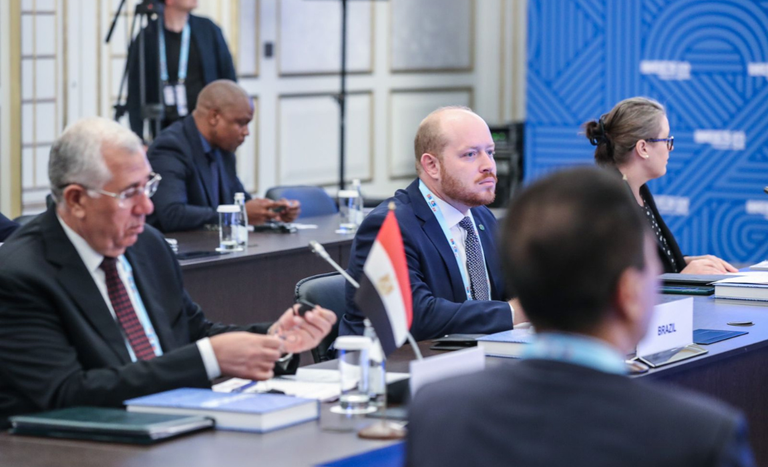
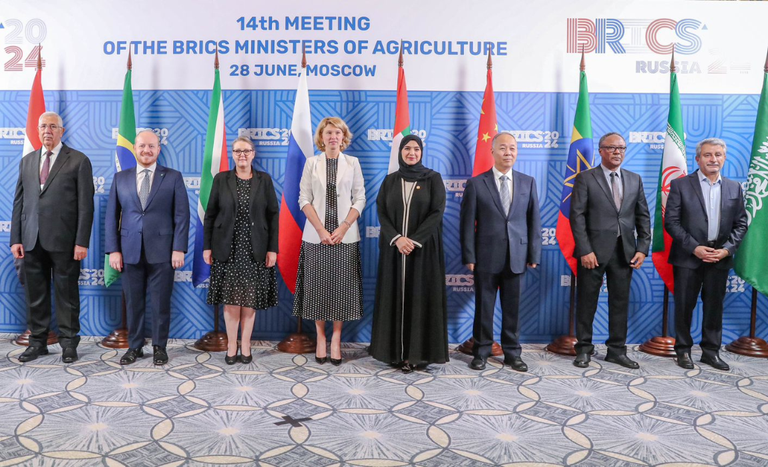
At the 14th Meeting of BRICS Ministers of Agriculture last week, Brazil, represented by Julio Ramos, Deputy Secretary for Trade and International Relations at the Ministry of Agriculture and Livestock (Mapa), presented the National Program for the Conversion of Degraded Pastures. The expanded BRICS, now including Brazil, Russia, India, China, South Africa, United Arab Emirates, Iran, Egypt, and Ethiopia, aims to strengthen economic, political, and cultural cooperation among its nations.
During the meeting in Moscow, Russia, the deputy secretary highlighted the importance of sustainable agriculture for global food security, emphasizing the role of science, innovation, and technology in transforming Brazilian agriculture. He mentioned the ABC Plan, which aims to reduce emissions and increase carbon capture, and the National Program for the Conversion of Degraded Pastures into cultivable land, designed to recover millions of hectares without deforestation.
In the grain trade session, Julio Ramos advocated for a fair and efficient multilateral trading system, free of tariff and non-tariff barriers, and emphasized the need to strengthen the WTO to promote grain trade that benefits all nations, especially the most vulnerable. He also reaffirmed Brazil’s commitment to collaborating with BRICS to develop equitable and sustainable trade tools.
JOINT STATEMENT
The joint statement by the ministers at the end of the event underscored the importance of food security and nutrition, highlighting the need to increase agricultural productivity and promote rural development, especially for vulnerable groups. The ministers emphasized the urgency of addressing challenges such as natural disasters, climate change, inequalities, and conflicts, and avoiding unilateral trade restrictions.
The ministers recognized the importance of strengthening agricultural trade to achieve sustainable development and food security, promoting a fair and transparent multilateral trading system. They committed to avoiding unjustified trade barriers, promoting cooperation among BRICS, creating a grain trade platform, developing sustainable agricultural methods, exchanging emerging technologies, and promoting biodiversity conservation.
“During the meeting in Russia, we highlighted the evolution of Brazilian agriculture, which is becoming increasingly sustainable and diverse, advancing with science, technology, and innovation. We also engaged in dialogue with the private sector of BRICS member countries, presenting our programs for converting degraded pasture areas into cultivable land and the Low Carbon Agriculture Plan, which will mitigate 1 billion tons of carbon equivalent. Brazil is committed to combating food insecurity, facilitating free trade, generating jobs and income, and offering the world a sustainable, prosperous, and equitable agriculture, preserving 66% of its territory with forests and native vegetation,” emphasized Julio Ramos, Deputy Secretary of Mapa.
BILATERAL MEETING
Also in Moscow, the Deputy Secretary of Mapa participated in a meeting with Russia’s Deputy Minister of Agriculture, Sergei Levin, highlighting the excellent bilateral relations and potential for increased partnerships and cooperation. Sanitary issues were discussed, including access to the Eurasian Economic Union market for eggs and egg products, the approval of pork and poultry plants, and the removal of re-inspection of meat products at Brazilian ports.
The mission from the Ministry of Agriculture also included the Director of Trade Promotion and Investments, Marcel Moreira, and the Agricultural Attaché in Russia, Marco Túlio Santiago.
Press Information
imprensa@agro.gov.br