Notícias
FOREIGN RELATIONS
Brazil-China Dialogue on food security held in Beijing
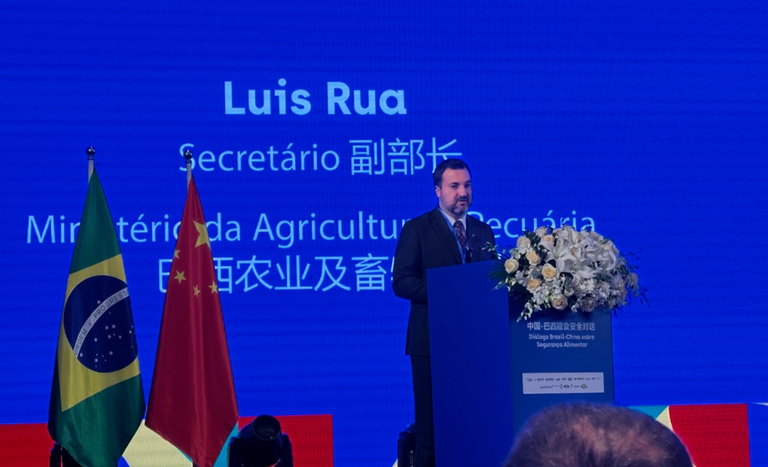
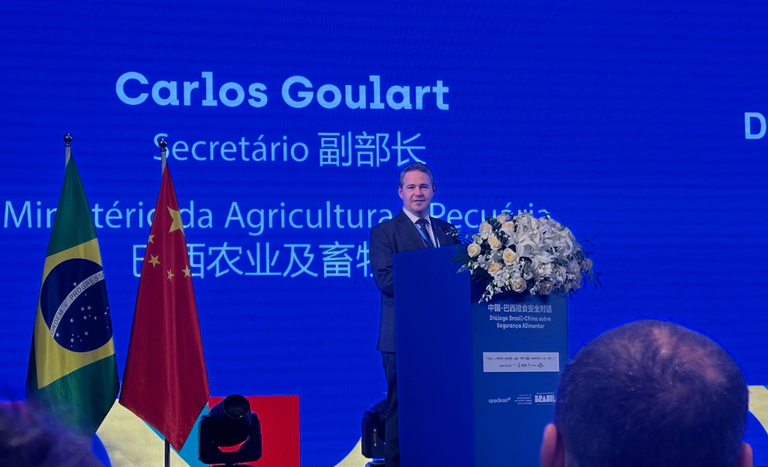
The Brazilian Ministry of Agriculture and Livestock (MAPA), in partnership with the Brazilian Trade and Investment Promotion Agency (ApexBrasil), hosted the Brazil–China Dialogue on Food Security on Wednesday, May 14, in Beijing. The event brought together public officials and representatives from a wide range of Brazilian and Chinese agribusiness sectors to discuss the future of food security and bilateral cooperation.
According to ApexBrasil, Brazil plays a key role in supporting China's food security, supplying more than 25% of the country’s agricultural and livestock imports.
Opening the seminar, MAPA’s Secretary of Agricultural Defense, Carlos Goulart, emphasized the critical role of the private sector in advancing this partnership. “I congratulate the Brazilian entrepreneurs who believe in this relationship, who invest in production excellence, and who meet the rigorous standards of the Chinese government by delivering high-quality, safe, and competitive products. It is gratifying to see the growing interest in exploring new markets, and above all, the commitment to deepening the ones we have already established,” he stated.
Luis Rua, MAPA’s Secretary for Trade and International Relations, highlighted the strategic importance of the Brazil–China partnership. “China is our largest trading partner. In 2023, according to Brazilian statistics, China imported USD 44 billion in Brazilian agribusiness products—around 30% of our total sector exports. To put that in context, China imported more than twice as much as the European Union, our second-largest partner. These figures underscore Brazil’s strategic role for China. This is a path of closer integration and collaboration in the name of global food security,” Rua said.
Laudemir Müller, Agribusiness Manager at ApexBrasil, underscored the long-term commitment Brazil seeks in its relationship with China. “We want to position Brazil as a reliable, stable, and sustainable partner for China. Our goal is to build a relationship that goes beyond trade—a relationship based on mutual investment. We want to attract more Chinese investment to Brazil and, at the same time, continue expanding our presence here in China,” he explained.
Representing Brazil’s agribusiness sector were the Brazilian Animal Protein Association (ABPA), the Brazilian Beef Exporters Association (ABIEC), the Brazilian Cotton Producers Association (ABRAPA), the Brazilian Association of Fruit Exporters (ABRAFRUTAS), the Brazilian Specialty Coffee Association (BSCA), the Brazilian Coffee Exporters Council (CECAFÉ), the National Corn Ethanol Union (UNEM), CropLife Brazil, and the Brazilian Institute of Beans and Pulses (IBRAFE).
On the Chinese side, participants included importers and representatives from the China Chamber of Commerce for Import and Export of Foodstuffs, Native Produce and Animal By-products (CFNA), the Agricultural Trade Promotion Center (ATPC), the China Fruit Marketing Association (CFMA), the China National Association of Grain Sector (CNAGS), and the China Meat Association (CMA).
BRAZIL–CHINA TRADE RELATIONS
China, the world’s second-largest economy, is Brazil’s top trading partner. In 2024, bilateral trade reached a record USD 160 billion, with Brazilian exports totaling USD 94.4 billion and imports from China amounting to USD 63.6 billion. This resulted in a trade surplus of USD 30.7 billion, representing 41.4% of Brazil’s total trade surplus. Brazil stands out as China’s largest supplier of essential commodities, including soybeans, beef, poultry, pulp, cotton, and sugar—further reinforcing its vital role in Chinese food security.
Press information
imprensa@agro.gov.br