Anvisa approves the first synthetic semaglutide pen for diabetes, an analog product of Ozempic
The new product Ozivy underwent a rigorous technical evaluation of efficacy, safety and quality.
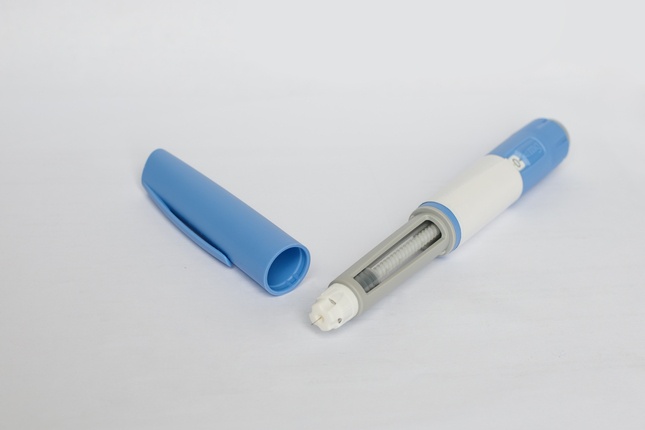
The Brazilian Health Regulatory Agency (Anvisa) published on Tuesday (May 26) the registration of the drug Ozivy. The product is the first synthetic semaglutide pen analogous to the biological product already sold in Brazil.
The new medication uses the same active ingredient as Ozempic, whose patent expired on March 20. Anvisa received the request for registration in 2023 and carried on a technical process to prove the efficacy, safety and quality of the new product.
The registration request was made by EMS/SA Laboratory and was dealt with in a chronological and priority order established for GLP-1 type drugs, popularly known in Brazil as slimming pens. The rules for prioritizing those drugs, including semaglutide, were defined according to CFP 12/2025. Currently, five other synthetic drugs as well as one biological semaglutide drug are being reviewed by the Agency.
Approved Indication
Ozivy may be used to treat adults with uncontrolled type 2 diabetes mellitus, along with diet and exercise:
• as a monotherapy, when metformin is considered inappropriate due to intolerance or contraindication;
• in addition to other medications used to treat diabetes.
The product will be presented as an injectable solution, in a pre-filled pen for weekly administration. The storage method for the new product is different from the analogous medication (Ozempic), since it must be stored in the refrigerator (at 2°C to 8°C) before and during treatment.
Ozempic storage is different, requiring refrigeration only before use, and can be kept at up to 30°C for up to six weeks after the patient starts taking the doses.
Check here the approved presentation options that may be offered by the laboratory:
• Semaglutide 1.34 mg/mL injectable solution in a pre-filled application system (multidose and disposable) with 1.5 ml + 1 pen + 6 needles
• Semaglutide 1.34 mg/mL injectable solution in a pre-filled application system (multidose and disposable) with 3 ml + 2 pens + 10 needles
• Semaglutide 1.34 mg/mL injectable solution in a pre-filled application system (multidose and disposable) with 1.5 ml + 1 pen + 4 needles
• Semaglutide 1.34 mg/mL injectable solution in a pre-filled application system (multidose and disposable) with 3 ml + 2 pens + 8 needles
Like all GLP-1 type medications, synthetic semaglutide is subject to prescription.
Technical Challenge
Analog synthetic semaglutide evaluation is a technical challenge for regulatory agencies worldwide. Anvisa is one of the first agencies to register this type of product.
Before the registration of the new Analog synthetic semaglutide, all semaglutide medications registered in Brazil were biological, made from biological Active Pharmaceutical Ingredients (APIs). Biological medications are complex molecules and can be obtained from biological fluids, animal tissues, or even from biotechnological procedures, through manipulation or insertion of other genetic material (recombinant DNA) or through the alteration of genes.
This category includes, among others, vaccines, hyperimmune serum, blood products, monoclonal antibodies, and GLP-1 analogs made by biological processes. Those products are usually administered by injection (intravenous or subcutaneous) to ensure the structural and functional integrity of the substances. However, it is possible to use them orally.
Synthetic analogues, on the other hand, are made by chemical synthesis, resulting in smaller, more stable molecules that can be reproduced identically. They are commonly used via various routes, such as oral, injectable, inhaled, and ophthalmic.
These products are considered highly complex because they share typical characteristics of synthetic drugs (for example, solvent residues in the process, residues of metallic catalysts, impurities with similar chemical structure), as well as the characteristics of biological drugs, such as the immunogenicity risk and aggregates formation, among others.
Is Ozivy a generic drug?
It is important to highlight that Ozivy is not a generic drug, since there are no generic versions of biological products according to Brazilian regulation. Therefore, the product is classified as a new drug, a synthetic analogue of a biological product.
When will the drug be available on the market?
The drug can only be marketed after registration by the Brazilian Health Regulatory Agency and after the maximum price is approved by the Chamber for the Regulation of the Medicines Market (CMED). However, the company that holds the registration has the decision when to put the drug on sale.
To be available in the Unified Health System (SUS), the new product must be evaluated and recommended by the National Commission for Technology Incorporation (Conitec) and approved by the Ministry of Health. It is important to mention that not all drugs registered by Anvisa undergo evaluation by Conitec or are incorporated into the Unified Health System (SUS).
Check here the full Resolution that approved the new medical.