Loading
Delegates' Area
English
KIDS20
Youth Press arrives at the other side of the world: G20 junior reporters head to China
In the context of celebrating the 50th anniversary of diplomatic relations between Brasil and China, students from the Kids20 project were invited by the Chinese Embassy in Brasil to visit the Far Eastern country in a cultural exchange that resulted in various contents.
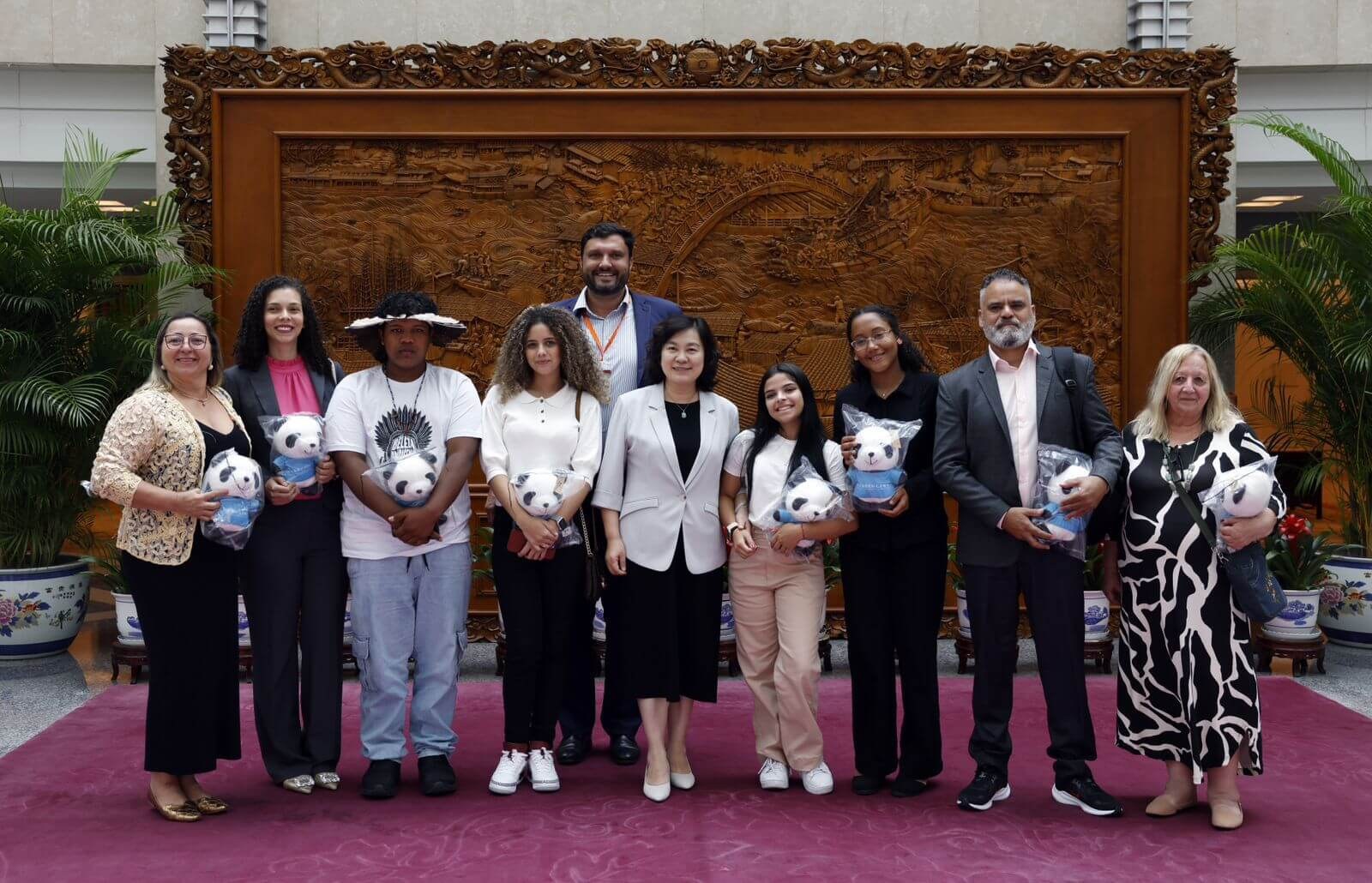
When the Kids20 project began, it was envisioned that they would conquer the world with the cleverness and energy of youth. What had not been imagined was that this idea would soon become tangible. This month, a significant step was taken in that direction: Alana Larissa, Ana Clara, Isabella, and Moisés traveled across the globe to cover G20 agendas in partnership with the People’s Republic of China, a member state of the forum of the world’s largest economies.
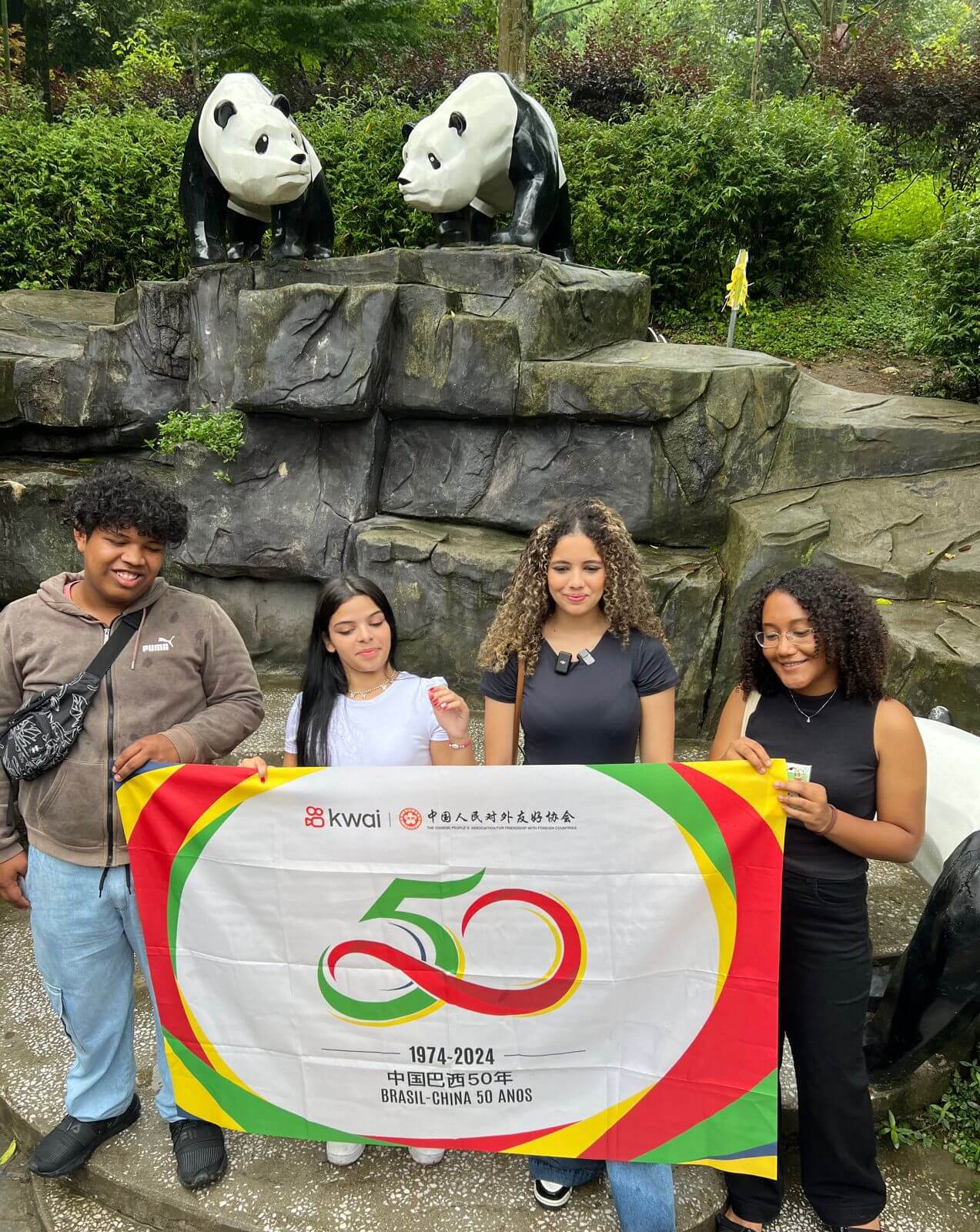
At the invitation of the Chinese government itself, through the Embassy in Brazil, the students traveled to China to learn more about its ancient history and culture, bringing the Far East closer to youth from public schools of São Paulo and Alagoas. It was a unique experience not only for the teenagers but also for the public educational system of these states and the history of G20, working for the first time with youth reporters in its communication team and now expanding its coverage to the international stage.
On the itinerary were the cities of Chengdu, Dujiangyan, Beijing, and Shanghai, with visits to landmarks such as the Great Wall, the Forbidden City, China’s Conservation and Research Center for the Giant Panda, China Central Television, and the Shanghai Free Trade Zone. Those who think they experienced the trip as a tour are mistaken. The quartet was in the country as G20 reporters and had the opportunity to talk to figures such as Hua Chunying, Vice-Minister of Foreign Affairs of China; Li Dong, spokesperson for the Great Wall; and Yang Wanming, former Chinese Ambassador to Brasil.
“In a time zone 11 hours ahead of Brasil, the teenagers produced various contents, including photographs, audiovisual materials, and written pieces which will be released gradually on this portal, the official G20 Brasil website. The quartet also engaged in integration activities with Chinese students. They visited the Desheng High School in Beijing and the Li Bing High School in Dujiangyan, where they experienced Tai Chi and relief painting.”
“In addition to so many other cultural aspects that I was able to experience, it was especially interesting to see the pandas and explore Chinese calligraphy. Moreover, I found the technological visits we did very interesting, exploring and seeing things that have not yet reached Brasil,” said Alana Larissa, a student of the Military Police School Tiradentes in Alagoas. “The trip was very rewarding and important. I will remember it throughout my life”, added Moisés, a young man from the Guarani ethnicity who studies at the Jaraguá Center for Indigenous Education and Culture, located in an Indigenous territory in southwestern São Paulo.
“The mission was incredible, with moments of engaging with culture, art, and education. The outcome of enabling such an immersion in the places we visited is very positive. We now possess knowledge that we will share in Brasil," said Carlos Lima, coordinator of Imprensa Jovem in São Paulo. The teacher, who works at the city's Municipal Education Department, also highlighted that the young participants "made history," recalling the words of a Chinese ambassador who noted that this was the first time the country's government had received such a young foreign delegation.
Among the produced contents, the audiovisual piece filmed at the Great Wall is already available and can be viewed here.
Pandas and diplomacy?
In an itinerary designed to transcend conventional tourism, the visit to the Center for the Giant Panda offered an opportunity to encounter this species, widely regarded as one of the world’s cutest mammals, and also a lesson about diplomacy. The Chinese government lends pandas to more than 20 nations as an instrument of foreign policy.
Giant pandas are a species endemic to China. For many years, they have been lent to other countries as symbols of Beijing’s friendship. This year, China offered two pandas to Brazil to celebrate 50 years of diplomatic relations between the two countries. The celebration of the 50th anniversary of Sino-Brazilian relations will take place next month, in August.
Through G20 Brasil, in an unprecedented move for the production of official forum materials, an e-book was published this year not only in Spanish, English, and Portuguese but also in Mandarin, a language spoken by approximately 14% of the world's population. This publication is the result of a partnership with the Chinese Embassy. Additionally, the e-book is available in Guarani, a Brazilian indigenous language.
When the reporters saw the agenda
Journalists are typically the ones reporting facts and seeking out new stories. But what happens when they themselves become the news? This was the case for the young journalists of the G20, who were featured on various channels, including the international news channel in China, China Global Television Network (CGTN).
In addition to the country’s official channel, the Kids20 project and its students were featured in China Youth Daily and on the social media channels of the Chinese embassy in Brasil and the Vice-Minister of Foreign Affairs of China. Additional content was produced, highlighting the cultural exchange between nations that are members of both the G20 and BRICS.