The even-more-wonderful city: Rio de Janeiro is now the face of the G20
Street furniture, electronic panels, banners, building envelopes: these advertising terms are putting the G20 in the middle of the Cariocas’ daily lives. From Copacabana to the Rocinha Favela, from airports to bus stops, the G20 is everywhere in Rio de Janeiro. The city is going to host a number of events throughout the year, including the Summit of Heads of Government and State that closes the forum’s Brazilian presidency in November.
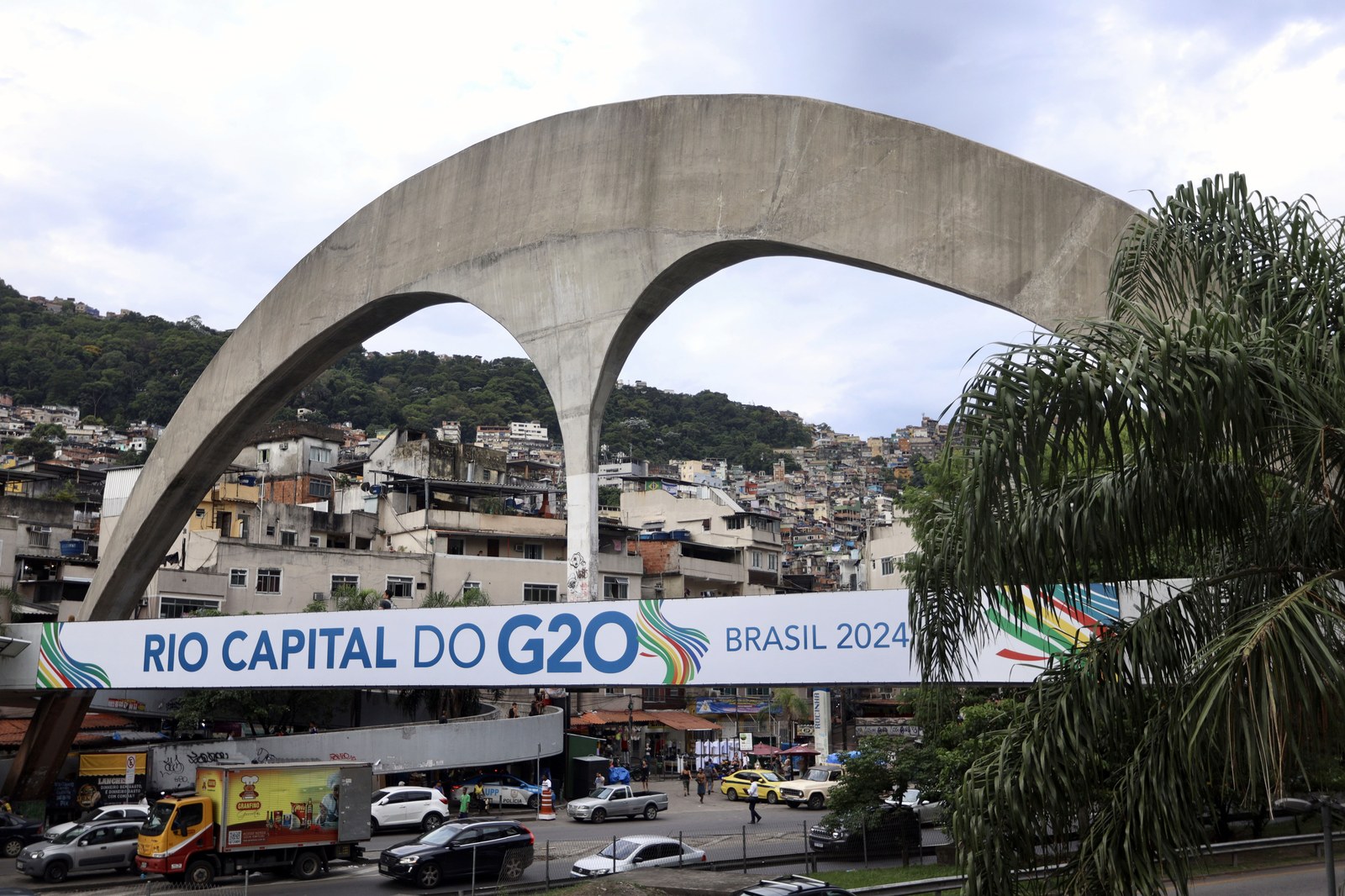
The G20 is everywhere: in the agendas that permeate the daily lives of the population—such as the discussions at the Women, Education, Employment and Sustainability working groups, for example—and, in Rio de Janeiro at least, in the efforts to disseminate and popularize the forum, which are adding even more color and life to the city this year. Thanks to actions by both the Brazilian Presidency’s Secretariat of Social Communications (Secretaria de Comunicação Social da Presidência da República/SECOM/PR), which takes part in the coordination of G20 communications, and by the City of Rio de Janeiro, the city that has inspired so many songs has become even more beautiful.
When arriving in Rio de Janeiro by air, tourists, businesspeople and/or authorities from all over the world are meeting the G20 even before seeing Christ the Redeemer. When picking up their bags or in the corridors of the Santos Dumont Airport and the Tom Jobim - Galeão International Airport, they come across brilliant panels about the G20. And the residents of the capital of Rio de Janeiro, are learning about the priorities of Brazil’s G20 presidency on their way to work, school or the city center at bus stops or on the VLT (Veículo Leve sobre Trilhos) train.
Lucas Padilha, Coordinator of International Relations at Rio de Janeiro’s City Hall, and President of the Rio G20 Committee highlighted that publicity is just one part of the city's preparation to host meetings that gather the world's main economies. “As well as preparing for the final Summit in Rio de Janeiro, we have been preparing the city for the G20. This not only means conservation, beautification, but improvements to the infrastructure of the regions that are going to host events throughout the year,” said Lucas.
Pietra Couto, a psychologist who was born and raised in Rio de Janeiro, mentioned the G20's publicity, and the role of advertising in bringing people closer to the issues at hand. “I saw the ads in high-traffic places, big banners. I think people realize that it is something of a political nature, an important meeting, involving international authorities,” she said. “Whenever I see the G20, I remember something great in the city, like Rio 92,” added Pietra.
“I see it as something very serious, involving high-level policies, and which cannot be limited simply to publicity. But I think advertising increases people's curiosity; it would be cool to ask young people if they know what the G20 is, what their perception of it is,” said Pietra.
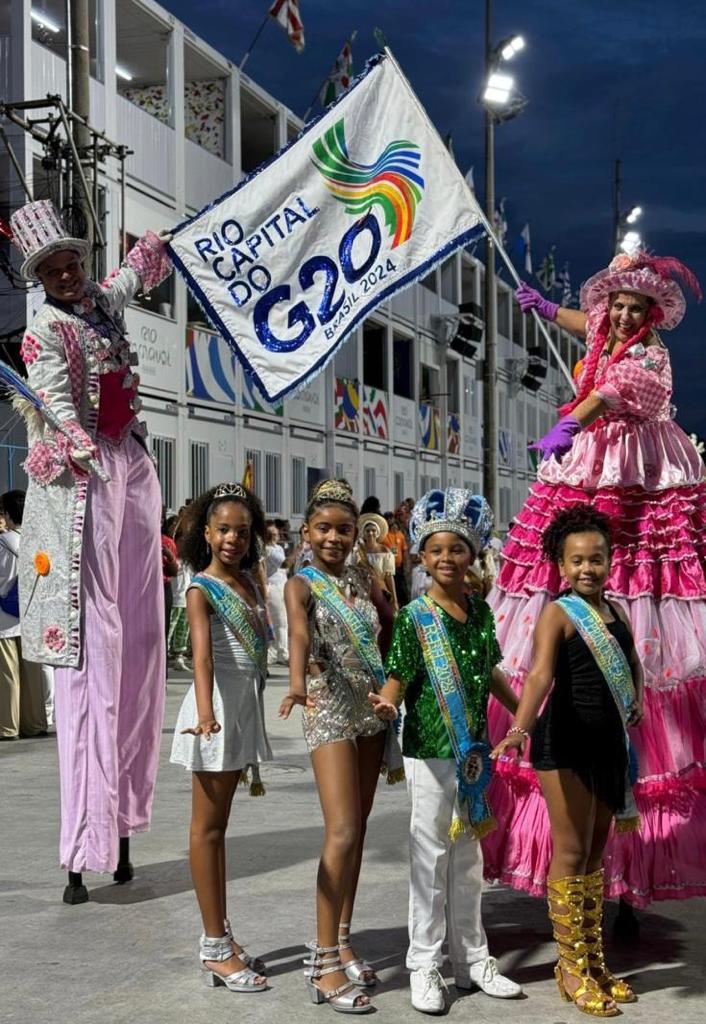
Like a good Brazilian, the G20 even took part in the world’s biggest party—Carnival—at the samba school parades in Rio de Janeiro this year. Across the Marquês de Sapucaí Sambódromo, the G20 was displayed on boxes and grandstands—and each school, when entering the avenue, was welcomed by a traditional mestre-sala and flag bearer carrying a flag with the G20 logo.
Other strategic places in the city also harbor banners promoting the G20. The Rocinha favela and the Copacabana neighborhood are some examples. In the City Center actions have been planned for the Museum of Tomorrow (Museu do Amanhã) in Botafogo, and the City Palace (Palácio da Cidade) will also bear the G20 identity. When Brazil began its term as president of the G20, on December 1, 2023, a projection lit up at Yup Star Rio, the largest Ferris wheel in Latin America, in the port of Rio.
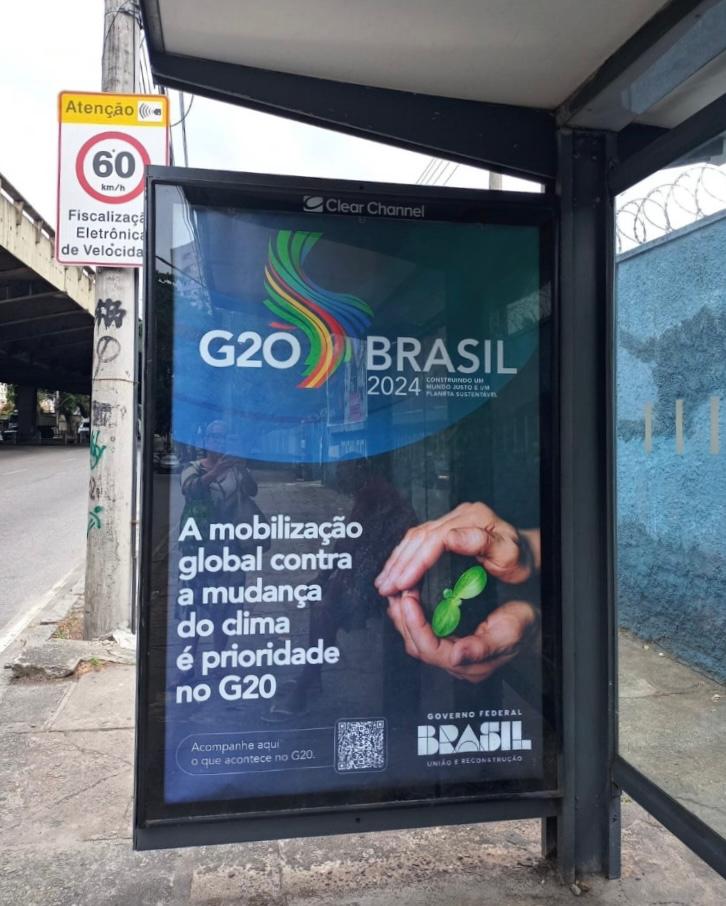
Meeting of Chancellors
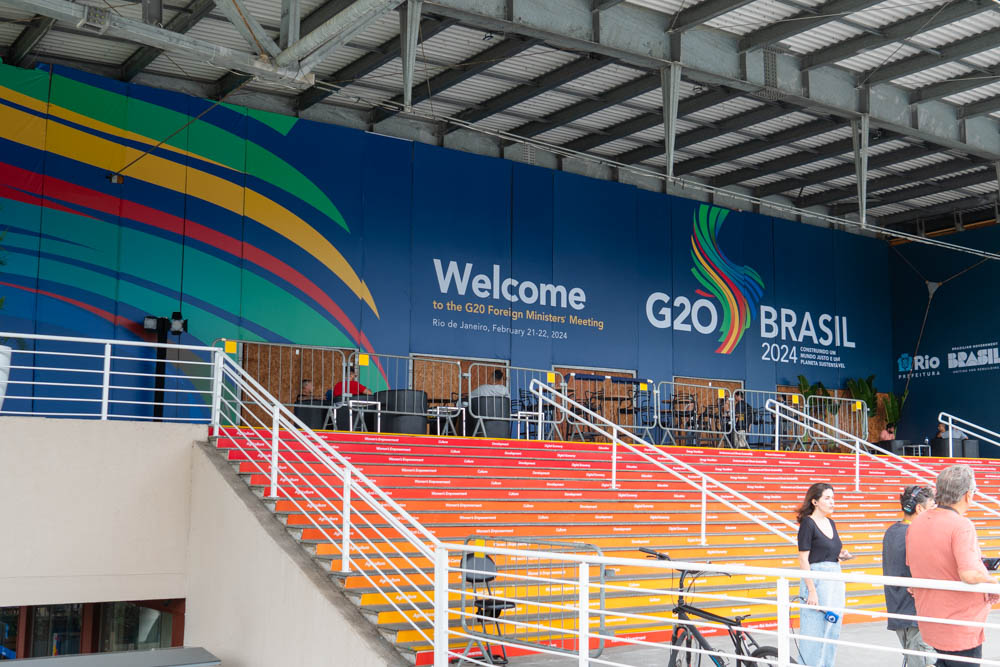
For the first ministerial meeting of the G20—where chancellors from the world's largest economies will gather on Wednesday and Thursday, Feb 21 and 22, in Rio de Janeiro—, the Glória Marina, chosen to host the meeting, also received a themed envelope. At the entrance of the Marina the G20 colors and logo are easily recognizable, and steps display the names of the fifteen working groups of the G20 Sherpa Track. The pavilion, from the press area to the rooms reserved for bilateral meetings, set up in a special structure for the event, has also got the G20 Brasil look.