Passing the baton: South Africa's Minister of International Relations commits to following Brasil's legacy at the G20
Brasil's Foreign Minister, Mauro Vieira, and South Africa's Minister of International Relations and Cooperation, Ronald Lamola, participated in a meeting at the Itamaraty Palace in Brasília, the home of Brazilian diplomacy, to formalize the transfer of the forum's presidency. Discussions included the Finance and Sherpa tracks, logistics, communication, and G20 Social.
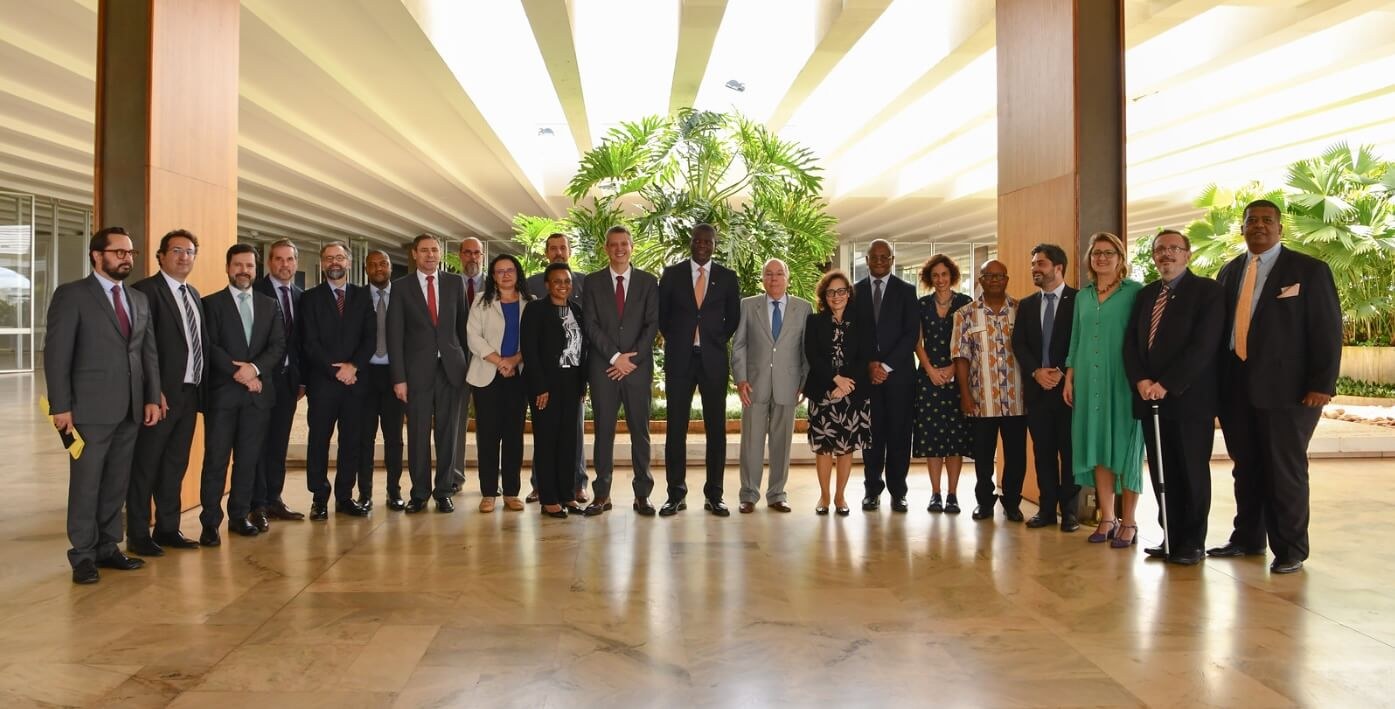
The transfer of the G20 presidency from Brasil to South Africa did not conclude when Lula struck the gavel on November 19, marking the end of the Leaders' Summit in Rio de Janeiro. While the gavel strike is undoubtedly the most symbolic moment of the transition, and the final public act of Brasil's presidency, the official end of Brasil's tenure as head of the group of the world's largest economies is set for November 30. Until then, several engagements with the South African team remain on the agenda, coordinated by the Ministry of Foreign Affairs of Brasil.
One such engagement was a seminar held on November 21 at the Itamaraty Palace, where the coordinators of G20 Brasil met with their South African counterparts to delve into the routines of the Sherpa and Finance tracks, and to gain a deeper understanding of the challenges and pace of communication and logistical activities. The structure of the main novelty carried out this year and to be continued next year was also discussed: the G20 Social.
The meeting was attended by the highest names in the diplomacy of the countries, the Minister of Foreign Affairs of Brasil, Mauro Vieira, and the Minister of International Relations and Cooperation of South Africa, Ronald Lamola. At the opening of the ceremony, both focused on the priorities of the Global South at the G20, since the troika continues to be composed of developing countries, and stressed the importance of conducting the forum committed to overcoming the geopolitical fractures of the current world in favor of reforms for sustainability and social justice.
Mauro Vieira recalled the Brazilian performance at the head of the forum this year and pointed out the Brazilian willingness to collaborate in facing the challenges that may arise to South Africa during its period. "The own motto chosen by the South African presidency is a testament to our common goals: 'solidarity, equality, and sustainability.' We therefore feel that your presidency will be able to build on what we achieved in 2024 and strengthen and expand the voices of the Global South in the coming year," declared the ambassador.
"South Africa will also work on the proposed priorities of inclusive economic growth, industrialization, employment, tackling inequalities, food security, artificial intelligence, and innovation for sustainable development. In addition, we will carry out a review of the work of the G20 and a reflection on the main achievements and the way forward," explained Lamola, emphasizing their commitment to continuing the Brazilian legacy and showcasing the transformative potential of this presidency for his country, the African continent, and people around the world. "We will continue to turn to you [Brasil] as members of the troika and as strategic partners and friends for guidance during this period. We believe that this is not the end, but rather a more structured form of engagement that we will continue to do.
Debates during the day
In the morning of November 21, discussions were around the work of the two G20 tracks (Finance and Sherpas) and the progress made this year, such as supporting the theme of taxation of large fortunes, committing to mobilizing resources for basic sanitation and access to drinking water and understanding addressing racism and promoting racial equality in the context of combating inequalities. The South African coordination congratulated the way Brasil led the discussion and presented its thematic ambitions for 2025.
In the afternoon, the G20 Social took center stage with a presentation on the importance of inviting social movements and the thirteen engagement groups to contribute more directly to the forum's main debate axes. In Brasil, this inclusive approach led to a more precise drafting of the outcome document, representative engagement, and popularizing the themes of the tracks among civil society. It was recognized that the success of the Brazilian presidency is due in part to this bold project proposed by Lula when he took over the G20. Minister Ronald Lamosa, when participating in the public act of conclusion of the G20 Social Summit, on November 16, had already promised the continuity of the project.
G20 Brasil communication lessons
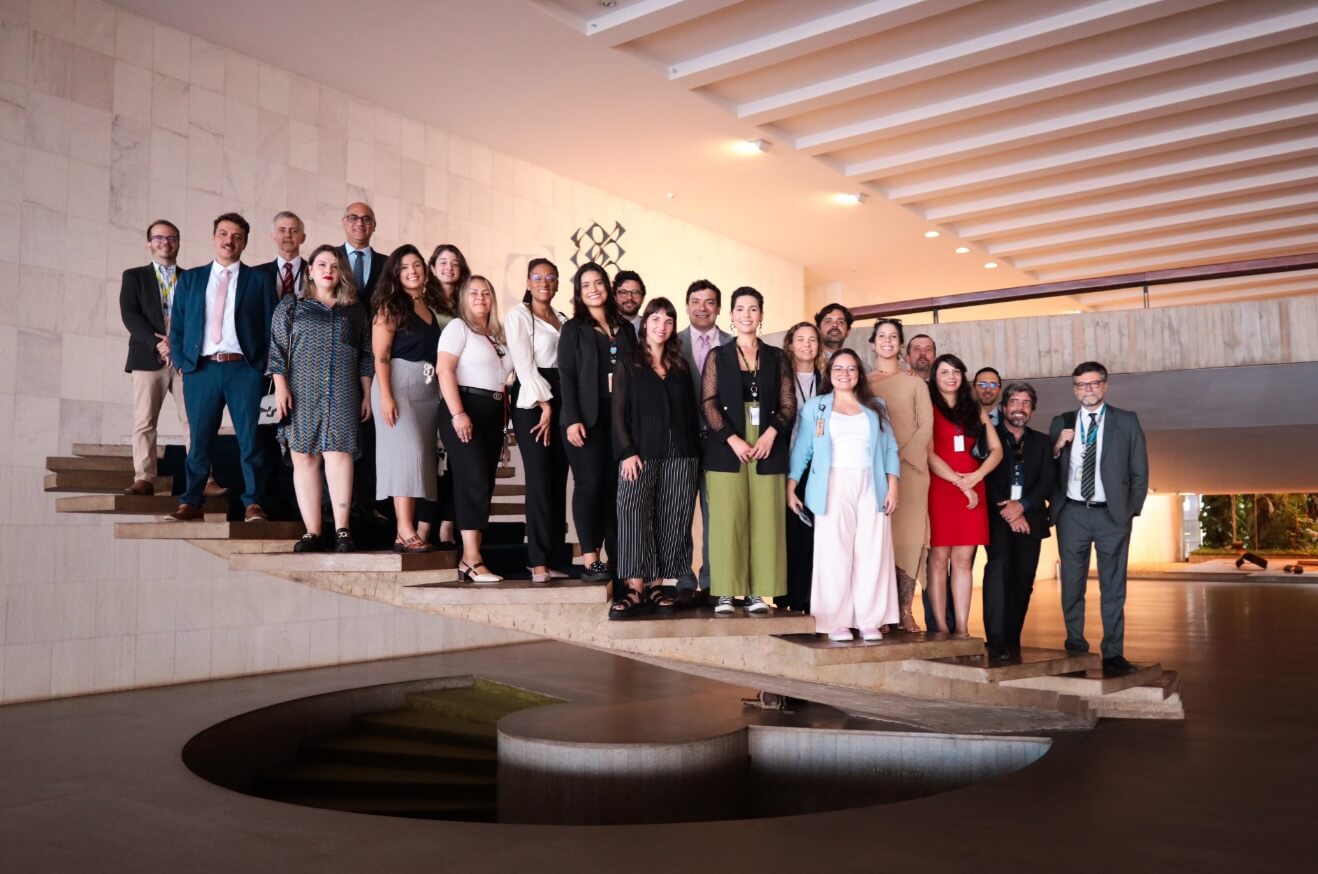
When discussing about the communication process, the challenge of communicating the impact of the G20 on people's lives was highlighted, as well as explaining that the forum is not only the Leaders' Summit, but the accumulation of months of technical, ministerial meetings, and side events.
Regarding the production of content on the official website, large figures were presented: about 1,500 texts and 600 radio bulletins in Portuguese, English, and Spanish published, more than 3 million and 600 thousand accesses and 230 thousand unique users. It was also evidenced the work of press relations, which only for the Leaders' Summit served more than 2,600 journalists, and the power of special projects. Among them, the preparation of the e-book in 6 languages (Portuguese, English, Spanish, Chinese, Japanese, and Guarani), the success of Kids 20, the partnership with indigenous communities, the podcast, the newsletter, and exclusive comics, as well as two special series. Collaborative communication with organized civil society for the G20 Social Summit was also highlighted.
The management of social networks (Instagram, Facebook, Linkedin, Twitter, and Blue Sky) presented the positive result since they grew followers and the digital strategy that made it possible to portray the G20 as a continuous and perennial process. The audiovisual also presented large numbers: more than 400 videos and 17,000 photos produced and disseminated on official channels (YouTube and Flickr), as a means of accessing the records by the delegations that met throughout the year, but also of distributing images to the commercial press. It was expressed that these records are also the historical documentation of the process of Brasil's presidency, as input to future products and research.
*Translated by PGET-UFSC