Loading
Delegates' Area
English
RESEARCH AND INNOVATION
Minister of Science, Technology, and Innovation: 'Knowledge generated worldwide should be shared”
Minister Luciana Santos underscored the imperative of reevaluating the global distribution of access to and production of scientific and technological advancements. Open innovation takes center stage in discussions happening in Recife, Pernambuco, on Friday (24), as part of the third G20 Research and Innovation Working Group meeting.
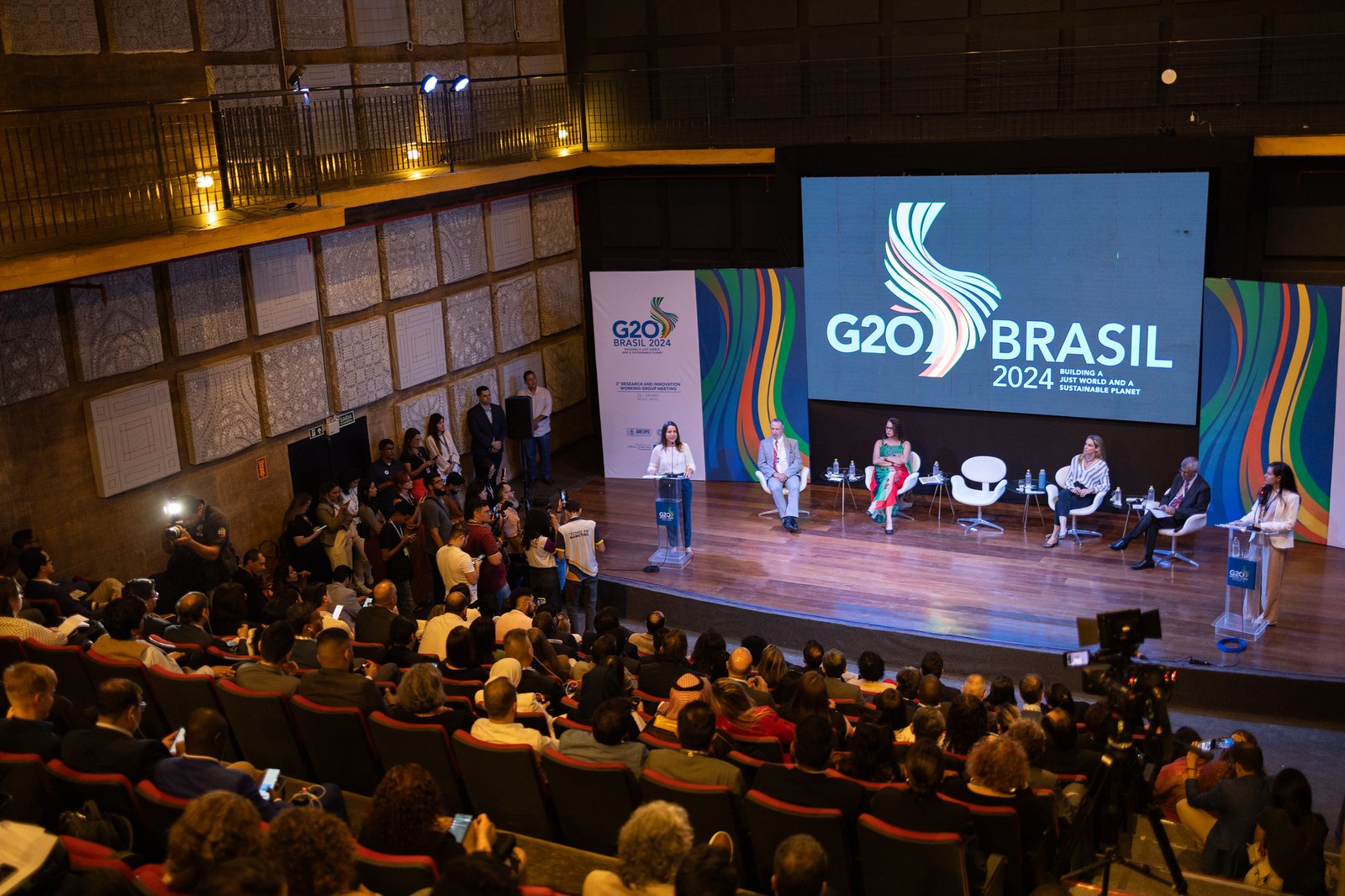
The third Research and Innovation Working Group (WG) meeting of the forum for the world's largest economies was attended by international G20 delegates, researchers, media professionals, diplomats, and government officials at the federal, state, and municipal levels. The opening session, held at the Cais do Sertão Museum in Recife, Pernambuco, reached full capacity.
The panel "Open Innovation for Fair and Sustainable Development” delved into the significance of international collaboration in reducing inequalities and disparities in accessing and producing science, technology, and innovation. It underscored the imperative of addressing global challenges through the lens of development rights, particularly focusing on enhancing access and leadership opportunities for girls and women in STEM (the acronym in English for Science, Technology, Engineering and Mathematics). Furthermore, the discussion spotlighted the role of Science, Technology, and Innovation (Ciência, Tecnologia e Inovação/CTI) in tackling climate change mitigation and resilience, using the recent tragedy in the Brazilian state of Rio Grande do Sul as a poignant illustration.
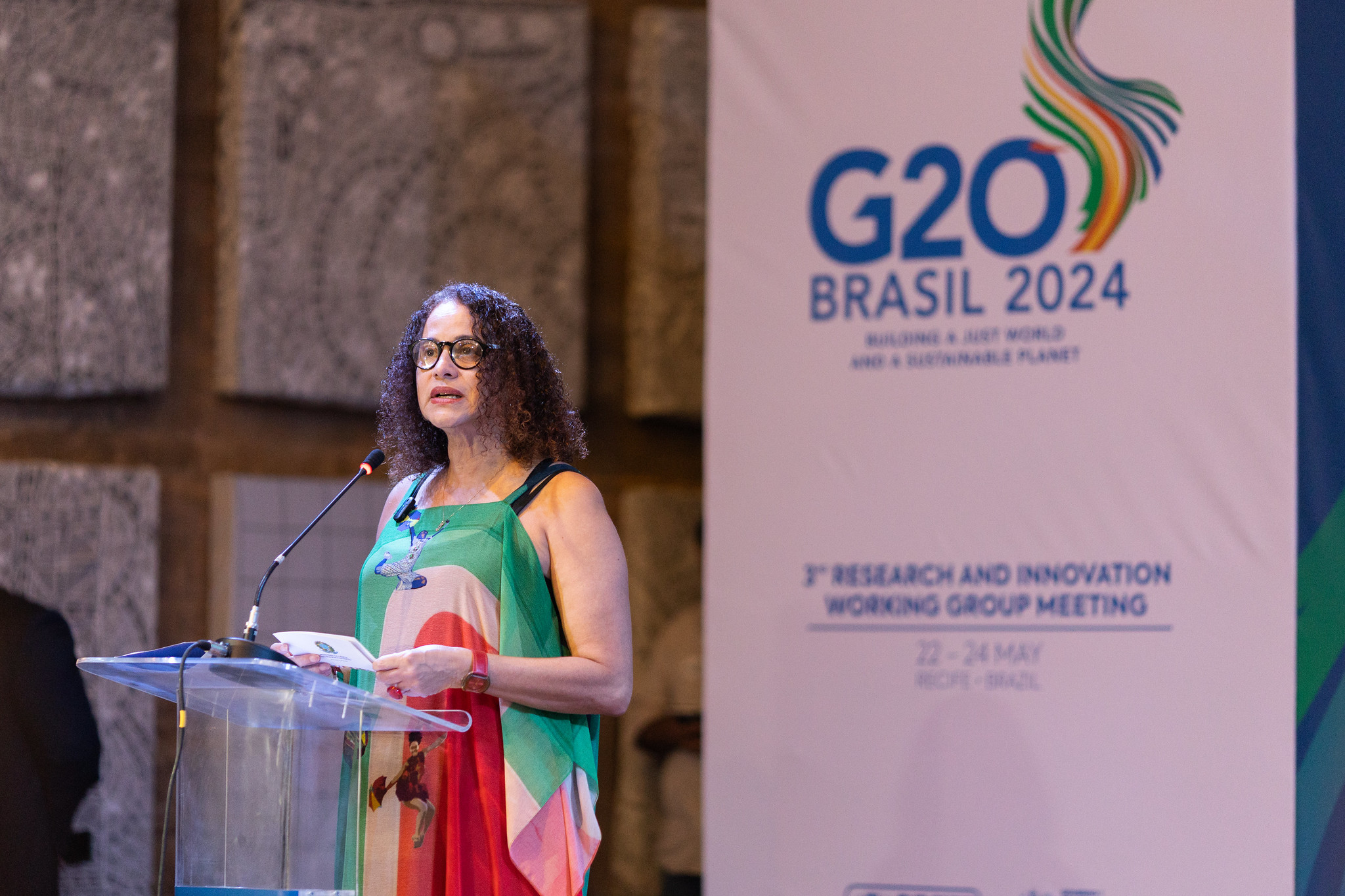
"The level of commitment required to attain both strategic and concrete outcomes is directly correlated with the significant challenges we confront in a world rife with multiple crises, such as climate change, biodiversity loss, health emergencies, food insecurity, and geopolitical tensions," remarked Brasil’s Minister of Science, Tecnology, and Innovation (Ciência, Tecnologia e Inovação/MCTI), Luciana Santos. “This initiative entails international cooperation that fosters collaborative development and facilitates the spread, transfer, and dissemination of knowledge and technology, thereby reversing the trend of concentrated scientific and technological access and production," added Luciana.
Sharing: A catalyst change
The Research and Innovation Working Group (WG), initiated during Brasil's G20 presidency, has been focusing on the open innovation topic. These discussions aim to foster international collaboration to advance global initiatives toward a model of fair and sustainable development.
With the fundamental goal of democratizing the innovation process and promoting the unrestricted exchange of knowledge, open innovation has experienced a significant upsurge in recent years. This momentum is fueled by the expansion of information and communication technologies (Tecnologia da Informação e Comunicações/TIC), the rapid pace of digitalization, and the growing mobility of skilled professionals, all of which facilitate collaborative creation and design of novel products and services. This approach has found application across diverse sectors, ranging from software development to education, healthcare, and energy.
With the fundamental goal of democratizing the innovation process and promoting the unrestricted exchange of knowledge, open innovation has experienced a significant upsurge in recent years. This momentum is fueled by the expansion of information and communication technologies (Tecnologia da Informação e Comunicações/TIC), the rapid pace of digitalization, and the growing mobility of skilled professionals, all of which facilitate collaborative creation and design of novel products and services. This approach has found application across diverse sectors, ranging from software development to education, healthcare, and energy.
"We have an opportunity to harness knowledge across all stages of research and foster its widespread dissemination through a profound convergence. The most effective approach to applying science in addressing common challenges is to promote and facilitate exchange and collaboration. The essence of open innovation lies in ensuring that knowledge generated is shared," said Minister Luciana Santos to the G20 members.
This perspective aligns closely with that of Secretary Osvaldo de Moraes. "We are utilizing scientific knowledge and collaboration to endeavor towards improving conditions for those most vulnerable. I see this as a legacy that the G20, along with its science, technology, and innovation component, can contribute to humanity," added Santos.
Open innovation: Dancing to the beat of the frevo

In this context, Recife was selected as the host city for the event due to its status as one of Brasil's premier technology hubs. Porto Digital, established in Recife at the turn of the century, has evolved into the largest urban technology park in Latin America, boasting over 400 companies and 18,000 employees. Presently, Porto Digital ranks as the city's third-largest service sector, following healthcare and construction, playing a pivotal role not only in scientific advancement but also in job creation and income generation.
Overlooking the sea at the Cais do Sertão, the meeting will continue until Friday (24), featuring discussions on North-South cooperation, economic decarbonization, sustainable initiatives in the Amazon, access to healthcare information, and efforts to address CTI disparities.
The minister was accompanied by a panel convened at the "É do povo" auditorium, a name symbolic of the G20 Brasil presidency's aspiration to involve wider society in the discussions. The panel included Recife’s Vice Mayor Isabella de Roldão and Pernambuco Governor Raquel Lyra. Also in attendance were Ambassador Lineu de Paula, representing the Ministry of Foreign Affairs (Ministério das Relações Exteriores/MRE) in the Northeast; and Osvaldo de Moraes, the head of the Brazilian delegation and deputy secretary for Strategic Policies and Programs at the MCTI.