Greater access to resources from green funds and transition to the generation of jobs and income: these are Brasil's plans for the Sustainable Finance agenda at the G20
The Sustainable Finance WG wants to increase access of Global South countries to 25 billion dollars in green funds, to boost a sustainable transition towards the generation of jobs and income, and to elaborate standards for companies to provide information on sustainability in their financial statements. The priorities were welcomed by the G20 member states.
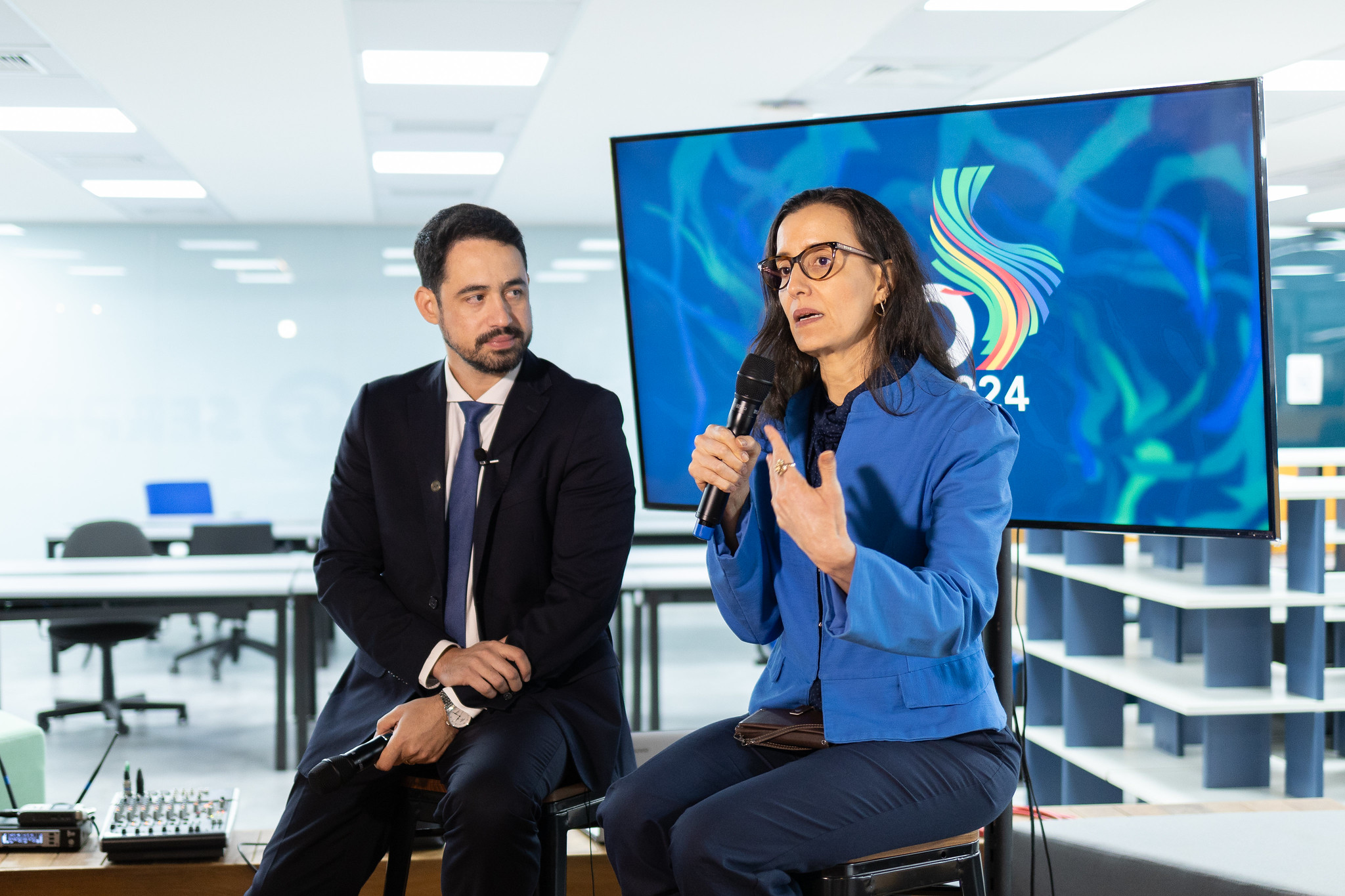
Leveraging the G20 countries so that they can unlock US$25 billion from green funds, promoting a transition focused on generating jobs and income, and discussing strategies to finance sustainable solutions, are among the priorities of the Sustainable Finance Working Group, which gathered via videoconference in Brasilia, on February 5 and 6. The WG also plans to discuss the elaboration of standards for small, medium and large companies to include information about sustainability in their financial statements.
Regarding the strategies to facilitate the access of countries from the Global South to the four main mechanisms of sustainable financing: the Green Climate Fund; the Climate Investment Funds; the Adaptation Fund; and the Global Environment Facility, the WG coordinator and undersecretary of sustainable development financing of Brasil's Ministry of Finance, Ivan Oliveira, explained that the proposal is connected to the policy of solidarity towards these nations, which was “widely welcomed by the group”.
“By the end of this year's Brazilian Presidency, we expect to have had a large boost of the G20 so that the access of the developing countries and economies to these funds can be facilitated. These 25 billion dollars must reach and impact average income countries, such as ours, as well as the small islands, and countries in Africa and Asia”, stated Oliveira.
“By the end of this year's Brazilian Presidency, we expect to have had a large boost of the G20 so that the access of the developing countries and economies to these funds can be facilitated. These 25 billion dollars must reach and impact average income countries, such as ours, as well as the small islands, and countries in Africa and Asia”, stated Oliveira.
Oliveira also detailed the proposal that aims to create high-level principles for the transition plans, with the goal of zeroing the countries’ greenhouse gas emissions with fairness, and taking into consideration their social development and the impact of these processes on the lives of the population. Together with the United States and China, co-chairs of the WG, the group decided to evaluate the cement and steel sectors to assess the possible effects of the green agenda on jobs and aspects such as the reduction of inequalities.
“We began to list a series of sectors to conduct this evaluation, and came to the decision - Brasil, China and the United States - that the basic sectors, cement and steel, may be an interesting starting point for this analytical process. This does not mean we will not move on eventually, now or during the next presidencies, to new studies on other sectors,” stated the representative from the Ministry of Finance.
Increasing capacity
During the debates about nature-based solutions, which involve issues such as preservation, conservation, bioeconomy, bioenergy, and a series of critical aspects of the agenda on sustainable development and finance, the group will evaluate 12 successful cases that used different financial instruments, especially public and private resources, to impact emerging economies and developing countries. The WG also wants to continue the Technical Assistance Action Plan, elaborated during the Indian Presidency, which has the goal of strengthening the countries’ capacity to access these funds.
“The goal is to bring more clarity to the financial instruments. One of the difficulties these countries face in accessing the resources from these funds is their capacity to elaborate good quality projects and programs. The priority is to elaborate a package of quality instruments that can cover part of this agenda and eventually be replicated in similar contexts,” indicated Oliveira.
Sustainability and competitiveness
The Banco Central do Brasil – BCB (Central Bank of Brazil) follows the WG priorities, focusing on the challenges and benefits of the implementation of the reports containing information regarding the climate for financial institutions and small, medium and large companies. According to Cyntia Azevedo, deputy head of the Central Bank's Department of International Affairs, the discussions are around the elaboration of standards that will assist these organizations in providing data regarding sustainability in their financial statements, having the “spirit of proportionality” as a reference.
“There are many challenges in the way of ensuring that these companies can report this information with quality, and we know that this will make them more competitive. The market wants to invest in companies that are socially and environmentally responsible. This is the type of information that is relevant for them to become well placed,” she highlighted.
“There are many challenges in the way of ensuring that these companies can report this information with quality, and we know that this will make them more competitive. The market wants to invest in companies that are socially and environmentally responsible. This is the type of information that is relevant for them to become well placed.”
The WG is part of the forum's Finance Track, and has the mission to propose solutions to overcome the institutional and market challenges, to mobilize sustainable finances to ensure global growth and stability, promoting transition processes towards greener, more resilient, and inclusive economies, attentive to the United Nations 2030 Agenda and the Paris Agreement goals.