Loading
Delegates' Area
English
G20 SOCIAL
G20 Social in Rio: Brasil drives global debate on hunger and poverty with active participation of civil society
The preparatory meeting of the G20 Social highlights the urgency of fighting hunger and poverty. It brings together social movements and civil society to discuss inclusive and sustainable solutions, with Brasil leading the global dialogue on food security.
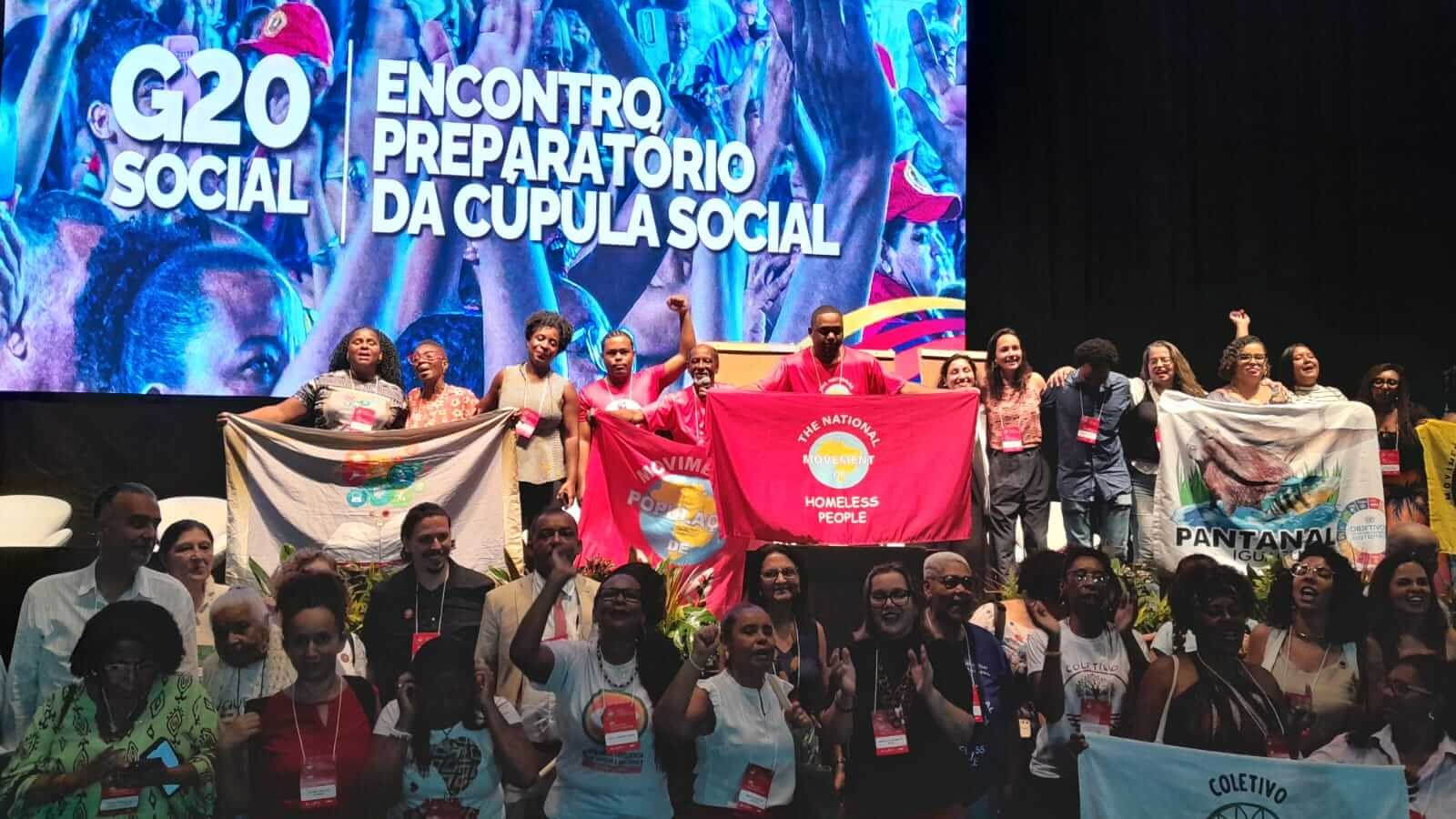
The fight against hunger and poverty is among humanity's most urgent challenges. The theme was defined as a central priority in the discussions of the G20 Brasil. According to the report "The State of Food Security and Nutrition in the World (SOFI)," published at the end of July by the United Nations, more than 700 million people worldwide go hungry. With economic inequalities worsening globally, the Brazilian presidency of the G20 intensifies efforts to deepen the debate on combating hunger, seeking concrete solutions, and mobilizing different sectors of society and international leaders.
Rio de Janeiro hosted the preparatory meeting of the G20 Social Summit under the coordination of the General Secretariat of the Presidency of the Republic. Representatives of social movements and Brazilian civil society gathered at the Fundição Progresso this Tuesday (20) for an event that aims to strengthen the dialogue between civil society and the leaders of the 20 largest global economies.
Civil society and social movements' participation in the G20 debates is an innovation in the international forum's editions. These voices bring to the discussion the realities experienced by those who are most affected by hunger and poverty, and their perspectives are considered fundamental for the construction of effective and lasting solutions, as highlighted by Bárbara Loureiro, from the national direction of the Landless Rural Workers´ Movement (Trabalhadores Rurais Sem Terra, MST). "This meeting is fundamental because it is a space where the 20 most significant world powers can meet. We must ensure that hunger and inequality are central agendas and that civil society has a voice in this process. It is people and social organizations that can point out real solutions to the great dilemmas of humanity, "she said.
Bárbara stressed that to overcome hunger, it must go beyond traditional solutions. "We did not overcome hunger only with agribusiness and commodity production. On the contrary, solutions are already being built by peasant movements worldwide, aiming to democratize land access through land reform and promote agroecology. We need to ensure that people have access to healthy food produced in fair social relations," she added.
According to the invited experts, hunger is not only a matter of a lack of food but rather a complex issue involving the unequal distribution of resources, environmental degradation, and lack of access to adequate means of production. The participants unanimously agreed that countries must discuss the need for agricultural policies that prioritize food security and nutrition instead of large-scale production focused exclusively on export and profit.
The role of social participation in transformation
Elisabetta Recine, president of the National Council for Food and Nutrition Security (Consea), assessed civil society's participation in the G20 as a transformative experience. "Bringing civil society to discuss issues at the G20, which traditionally has a rigid agenda, is fundamental. This Brazilian experience of social participation has a lot to teach the world," she pointed out.
Recine spoke about the importance of articulating short and long-term actions to fight hunger and poverty. "We need a combination of immediate actions, such as income transfer and school meals, with structural transformations that address the roots of hunger and poverty. Only then we can ensure that the progress will last," she explained.
She also highlighted Brasil's role as an example in the fight to end hunger. "Brasil has left the hunger map before, due to an articulation of policies with the effective participation of society. Now we are heading out of the hunger map again, and this experience gives us the authority to talk about the topic on the global stage," she concluded.
Another point she made was that poverty eradication requires more than temporary assistance programs. Participants argued that it is necessary to invest in strategies that promote the economic autonomy of vulnerable populations. This includes strengthening micro and small businesses, promoting the solidarity economy, and supporting family farming, which plays a central role in global food security.
Proposals for the work context
Clemente Gunz Lucio, coordinator of the Forum of Trade Union Centers and member of the Board of Oxfam Brasil, brought to the debate the centrality of work in the fight against poverty. He presented four main guidelines: “First, robust investment is needed to support micro and small businesses, family farming, and the solidarity economy. Second, we must sustain a policy of valuing the minimum wage salary. Third, we must provide ongoing professional training for workers to adapt to innovations. And, finally, strengthen Trade Unions so that they can regulate working conditions, "he categorized.
Clemente also highlighted the importance of popular mobilization for these proposals to gain strength. "We will present these ideas at the G20, but the objective is for the Trade Unions to continue to focus on this debate, bringing to the G20 Social the transformative perspective of the world of work," he concluded.
The G20 Social Summit will be held between November 14 and 16 in Rio de Janeiro, preceding the Heads of State and Government Summit. The preparatory meeting highlighted the need for an inclusive and comprehensive approach to addressing the global challenges of hunger, poverty, and inequality. Brasil positions itself as a leader in promoting a global agenda focused on social well-being and sustainability.