G20 Radio Bulletin 148 - G20 Social: Brasil guides new global agenda against hunger
Brasil proposes the Global Alliance Against Hunger and Poverty, discussed at the G20 Social, to unite countries in sustainable food production, combat inequalities, and eradicate global hunger. Listen to the report and learn more.
Report: Leandro Molina / Rebeca Rodrigues
Reporter: One of the main issues under discussion in the G20 Social Territory in Rio de Janeiro is the Global Alliance proposed by Brasil to fight hunger and poverty. The Alliance is founded on the principle that no country can fight hunger in isolation. The Brazilian initiative will be launched at the Leaders' Summit.
For Wellington Dias, Minister of Social Development and Assistance, Family, and Fight Against Hunger, the urgency is evident. The minister highlighted that in Brasil, hunger has decreased, with the percentage of the population facing moderate or severe food insecurity dropping from 32.8% to 18.4%. With these advances, the government predicts that the country will leave the Hunger Map by 2026.
Wellington Dias: From what we have heard here, we will have proposals that will be delivered directly to the representation of Brasil, to president Lula, and to the chancellor of South Africa. Certainly, these are powerful proposals and will be considered for implementation, which we will move forward in this work of the G20 together with the UN.
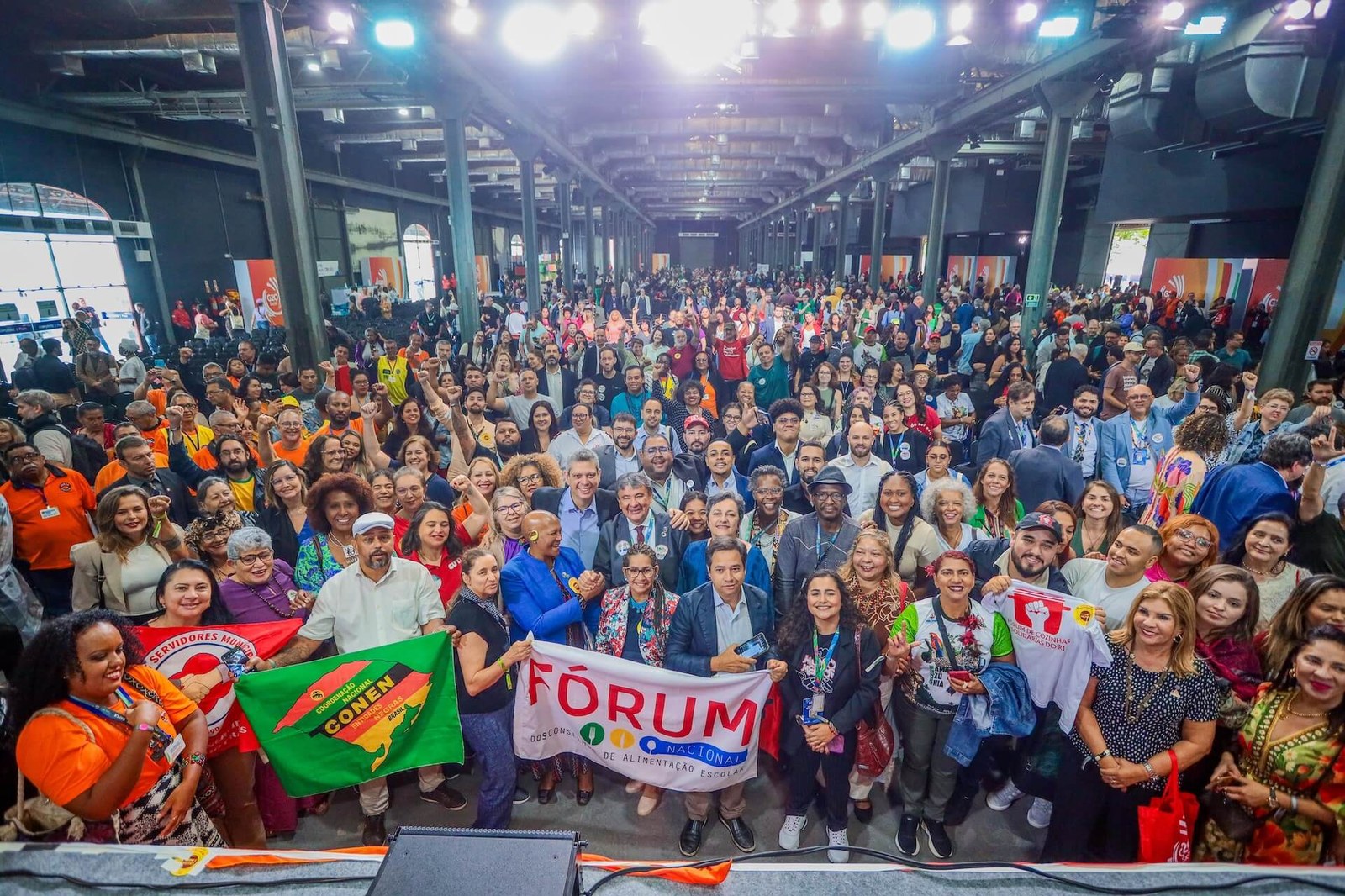
Reporter: The activity, which filled one of the warehouses of the G20 Social Territory, was attended by authorities, representatives of civil society, and social movements, highlighting the central role of public policies and social engagement in addressing hunger and poverty.
Nosipho Jezile, South Africa's representative to the FAO, highlighted alarming statistics: one in nine people in the world goes hungry, and a quarter of the hungry population is in Africa. She stressed that hunger is a human rights issue and that the Global Alliance proposed by Brasil is a promising start.
Nosipho Jezile: Social dialogue is important to include the voices of the most vulnerable farmers, especially family farmers, in dealing with hunger and poverty. In the context of food security, this is the importance of food. This is the significance of food.
Reporter: Adriana Correia, representative of solidarity kitchens in Rio Grande do Sul, pointed out the urgency of recognizing these initiatives as essential in the fight against hunger.
Adriana Correia: We went through a lot of difficulties and a lot of work, but the social movements helped us. Only through social movements did we have a result. We are here, and our goal is to eradicate hunger. This is our fight.
Reporter: In addition, within the debates, there was a consensus on the vital role of women in food production. Daniéria Silva Carolina is an agrarian land reform settler in Vale da Vitória, São Mateus (ES). For her, the debate about the production of healthy food is essential.
Daniéria Silva Carolina: The production of healthy food is a flag of our struggle, and it is on our agendas. It’s what we stand for, it’s what we believe in, and we’re here, fighting, in a constant struggle to make it truly happen. Producing healthy food, the debate about agroecology, not only debating but talking about the importance of agroecology and the production of healthy food.
Reporter: The discussions and proposals of the social movements will be forwarded to the plenary of the G20 leaders. With the international support gained at the G20, the Brazilian government reaffirms its ambition to eradicate hunger not only within its national territory but also globally.
*Translated by PGET-UFSC
Other news