Loading
Delegates' Area
English
FINANCIAL INCLUSION
Financial well-being: quality in the population inclusion process is fundamental
"It's important that the population knows how to use credit efficiently, how to save, how to plan the use of their funds," said Luis Mansur of the Central Bank.

Today 84% of adult Brazilians have a bank account, and 75% of the population has already made a transfer via PIX. The banking rate in the world is around 76% and in emerging countries 71%. Given these figures, Brasil is a success case in terms of financial inclusion and it wasn't just a public policy that led to such a high figure - a series of initiatives were taken, such as correspondent banking and the digitalization of banks.
Luis Gustavo Mansur, head of the Central Bank's Department for Promoting Financial Citizenship, presented statistics about the Brazilian banking system and spoke to the press about the main issues debated by the members of the Global Partnership for Financial Inclusion on Friday (15) in Brasilia.
According to Mansur, the increase in inclusion has also generated a high number of indebtedness due to the inappropriate use of financial products and services. That's why it's important to discuss, within the G20, what can be understood as financial well-being. "It's important that this inclusion is accompanied by a quality process, that this increase is not accompanied by high levels of indebtedness, of over-indebtedness. The population needs to know how to use credit efficiently, how to save, how to plan the use of their funds," he emphasized.
Based on the debate, the group hopes to arrive at a definition of financial well-being and, at the end of the year, propose metrics to measure the population's satisfaction with the inclusion process. The aim is to monitor the quality of people's integration into the formal banking system and to be able to see whether they will actually have a balanced financial life.
Inclusion as an engine for economic growth
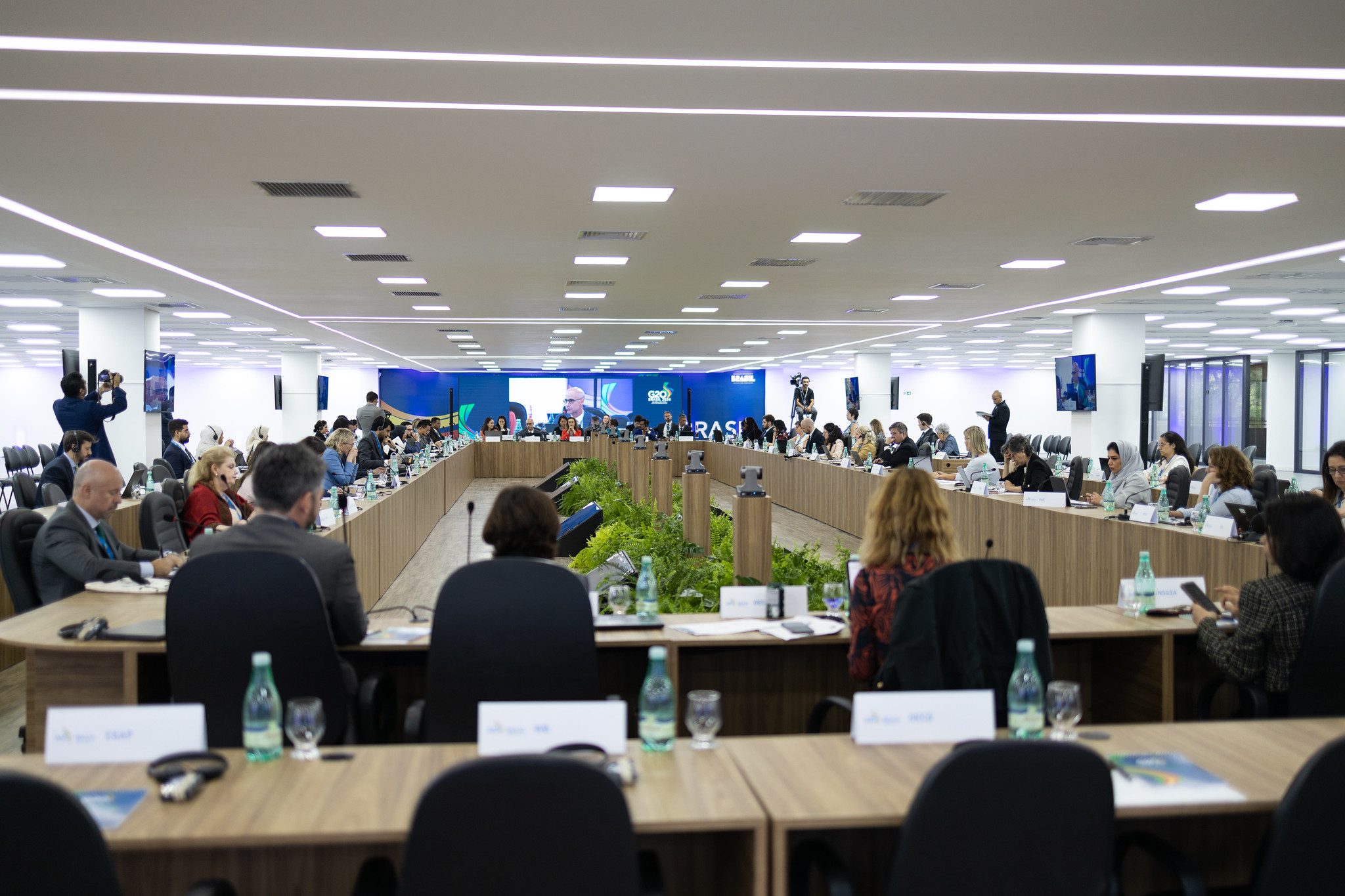
Carolina Barros, Director of Relations, Citizenship and Conduct Supervision at the Central Bank, believes that inclusion is an engine that drives economic growth and social progress. It is fundamental to achieving many of the sustainable development goals. For the director, the Global Partnership for Financial Inclusion can help improve the quality of integration into the financial system, especially among the most vulnerable and disadvantaged segments of society. "Financial inclusion has emerged as a central pillar in our efforts to promote development and reduce inequality. It plays an important role in realizing our premise in the G20 presidency, which is to build a just world and a sustainable planet," affirmed.
The Global Partnership for Financial Inclusion is a space for exchanging knowledge and the main mechanism for implementing the G20 Financial Inclusion Action Plan. In this perspective, Luis Mansur hopes that Brasil's successful experience can be replicated in other countries at the end of the G20 summit.
Under the Brazilian presidency, the partnership will focus on debating the obstacles and solutions for advancing financial inclusion in regions and countries where access levels are still low. It will also discuss financing for small and medium-sized enterprises. The next meeting of the Global Partnership for Financial Inclusion will take place between July 1 and 3 in Fortaleza.