Loading
Delegates' Area
English
CHILDREN IN G20
Children in G20: commitment of world leaders to gender equality and girls' empowerment requires concrete action
G20 Final Declaration affirms countries' commitment to promoting gender equality and combating sexual violence against women and girls. Promoting gender equality, including girls and women's empowerment, should be a priority in the discussions and decision-making of world leaders, especially in global forums such as the G20 Summit, held in November in Rio de Janeiro.
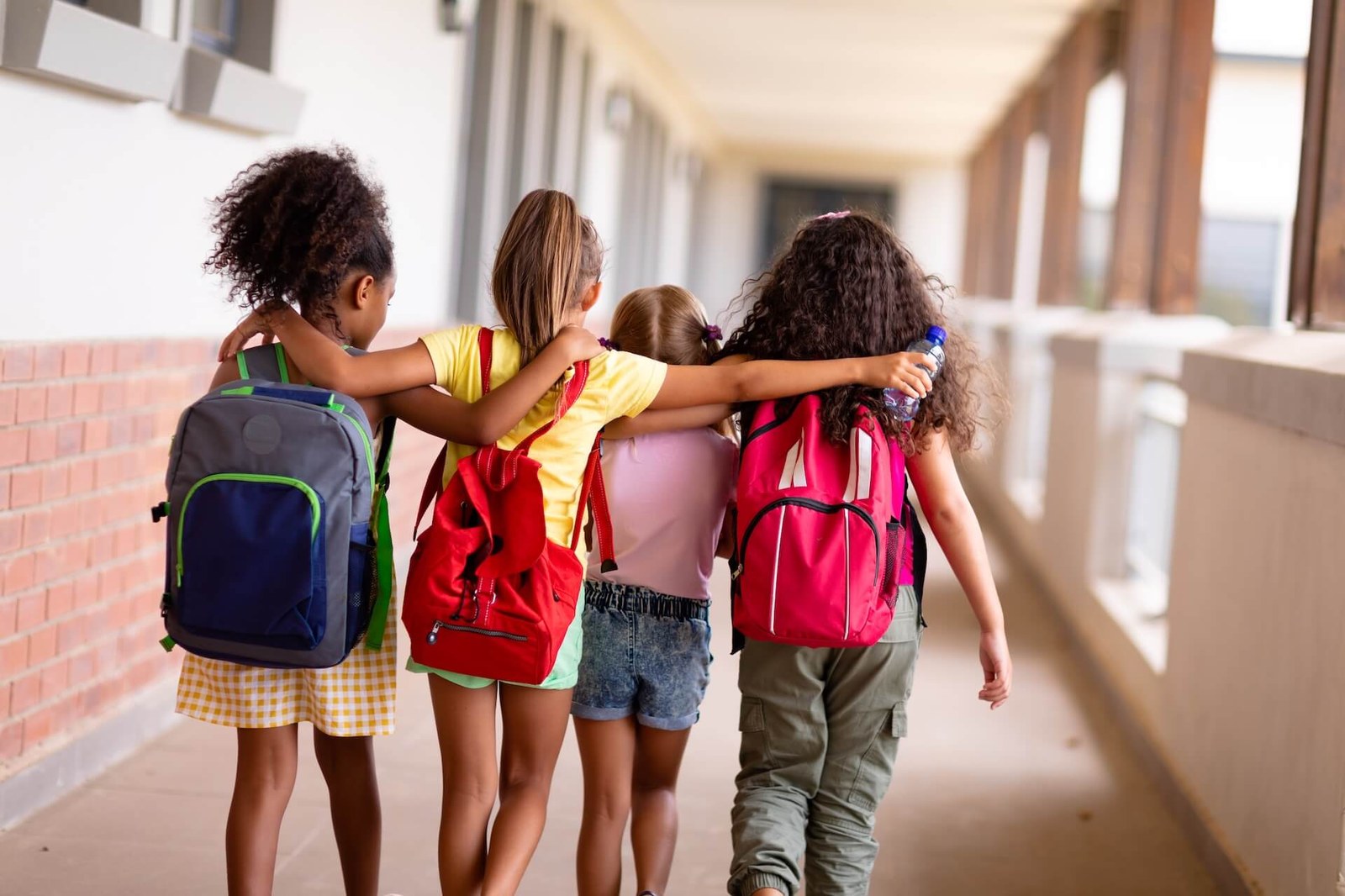
This theme is so relevant that it is present in two documents prepared and supported by Children in G20: a policy pack that brings together the group's recommendations to ensure the inclusion of the children's rights agenda in all G20 processes and a letter that presents the perspectives and needs of more than 50,000 children and adolescents from 60 countries to the bloc's leaders. The documents highlight the urgency of developing plans and addressing issues such as combating violence and sexual abuse against girls, ensuring sexual health and rights, and reproductive rights, as well as promoting gender equality through education.
The official document of the G20 Final Declaration, released on the night of November 18, affirmed the commitment of the countries belonging to the bloc to this theme. An excerpt from the document affirms the need to “promote gender equality in paid and unpaid care work to ensure the equal, full and meaningful participation of women in the economy.”
“Country leaders must be committed to combating sexual violence against girls and women to promote gender equality. Furthermore, this commitment must be the guiding thread and basis for public policies, programs, and actions so that the rights of girls and women are effective and are not only formally guaranteed,” mentiones Mariana Zan, a lawyer at Alana Institute.
Gender equality in Brasil and worldwide
Present in international frameworks, such as the UN Convention on the Rights of the Child (UNCRC) and Sustainable Development Goal (SDG) 5 of the UN's 2030 Agenda, as well as in national frameworks, including the 1988 Federal Constitution, the Statute of the Child and Adolescent (Estatuto da Criança e do Adolescente, ECA), and the Legal Framework for Early Childhood, the promotion of gender equality ensures the elimination of discrimination, violence, and economic, educational, political, and social inequalities, allowing all individuals to develop their potential fully and creates opportunities for equitable participation in all spheres of life—from domestic settings to various societal roles.
However, some data show the challenges that must be overcome to achieve these goals. In 2019, in Brasil, women devoted an average of 21.7 hours per week to unpaid domestic and caregiving work, while men dedicated only 11 hours. This number increases to 22.3 hours per week for black women, meaning that, at the end of a year, black women perform almost 68 more hours of unpaid care than white women, according to the 2019 PNAD (National Household Sample Survey).
It is also necessary to focus on girls’ issues: 25% of black girls aged five to nine perform domestic activities, followed by just over 20% of white girls and then by 16% of boys, white and black, tied, according to 2015 data from the study “Retrato das desigualdades de gênero” (Portrait of gender and race inequalities). Moreover, in 2019, about 84,000 children and adolescents from five to 17 years old performed domestic child labor, with 48.6% working as caregivers for other children and 40.3% performing domestic services.
The impact of the care work on girls
This month, the organization that is part of the group "Children in G20" called Plan International launched the research: "Out of Time: The Gender Division of Care and its Impacts on the Reproduction of Inequalities for Girls", which evaluates the impact of the division of caregiving tasks according to gender, revealing how this affects their future opportunities, well-being, and aspirations. One of the conclusions points out that they feel overwhelmed with housework and care from an early age.
The study delved into the testimonies of 92 girls from nine countries – Benin, Brasil, Cambodia, El Salvador, Philippines, Dominican Republic, Togo, Uganda, and Vietnam, along with the historical analysis of data collected from the same group of girls in the last 18 years – about how they organize themselves to complete their studies and develop skills for the future, whether they perform paid work to promote their economic independence, how and for how long they perform unpaid care tasks, how they build social relationships with other people, participating in community life, as well as how they rest and take care of well-being.
The results show that 94% of the participants perform unpaid care work as part of their daily activities. The time dedicated varies greatly between them, but on average, it reached 5 hours and 15 minutes per day, which is often twice the average time used for school tasks.
Girls from the nine countries were included in a sample, among the poorest families in each country. Over the years, the study has collected data on a wide variety of topics and themes, including education, health in sexual and reproductive health and rights contexts, hunger, protection and violence, girls' activism and participation in civic spaces, climate change, how girls challenge gender norms, among others. The study conducts annual in-depth interviews with girls and their caregivers to understand their daily reality, experiences, attitudes, challenges and hopes for the future. In 2024, it explored the factors and motivators that shaped girls' use of time and examined the impact of the division of care between genders.
The current research's findings reaffirm the discoveries of the Por Ser Menina project (For Being a Girl), carried out in 2021 with 2,589 participants aged 14 to 19 in the five Brazilian regions by Plan International Brasil. The study pointed out that girls perform twice as much domestic work as boys (67.2% of girls against 31.9% of boys) and are early held responsible for caring for people and their homes.
"These data confirm our concerns about the impacts that the high volume of domestic work and home care activities have on the lives of girls and young women from an early age. If they do not have enough time to study and dedicate themselves to fundamental activities to build their future, they will remain in cycles of poverty and inequality," says Cynthia Betti, CEO of Plan International Brasil.
The reality for girls and its impact on education
It is challenging to balance time between unpaid work, studies, and other essential activities, such as being in social spaces with friends, practicing hobbies, participating in the community, taking care of health and well-being, and sleeping. Many girls reported high levels of stress and few hours of sleep. Some even mentioned experiences of loneliness and isolation because they did not have time to be with friends and family. Rest and leisure activities are essential for children and adolescents, and they are especially important for girls, who need to develop leadership and autonomy skills.
The study identified that the disproportionate time that girls dedicate to unpaid care work directly impacts their education, with reports of girls arriving late to school, having difficulties completing school tasks, and, in some cases, even dropping out of school.
Among the 92 participants, 20 dropped out of school and are not seeking educational alternatives (21%), mainly in African countries. The unequal division of unpaid care work has negative long-term economic consequences for girls: in addition to affecting their education, they are less likely to acquire skills for well-paid jobs, which increases the risk of poverty in adulthood.
The group "Children in G20" is composed of Save the Children, Plan International, Alana Institute, ANDI – Communication and Rights, Childhood, FamilyTalks, José Luiz Egydio Setúbal Foundation, Promundo Institute, Maria Cecilia Souto Vidigal Foundation, International Center for Research and Policy on Childhood (CIESPI/PUC-Rio), Brazilian Coalition to End Violence against Children and Adolescents, Association for Child and Adolescent Mental Health (ASEc+), Soulbeegood, Vertentes - Mental Health Ecosystem, Global Mental Health Action Network, Living Trees Institute for Conservation and Environmental Culture, Jô Clemente Institution and National Early Childhood Network (RNPI), Orygen, ItotheN and Catalyst 2030.
*Translated by PGET-UFSC