BRICS Summit: President Lula thanks countries for their support at Brasil’s G20 presidency in Kazan
According to the president, the support of the G20 countries was essential to advance important initiatives to reduce inequalities, such as super-rich taxation. Another well-received initiative was the Global Alliance Against Hunger and Poverty, which some countries have already joined. Lula also stressed the importance of BRICS in fighting climate change.
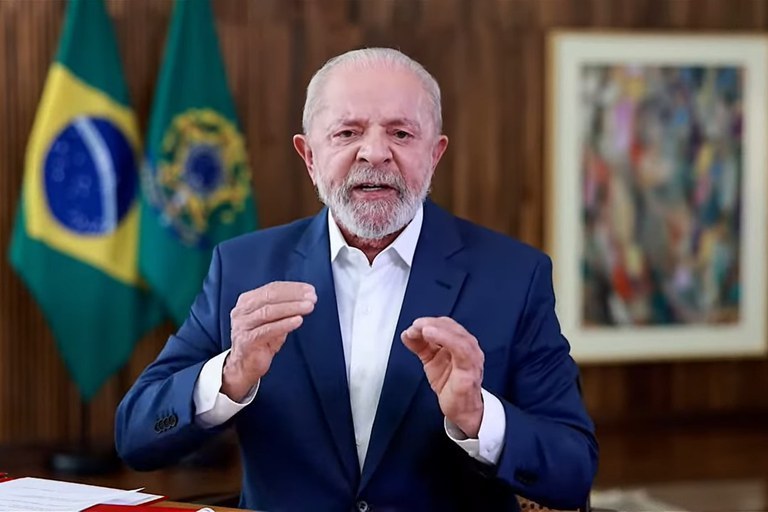
President Lula began his speech at the BRICS Summit's Open Plenary Session on Wednesday, 23rd, in Kazan, Russia, by thanking G20 members for their support for Brasil's presidency of the forum this year. According to the president, the group countries' support was essential to advancing important initiatives to reduce inequalities, such as super-rich taxation.
“In recent decades, our countries have implemented successful social policies that can serve as an example to the rest of the world. One of the initiatives of Brasil's presidency, the Global Alliance Against Hunger and Poverty, is already in an advanced stage of accession. I invite everyone to join the initiative, which was born in the G20 but is open to other participants,” he said.
The president also stressed that BRICS is a relevant actor in tackling climate change, as the most significant responsibility lies with rich countries whose emissions history culminated in the current climate crisis. On the other hand, the president hasn't forgotten to mention that emerging countries also need to strive to limit the increase in global temperature to one and a half degrees
“It is necessary to go beyond the 100 billion annually promised and not fulfilled and strengthen measures to monitor the commitments made. Scientific data express an unprecedented sense of urgency. Our planet is one, and its future depends on collective action,”Lula argued.
According to Lula, in this spirit of joining forces, during COP 30 in Brasil, countries will be able to show that it is feasible to reconcile greater ambition in Nationally Determined Contributions (NDCs) with the principle of common but differentiated responsibilities. The NDC is each country's climate action plan to reduce greenhouse gas emissions.
BRICS Summit in Brasil
In 2025 Brasil will host the 17th BRICS Summit, which should reaffirm the bloc's vocation to defend a multipolar world and less asymmetric relations between countries.
“We need to strengthen our technological capacities and favor the adoption of non-exclusive multilateral frameworks, in which the voice of governments preponderates over private interests,” said the president.
Lula mentioned that BRICS has been responsible for significant global economic growth in recent decades. The bloc represents 36% of global GDP by purchasing power parity. However, despite uniting significant countries for the global economy, according to the president, the world lives a Marshall Plan in reverse. In a nutshell, emerging and developing economies finance the developed world. For this reason, BRICS initiatives and institutions break with this logic.
“Many insist on dividing the world between friends and enemies. However, the most vulnerable are not interested in simplistic dichotomies. They want plenty of food, decent work, and universal quality of public schools and hospitals. And a healthy environment without climatic events that endanger their survival.”
The motto of next year’s Brasil’s BRICS presidency will be “Strengthening Global South Cooperation for More Inclusive and Sustainable Governance.” A phrase that reflects this new way of thinking about international relations.