Brasil aims at reducing technological inequalities to boost sustainable transition
The Research and Innovation WG outlines a plan to promote technology transfer between countries in the Global South and boost open innovation measures for decarbonizing the economy, protecting the Amazon, promoting access to health and diversity in science and technology. Coordinated by the Ministry of Science, Technology and Innovation (MCTI), the group met this week in Brasilia by videoconference.
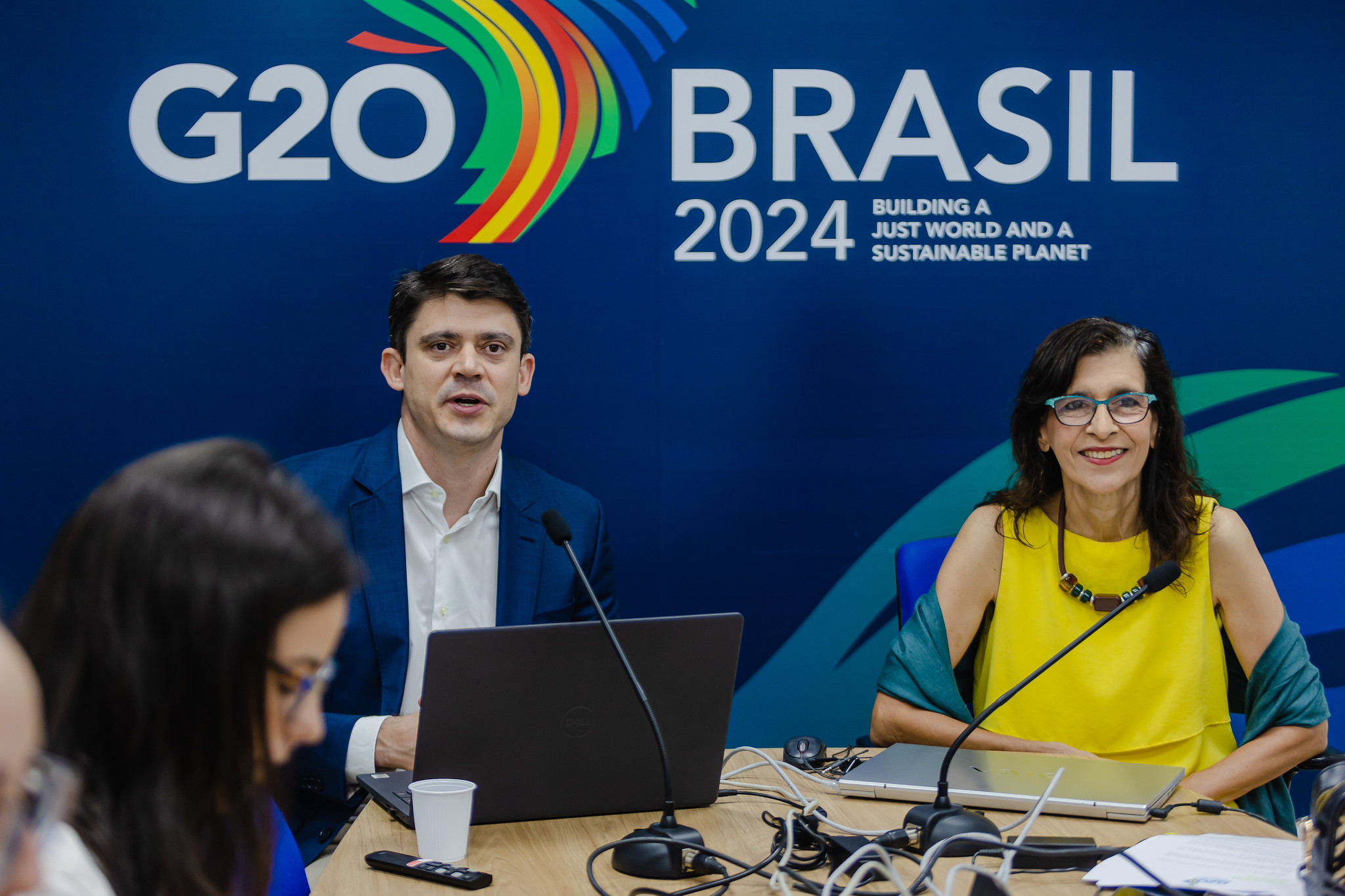
Inequality in access to technology limits sustainable transition processes. This premise guides the actions of the Research and Innovation Working Group of the G20 Sherpa Track, which held its first alignment meeting this week in Brasilia via videoconference. The WG, coordinated by the Ministry of Science, Technology and Innovation (MCTI), presented the work plan, whose priorities are technology transfer between countries in the Global South and open innovation measures to decarbonize the economy, expand the right and access to health, promote sustainable Amazonia and diversity to tackle inequalities.
"Brasil is bringing to the G20 the debate on a more equal society and biodiversity, through innovation for this new type of development, which does not come to burn the planet, but which takes social, economic and sustainability factors into account," said Márcia Barbosa, Secretary of Strategic Policies and Programs at the MCTI and coordinator of the WG.
According to Paulo Afonso, from the MCTI's Special Adviser for International Affairs, the group discussed the priorities and the possibilities of linking up with other WGs in the forum and moving towards refinement. Brasil's proposals were well accepted by the member countries, with the debates on open innovation for the defense and protection of the Amazon rainforest and tackling inequalities in science and technology standing out.
Márcia Barbosa argues that the WG has the challenging task of articulating "all perspectives" to produce knowledge based on the logic of both developed countries and the Global South, as well as local experiences and those of Indigenous peoples. The group's coordinator said that the idea is to build global instruments to support the production and monitoring of S&T public policies in the forum countries.
"We need to have a more equal science, a science that does not discriminate, that has all perspectives, that looks at European knowledge, American ignorance, but also looks at local knowledge, the knowledge of native peoples," said the coordinator of the WG at the MCTI.